Kettlebell Side Plank Reach Through
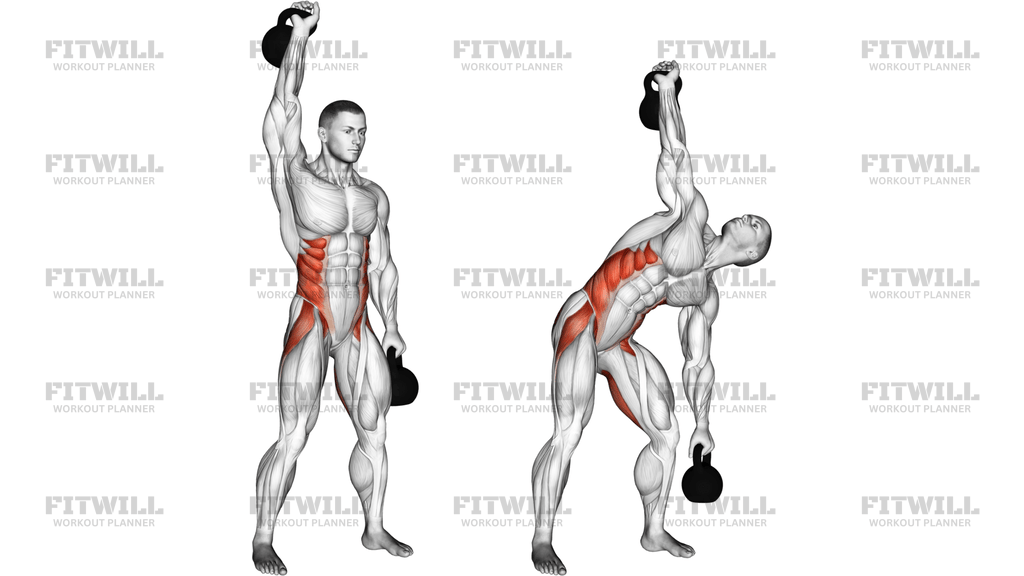
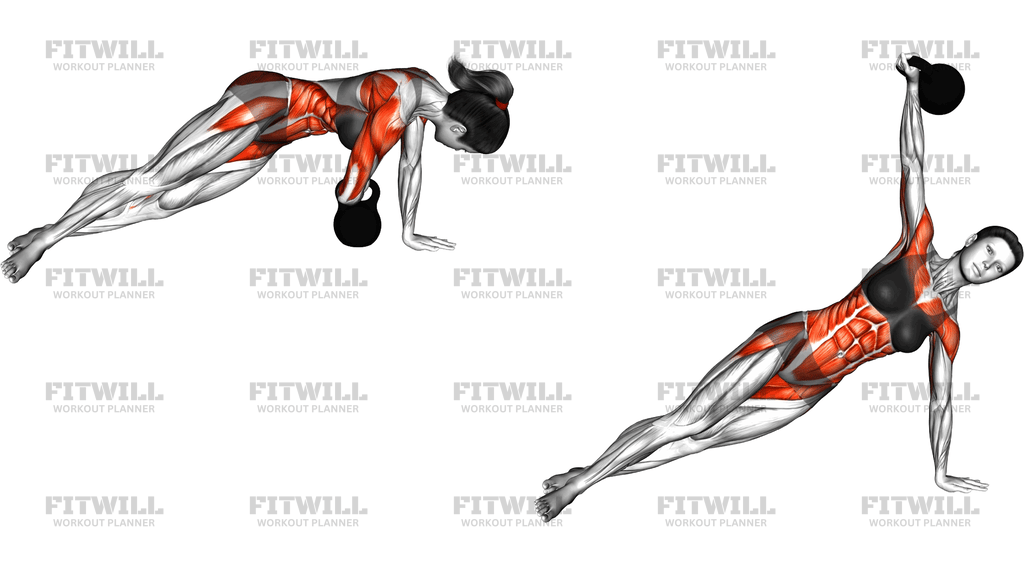
The Kettlebell Side Plank Reach Through is a rotational core exercise that combines an isometric side plank with a dynamic reaching and pressing pattern through the top arm. You hold a side plank on one forearm or hand while gripping a kettlebell in the free hand, sweep the weight down and underneath your torso, then reverse the motion and press it straight up toward the ceiling until the arm is vertical. The result is a movement that challenges anti-rotation control, oblique strength, and shoulder stability all at once.
This exercise is especially useful for anyone who already owns a solid side plank and wants to add load and rotation to it. Combat athletes, racket sport players, and throwers benefit from the trunk rotation under load, while general lifters benefit from the way the weighted top arm forces the ribs and pelvis to stay stacked. Because one side works at a time, it also exposes and helps correct left-to-right differences in oblique strength and hip control.
The primary work comes from the obliques and deep core musculature on the underside of the body, which must hold the torso in a straight line while the arm moves the kettlebell through space. The glutes and hip abductors keep the hips elevated, and the shoulder of the top arm works through internal and external rotation as you reach through and press back up. The supporting shoulder and lat on the bottom side quietly do a lot of stabilizing as well.
Setup matters more here than in most core drills because the kettlebell changes your balance the moment you pick it up. Before starting, position the weight within easy reach of your top hand, set your elbow or hand directly under the bottom shoulder, and stack the feet so the body has a stable base. If your hips sag or your shoulder sits loose in its socket, the reach-through will amplify every one of those faults, so establish the plank first and add the weight only once the line from head to heel is straight.
To execute well, think of the bottom side of your trunk as the anchor that never moves while the top arm does all the traveling. Sweep the kettlebell under the body by rotating from the shoulder, not by letting the chest roll toward the floor, then pull it back along the same path and extend it overhead. Keep the press deliberate rather than explosive at first; the heavier the kettlebell feels, the more your ribs will want to flare and your hips will want to drop.
Practically, this movement fits well as a secondary core exercise after main lifts, as part of a circuit, or as a warm-up primer for rotational work. Start with a light kettlebell, even 4 to 8 kilograms, and complete all reps on one side before switching. Stop the set as soon as the hips drop or the supporting shoulder starts to ache; quality of position is the entire point of this drill.
[ Workout Log & Planner ]
Put your next workout in Fitwill
Keep your plan and training log ready when you are.


Instructions
- Place a kettlebell on the floor next to the hand you plan to reach with, then sit sideways with your legs extended and your feet stacked, one in front of the other.
- Set your bottom elbow directly under your bottom shoulder, take hold of the kettlebell with your top hand, and lift your hips so your body forms a straight line from head to heels.
- Spread your bottom hand's fingers for a firm base if supporting on the hand, or keep the forearm flat on the floor for a more stable variation, and squeeze the glutes to hold the hips high.
- Brace your trunk as if bracing for a light punch, and keep your ribs pulled down over your pelvis before the arm begins to move.
- Sweep the kettlebell down and under your torso by rotating from the top shoulder, letting the arm pass beneath your ribs while the chest stays squared to the side wall.
- Reverse the arc and press the kettlebell up and slightly back until the top arm is straight and vertical over the shoulder, with your eyes following the bell.
- Lower the kettlebell back under the body along the same controlled path and complete all repetitions on one side without letting the hips sag or rotate.
- Exhale as you press the kettlebell up and inhale as you sweep it back underneath your torso.
- Set the kettlebell on the floor, lower the hips to rest, shake out the supporting shoulder, and repeat on the opposite side.
Tips & Tricks
- The most common mistake is letting the hips sag the moment the kettlebell travels under the body, because the weight pulls the center of mass forward and down; consciously drive the bottom hip toward the ceiling throughout the reach.
- If the supporting shoulder shrugs up toward the ear, actively push the floor away and lengthen the neck before you start reaching.
- Keep the kettlebell close to the ribs on the sweep underneath; letting it drift far from the body turns the movement into a shoulder strain rather than a core drill.
- Stack the top foot slightly in front of the bottom foot rather than directly on top if you feel wobbly, which widens the base without changing the exercise.
- Do not let the chest roll toward the floor during the reach-through; the rotation should happen in the shoulder joint, with the torso holding its side-facing position.
- Wrist position matters with the bell overhead: keep the wrist straight and knuckles up rather than letting the bell flop back and bend the wrist into extension.
- If full reach-through is too hard, stop the kettlebell just short of the torso and press from there, then gradually increase the range as control improves.
- Switch sides between sets rather than alternating reps, and match the work on the weaker side rather than adding reps to the stronger side.
- Place the kettlebell on a yoga mat or against a wall when setting it down between sets so it cannot roll or tip over.
Frequently Asked Questions
What muscles does the Kettlebell Side Plank Reach Through work?
The obliques and deep core on the underside of the torso do the main stabilizing work, while the top shoulder moves the kettlebell through rotation and overhead pressing. The glutes and hip stabilizers also work hard to keep the hips elevated throughout.
Should I do the Kettlebell Side Plank Reach Through on my forearm or my hand?
Forearm support gives you a wider, more stable base and is the better choice while learning the movement. Supporting on the hand makes the drill harder and is a reasonable progression once your hips no longer drop during the reach.
How heavy should the kettlebell be for this exercise?
Start lighter than you think you need, often 4 to 8 kilograms, because the reach-through position puts the shoulder in a compromised angle under load. The right weight lets you press overhead smoothly without the hips sagging or the ribs flaring.
Why do my hips drop when I reach the kettlebell under my body?
The bell shifts your center of mass toward the floor, so the underside obliques and glutes have to work harder to compensate. Slow the reach down, lighten the weight, and consciously push the bottom hip toward the ceiling to fix it.
Can beginners do the Kettlebell Side Plank Reach Through?
Beginners should first be able to hold a bodyweight side plank for about 30 seconds per side with a straight line from head to heels. Once that is comfortable, a very light kettlebell and a partial reach is a sensible entry point.
What can I substitute if I do not have a kettlebell?
A light dumbbell works with a similar grip, or you can perform the reach-through with no weight at all, simply sweeping the free arm under the body and pressing toward the ceiling. The bodyweight version is actually a common regression.
Should my feet be stacked or staggered during this exercise?
Stacked feet make the drill more demanding on the obliques, while placing the top foot slightly in front of the bottom foot widens the base and improves balance. Either is acceptable; choose the one that keeps your hips level and lifted.
Is it normal to feel this in the shoulder more than the abs?
Some shoulder work is expected since the top arm presses the kettlebell overhead, but sharp or dominant shoulder fatigue usually means the weight is too heavy or the bell is drifting too far from the ribs during the sweep. Reduce the load and keep the arc tight to shift emphasis back to the trunk.
How many reps and sets should I do?
Two to three sets of 6 to 10 controlled reaches per side is a solid working range. Prioritize holding the side plank position with a straight line over squeezing out extra repetitions.