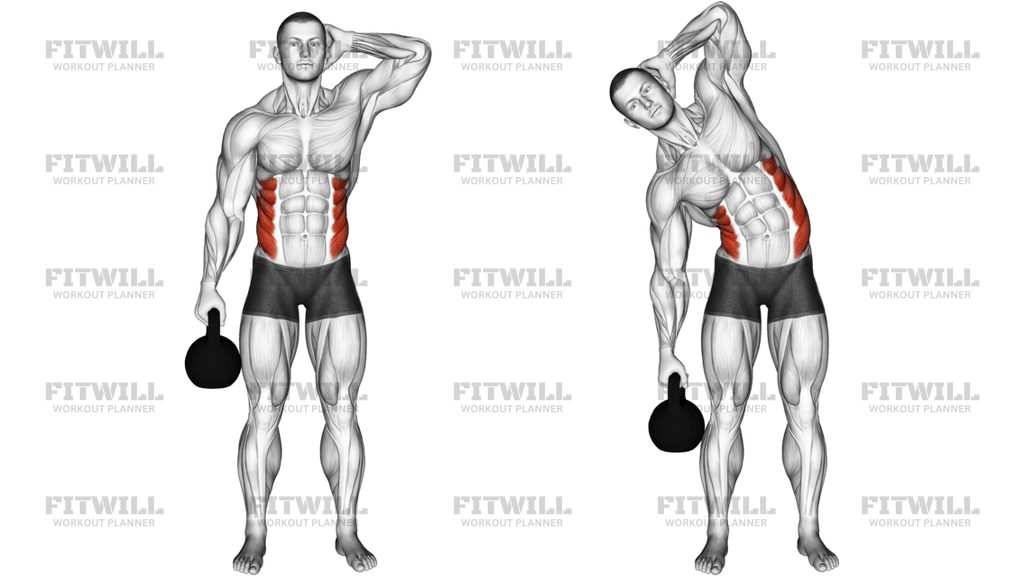
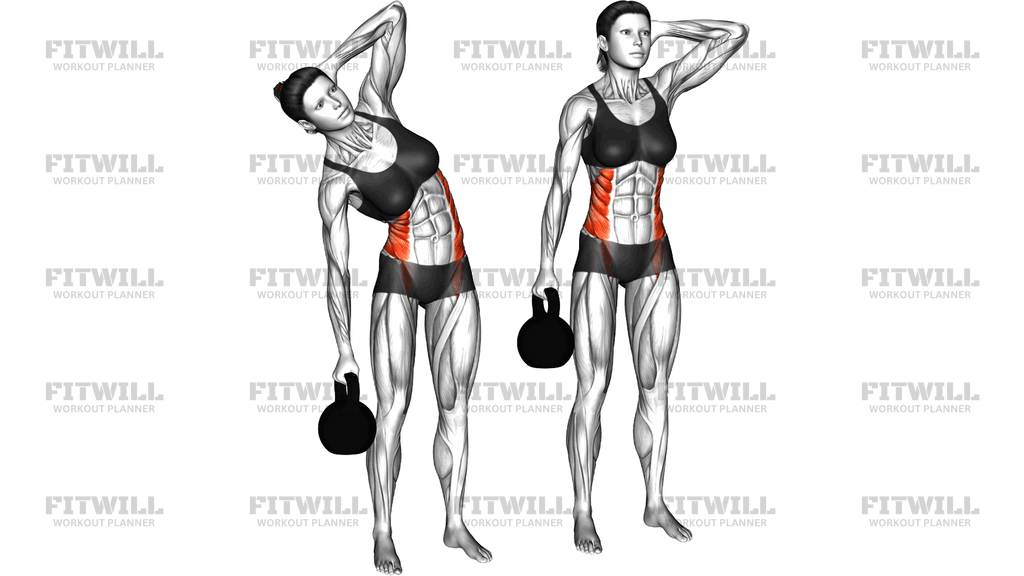
Kettlebell Double Windmill
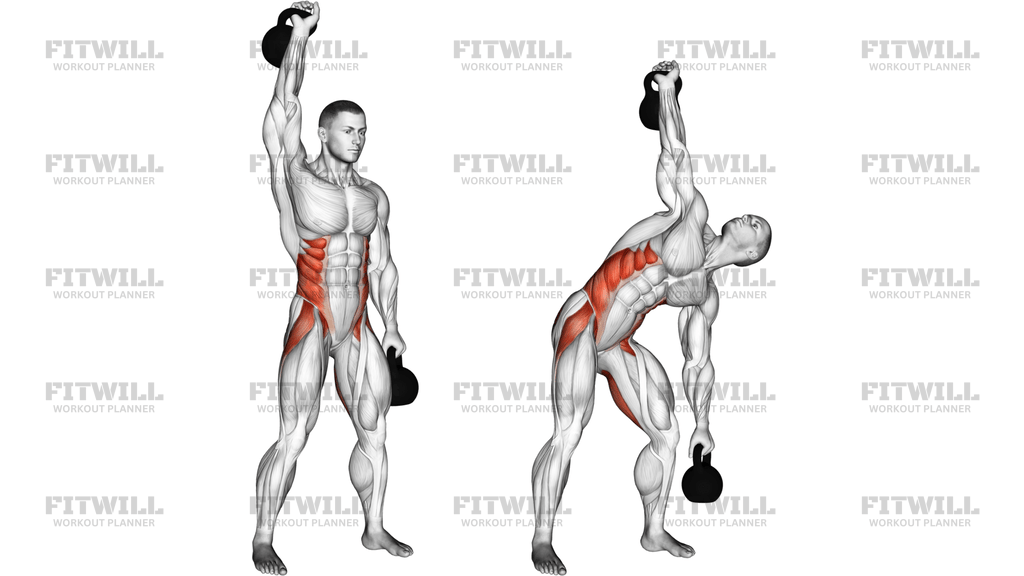
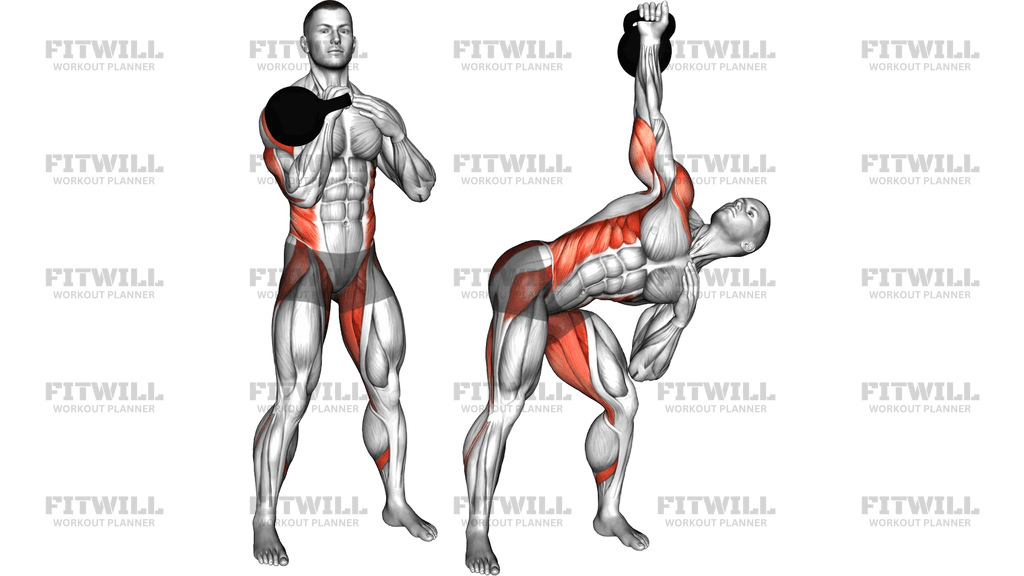
Kettlebell Double Windmill is a loaded side-bending and hip-hinge drill that asks you to keep one kettlebell stacked overhead while the other arm stays long and heavy at your side. The movement is small compared with big squat or press patterns, but the demand on the obliques, deep core, hips, and shoulder stabilizers is high. That is what makes Kettlebell Double Windmill useful for building control, not just strength.
The overhead arm has to stay vertical while the torso folds and rotates underneath it. At the same time, the lower side of the body has to stay organized so the hips do not drift, the ribs do not flare, and the spine does not collapse. In this exercise, the primary work comes from the obliques, with the abs, lower back, and hip stabilizers helping you stay aligned as you descend and stand back up.
The setup matters more than the range of motion. Start with the feet slightly wider than shoulder width, the toes turned a little outward, one kettlebell locked out overhead, and the other hanging straight down in the opposite hand. Keep the chest open, the eyes on the overhead bell, and the shoulder packed before you begin the hinge. If the top arm drifts forward, the rest of the rep becomes a shoulder and balance problem instead of a controlled trunk exercise.
Each rep should feel like you are sliding the torso between the legs while reaching the lower hand toward the floor, not like you are simply tipping sideways. The hips move back, the spine stays long, and the overhead arm stays stacked over the shoulder the whole time. Stop the descent as soon as the lower position can no longer be held without rounding, then drive the hips forward to stand and finish tall before resetting the next rep.
Kettlebell Double Windmill fits well in a strength or accessory block when you want trunk control, overhead stability, and hip coordination in the same drill. It is not the best place to chase fatigue or fast reps. Use a light load first, earn a smooth pattern, and progress only when both bells stay quiet through the full range. If shoulder mobility or balance is limited, a single-kettlebell windmill or a shorter partial range is a safer place to start.
Fitwill
Log Workouts, Track Progress & Build Strength.
Achieve more with Fitwill: explore over 9600 exercises with images and videos, access built-in and custom workouts, perfect for both gym and home sessions, and see real results.
Start your journey. Download today!




Instructions
- Stand with your feet slightly wider than shoulder width, turn your toes a little outward, and hold one kettlebell overhead with the elbow locked and wrist stacked over the shoulder.
- Hold the second kettlebell in the opposite hand with the arm hanging straight down, keep both shoulders set, and look toward the overhead bell before you start.
- Take a breath, brace your midsection, and shift your hips slightly back while keeping both knees soft.
- Push your hips toward the side of the overhead arm as you hinge, letting your torso lean away from the lower kettlebell.
- Slide the lower hand down toward the inside of the front leg and keep the overhead arm vertical instead of letting it drift forward.
- Descend until your free hand or lower kettlebell reaches as low as you can while your chest stays open and your spine stays long.
- Pause briefly in the bottom position, then exhale and drive your hips forward to stand back up under control.
- Finish tall with both kettlebells steady, reset your stance if needed, and repeat for the planned reps before lowering the bells safely.
Tips & Tricks
- If the top kettlebell drifts in front of your shoulder, shorten the range and re-stack the arm before the next rep.
- Keep the lower kettlebell hanging like a weight, not swinging across your body as you hinge.
- Turn the front foot out a little more if your hip blocks the descent or your torso twists early.
- Bend the knees only enough to let the hips move back; turning the drill into a squat reduces the windmill effect.
- Keep your eyes on the overhead bell the whole rep so the shoulder and upper back stay organized.
- A lighter pair of kettlebells usually works better than a single heavy bell because the second load magnifies balance errors.
- Stop the descent before your upper back rounds or the overhead rib cage flares hard to fake more range.
- Use a slower lowering phase than the standing phase to make the obliques and hips do the work instead of momentum.
Frequently Asked Questions
What muscle does Kettlebell Double Windmill target most?
The obliques are the main target, with the abs, lower back, and hip stabilizers helping to keep the torso stacked under load.
Can beginners perform this exercise?
Yes, but beginners should start very light and practice the hinge and overhead stack first. A single-kettlebell windmill is usually easier before moving to Kettlebell Double Windmill.
How should the two kettlebells be positioned in Kettlebell Double Windmill?
One kettlebell should stay locked out overhead while the other hangs straight down from the opposite hand. Both arms should stay long so the torso does the work instead of the shoulders shrugging.
How low should I go in Kettlebell Double Windmill?
Go only as low as you can while keeping the overhead arm vertical and the spine long. If your ribs flare or your back rounds, stop the descent there.
What is the biggest mistake people make in Kettlebell Double Windmill?
Letting the overhead bell drift forward and turning the rep into a side bend is the most common error. The top arm should stay stacked over the shoulder from start to finish.
Which side should I face or hinge toward?
Hinge away from the overhead-side bell and let the torso fold toward the opposite side, keeping the shoulders square enough that the top arm stays stacked.
Is Kettlebell Double Windmill a good core exercise?
Yes. It trains anti-rotation, lateral core control, and bracing under an overhead load, which makes it more demanding than a basic side bend.
Can I substitute a single kettlebell?
Yes. A single-kettlebell windmill is the simplest regression and is a good choice if the second bell makes your balance or shoulder position unstable.