Barbell Incline Wide Reverse-Grip Bench Press
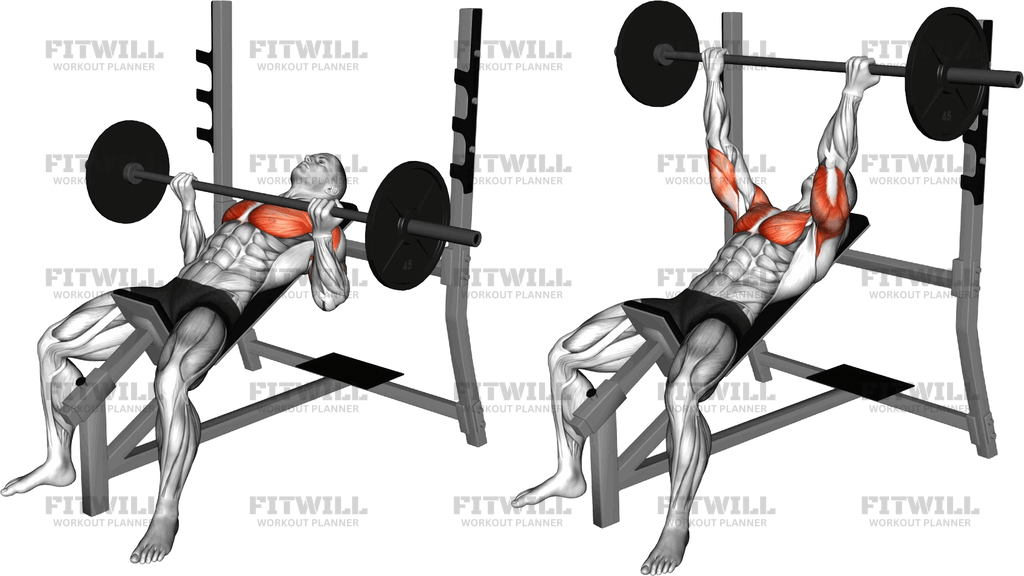
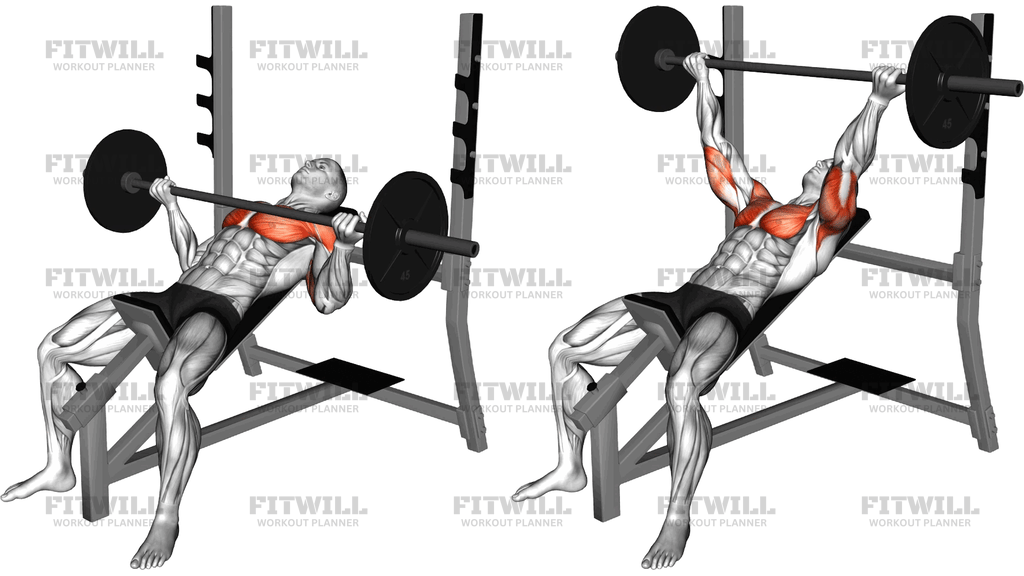
Barbell Incline Wide Reverse-Grip Bench Press is an incline pressing variation that shifts the line of force slightly higher on the chest while keeping the grip underhand and wider than a standard close reverse-grip press. The image shows a barbell bench set on an incline, with the lifter pressing from an upper-chest touch point to a stacked lockout. That combination makes the movement feel unusual at first, but it is still a straightforward chest-dominant press when the bench, grip width, and wrist position are set correctly.
This exercise primarily trains the chest, with the front shoulders and triceps assisting through the press. Because the hands are turned palm-up, the setup can also challenge forearm position, wrist stability, and shoulder comfort more than a standard incline bench press. The wide reverse grip changes the leverage of the press and can make the top half of the range feel more natural for some lifters, but it also raises the need for careful unracking and controlled bar path.
The setup matters more here than in many basic presses. Lie back on an incline bench with your upper back supported, feet planted, and eyes under the bar. Take a reverse grip wide enough to keep the wrists stacked without forcing the elbows too far out, then unrack the bar to the top of the shoulders and upper chest line. From there, lower it in a smooth arc to the upper chest or high sternum area, keeping the forearms near vertical and the shoulder blades pinned to the bench.
On the press, drive the bar up and slightly back toward the rack so the rep finishes over the shoulders again, not drifting toward the face or belly. Keep the descent controlled, avoid bouncing off the chest, and use a spotter or safety pins because the underhand grip makes the unrack and rerack less forgiving. This is a useful accessory press for chest-focused training, upper-chest emphasis, or lifters who respond well to reverse-grip pressing mechanics, but it should stay light enough that the wrists, elbows, and shoulders can keep a clean line from the first rep to the last.
[ Workout Log & Planner ]
Put your next workout in Fitwill
Keep your plan and training log ready when you are.


Instructions
- Set an incline bench inside a rack, lie back with your upper back and head supported, and plant both feet firmly on the floor.
- Take an underhand grip on the bar that is a little wider than shoulder width, then stack your wrists over your forearms before unracking.
- Unrack the bar to the top of your shoulders and upper chest line with your elbows soft and your shoulder blades pinned to the bench.
- Lower the bar slowly in a controlled arc toward your upper chest or high sternum, keeping your wrists straight and your forearms close to vertical.
- Let the bar settle lightly near the upper-chest touch point without bouncing or losing tightness through the shoulders.
- Press the bar upward and slightly back toward the rack until your arms are extended and the bar finishes over the shoulders again.
- Exhale as you press, then reset your breath and upper-back tension before the next repetition.
- Re-rack the bar carefully only after the rep is fully controlled, or use a spotter to guide the hooks in safely.
Tips & Tricks
- Keep the grip wide enough that the wrists stay stacked; if the bar feels trapped in the fingers, the load is usually too heavy or the grip is too narrow.
- Treat the unrack as part of the lift. On a reverse grip, a sloppy handoff can pull the shoulders forward before the first rep even starts.
- Touch higher on the chest than a flat bench press. If the bar drifts too low, the shoulders usually take over and the angle stops matching the exercise.
- Press up and slightly back, not straight toward the ceiling. That path keeps the bar over the shoulder line at the top of the rep.
- Keep the elbows from flaring hard to the sides; a moderate angle usually feels stronger and easier on the shoulders.
- Use a lighter load than you would on a standard incline press. The reverse grip changes leverage and makes the setup less forgiving.
- If your wrists extend backward during the descent, shorten the range or reduce the load before the joint position turns into a limiter.
- Use safety pins or a reliable spotter, especially when training alone in a rack, because the underhand grip makes failed reps harder to recover.
Frequently Asked Questions
What does Barbell Incline Wide Reverse-Grip Bench Press train most?
It primarily trains the chest, with the front shoulders and triceps helping to finish each press.
Why use a reverse grip on the incline bench?
The underhand grip changes the pressing angle and can make the upper-chest line feel more direct for some lifters.
Where should the bar touch on each rep?
Aim for the upper chest or high sternum area, not the lower chest used in many flat bench variations.
How wide should my grip be?
Wide enough to keep the wrists stacked and the elbows from drifting too far forward, but not so wide that the shoulders lose position.
Is this exercise safe for beginners?
Yes, but beginners should keep the load light and use a spotter or safety pins because the reverse grip makes the unrack more demanding.
What is the most common mistake with this lift?
Letting the wrists bend back and lowering the bar too low are the two errors that usually make the press feel unstable.
Can I use dumbbells instead of a barbell?
A dumbbell version can work, but the barbell setup shown here is more specific to this reverse-grip incline press pattern.
Should I use a steep incline for this exercise?
No. A moderate incline usually keeps the movement in a chest-focused pressing groove; a steep bench shifts it too much toward the shoulders.