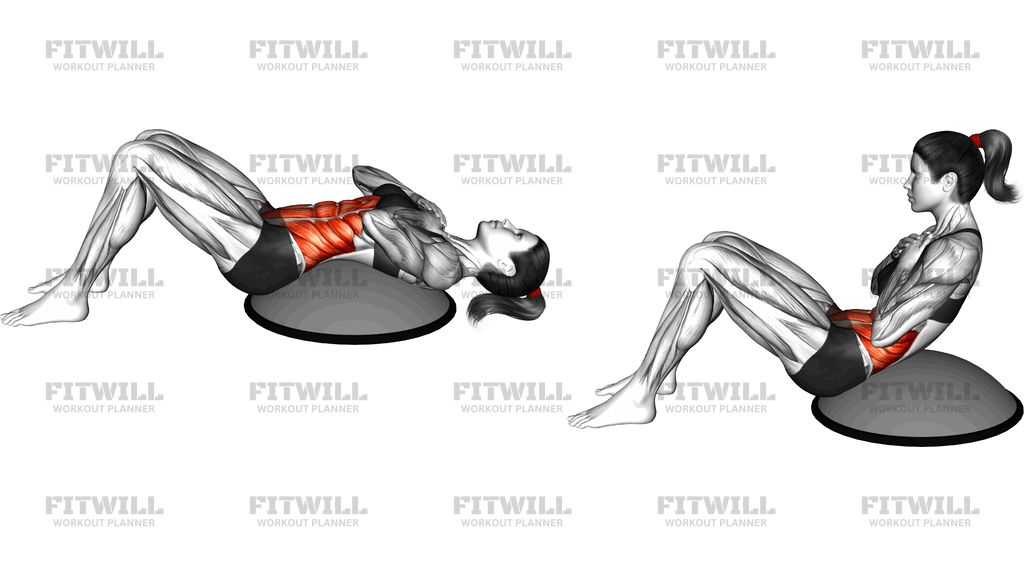
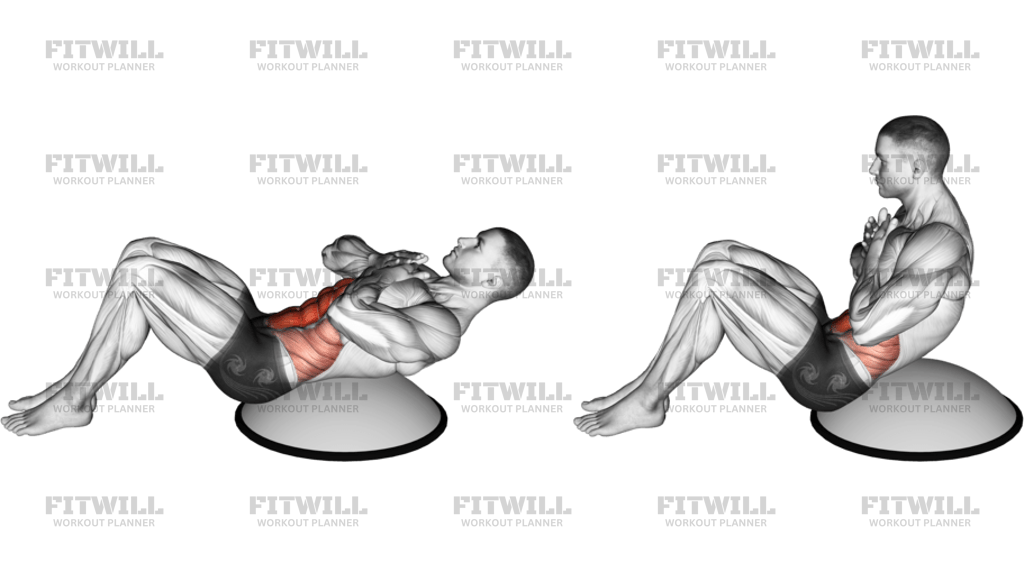
Alternate Straight Leg Raise On Bosu Ball
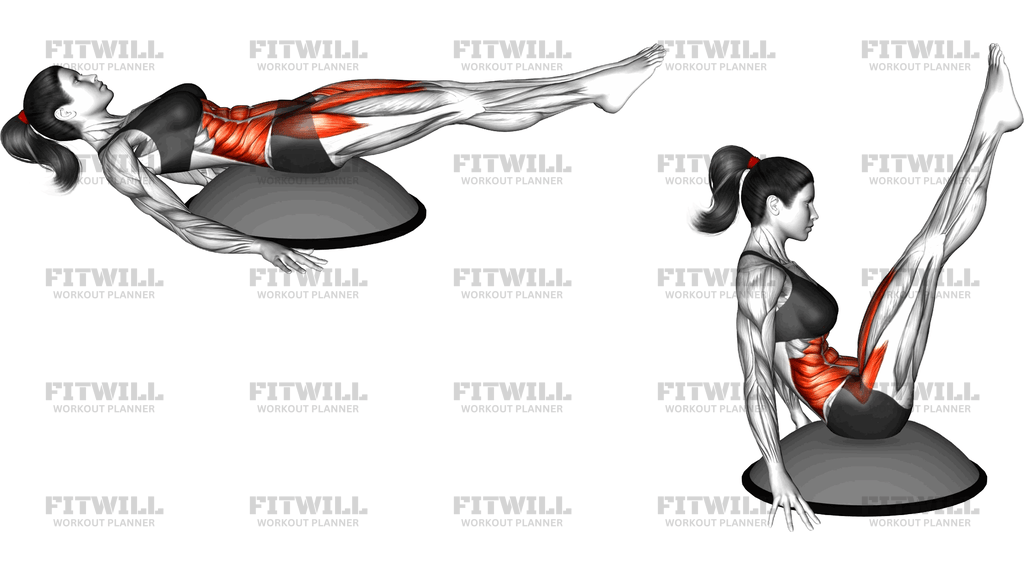
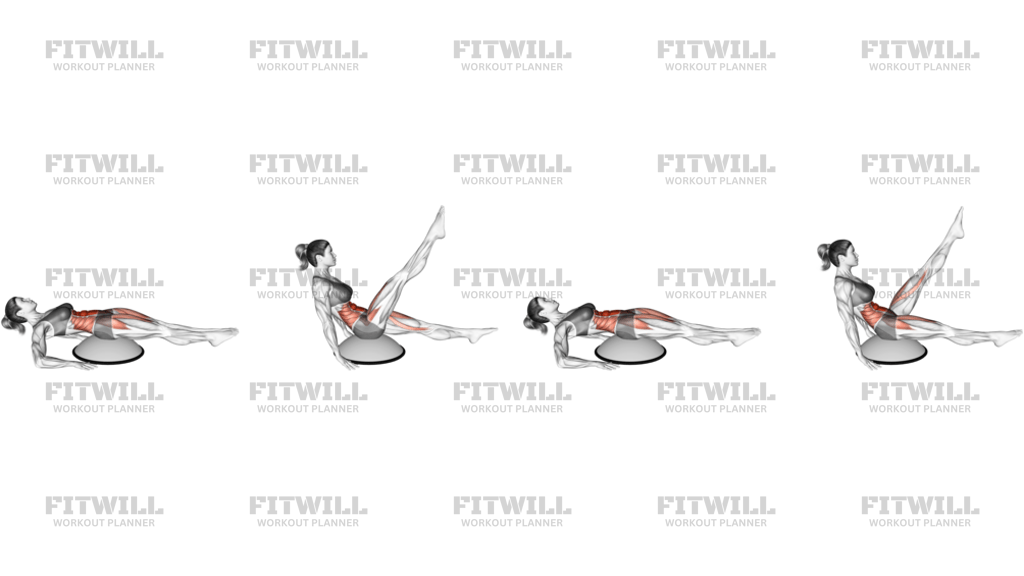
Alternate Straight Leg Raise On Bosu Ball is a BOSU-supported core exercise built around alternating long-lever leg raises. The curved dome creates an unstable base under the pelvis and lower torso, so the movement asks the abs to keep the trunk quiet while one leg lowers and the other lifts. That instability is useful, but only if the setup is clean enough to keep the pelvis from rocking side to side.
The main training emphasis is the rectus abdominis, with the hip flexors helping lift the working leg and the obliques helping resist rotation. In more technical terms, the Rectus abdominis does most of the trunk flexion and anti-extension work, while the External obliques and Transversus abdominis help brace the midsection and the Iliopsoas assists the leg raise. If the low back starts arching hard or the hips begin to twist, the abs are no longer doing the job the movement is meant to train.
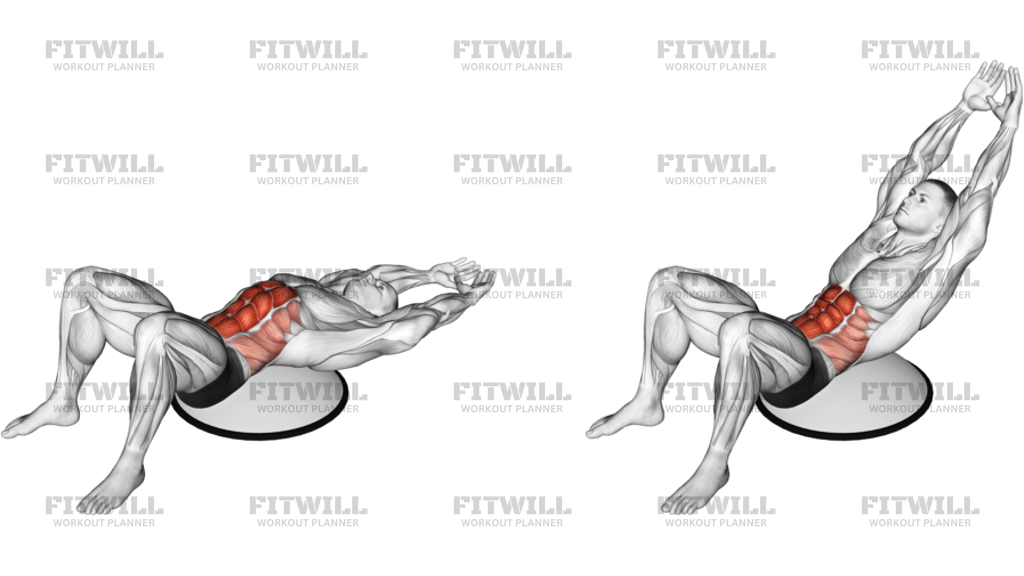
The BOSU ball changes the exercise from a simple floor leg raise into a more demanding stability drill. Because the dome is under the pelvis and low back, your body has to organize around a small support point before the first rep even starts. A good setup means the shoulders, head, and hands are settled, the chest is open, and the lumbar spine stays controlled rather than collapsing into the dome. That makes the alternation cleaner and keeps the tension on the abdominals instead of turning the exercise into a momentum-based hip swing.
Use a slower, more deliberate tempo than you would on the floor. Lift one straight leg until it is nearly vertical, lower it with control, then alternate to the other side without letting the non-working leg drift or bend. The return phase matters just as much as the raise, because that is where the abs have to stop the legs from dropping and the pelvis from tipping. Exhale during the lift, inhale as the leg lowers, and stop the set when you can no longer keep the rib cage down and the low back organized.
This is a strong choice for core-focused sessions, warmups that need abdominal activation, or accessory work after heavier lifts. It is not a race for height or speed. The best reps look quiet through the torso, smooth through the legs, and consistent from side to side. If the BOSU makes the movement too unstable to control, shorten the range, slow the tempo, or move the exercise to the floor before adding more volume.
[ Workout Log & Planner ]
Put your next workout in Fitwill
Keep your plan and training log ready when you are.


Instructions
- Sit on the BOSU dome and lean back until your lower back and sacrum are supported by the curve, then plant your hands on the floor slightly behind your hips for balance.
- Straighten both legs long in front of you with the knees locked softly, toes pointed up, and the pelvis centered on the dome.
- Brace your abs so the rib cage stays down and the low back does not flare off the BOSU as you start the first rep.
- Lift one straight leg toward the ceiling until it is nearly vertical while the other leg stays long and hovering low in front of you.
- Lower that leg slowly until it is close to the floor without letting the torso roll or the supporting leg bend.
- Switch legs and raise the other straight leg through the same path, keeping the motion smooth and even from side to side.
- Keep the hands lightly pressed into the floor and use them only for balance, not to push yourself through the rep.
- Exhale as the leg rises and inhale as it lowers, then reset your pelvis before the next alternation.
- Stop the set when you can no longer keep both legs long and the pelvis steady on the BOSU.
Tips & Tricks
- Set the BOSU so the dome is stable and centered before you sit down; wobble at setup makes the alternation harder to control.
- Keep the movement coming from the hip joint, not from a big swing through the low back or a bounce off the dome.
- If you feel the hip flexors taking over, lower the working leg a little less and slow the top half of the rep.
- Press your palms into the floor just enough to steady yourself; pushing hard with the arms usually hides weak trunk control.
- Keep the non-working leg long instead of letting it bend, because a bent support leg turns the exercise into a different pattern.
- Let the pelvis stay level from side to side; if one hip hikes every rep, shorten the range and clean up the brace first.
- A slower lowering phase gives the abs more work than a fast kick up and drop down.
- Choose a rep count that lets every alternating raise look the same, since fatigue shows up quickly in this long-lever position.
Frequently Asked Questions
What does Alternate Straight Leg Raise On Bosu Ball work most?
It mainly targets the rectus abdominis, with the obliques and deep core helping keep the pelvis steady.
Can beginners perform this exercise?
Yes, but beginners should keep the range small and slow the lowering phase so they can control the BOSU instability.
Where should my hands go during the set?
Place your hands on the floor slightly behind your hips. They are there to balance you, not to drive the raise.
How high should I lift each leg?
Lift the working leg until it is close to vertical, but only if the low back stays organized and the pelvis does not tip.
Why use a BOSU ball instead of the floor?
The dome adds an unstable support point under the pelvis, which makes the abs work harder to stop rocking and rotation.
Why do my hip flexors feel this so much?
They help lift the straight leg, so some hip flexor work is normal. If they dominate, reduce the range and slow the descent.
What is the biggest form mistake?
Letting the low back arch and the hips rock side to side is the main mistake, because it shifts the work away from the abs.
How can I make the exercise harder without adding weight?
Use a slower lowering phase, keep the non-working leg lower to the floor, or increase the number of clean alternating reps.