Myotatic Crunch On Bosu Ball
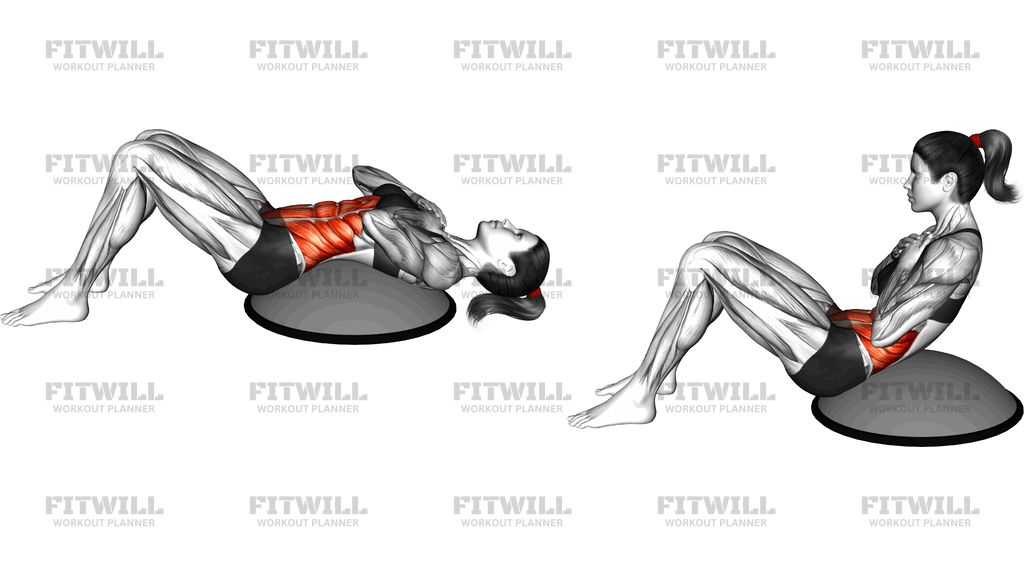
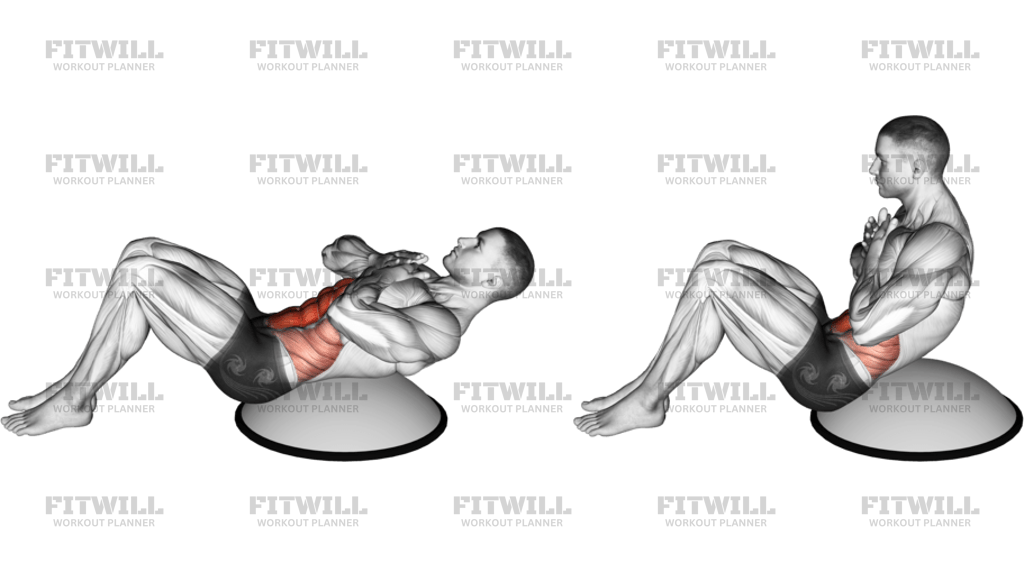
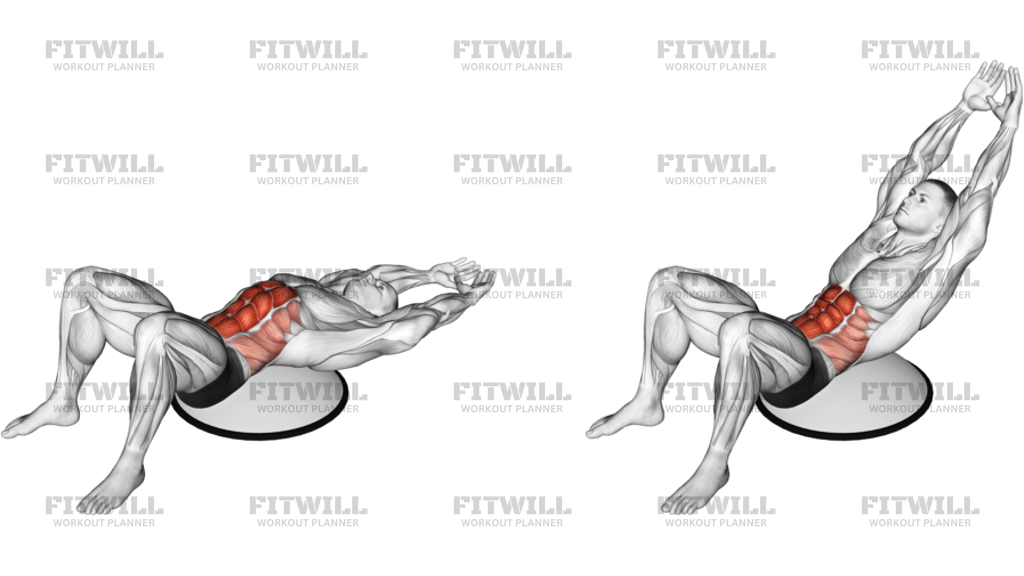
Myotatic Crunch On Bosu Ball is a supported core flexion exercise done with the upper back draped over the rounded side of a Bosu Ball. The setup creates a small stretch through the abdominals before each crunch, so the movement feels more elastic and reactive than a flat-floor crunch while still staying low impact. The exercise is mainly used to train the rectus abdominis with help from the obliques and hip flexors.
Because the torso starts slightly extended over the dome, the setup matters as much as the crunch itself. If the Bosu Ball sits too high on the back, the neck takes over. If it sits too low, the hips and lower back become the main support. The best version keeps the feet planted, the knees bent, and the rib cage free to move so the abs can shorten cleanly from a lengthened position.
On each repetition, the goal is to curl the ribs toward the pelvis rather than yanking the head forward. The arms reaching overhead in the bottom position make the lever longer and increase the challenge, but the motion should still be controlled and deliberate. A good rep finishes with the shoulder blades and upper back coming slightly off the dome before you lower back into the stretch with control.
Myotatic Crunch On Bosu Ball is useful as accessory core work, warm-up activation, or a conditioning block when you want abdominal work without heavy spinal loading. It can also help lifters and athletes practice trunk control in a position that challenges balance a little more than a floor crunch. Keep the range pain-free and avoid forcing the lower back into a hard arch at the bottom.
This is not a movement to rush for fatigue. The quality comes from crisp repetition, a smooth transition between stretch and contraction, and a neck that stays quiet while the trunk does the work. If the shoulders or hip flexors start dominating, reduce the range, shorten the arm reach, or slow the descent until the abs regain control.
[ Workout Log & Planner ]
Put your next workout in Fitwill
Keep your plan and training log ready when you are.


Instructions
- Place the Bosu Ball dome side up on the floor and sit with your upper back resting across the rounded surface, knees bent and feet flat about hip-width apart.
- Walk your feet forward until your lower back and mid-back are supported on the dome, then let your head rest back without pinching the neck.
- Reach both arms overhead so your biceps are near your ears and your ribs stay stacked over your pelvis instead of flaring.
- Take a breath in at the bottom, then brace your midsection as if you are preparing for a short, sharp curl.
- Exhale and curl your ribs toward your pelvis, lifting your shoulder blades and upper back slightly off the Bosu Ball.
- Bring your hands forward over your chest as you crunch, keeping the chin gently tucked and the eyes aimed upward.
- Pause briefly at the top when the abdominals are fully shortened, then stop before the hips start to drive the motion.
- Lower slowly back over the dome until your upper back is supported again, and inhale as you return to the stretched position.
- Reset your feet and arm position before the next rep, or step off safely if the neck or low back begins to feel crowded.
Tips & Tricks
- Keep the Bosu Ball under the mid-back, not the neck or the low back, so the crunch starts from the abs instead of the spine.
- If your neck wants to lead, keep the chin slightly tucked and think about lifting the sternum instead of the head.
- A smaller arm reach makes the movement easier; overhead arms increase the lever and make the abdominal brace work harder.
- Do not slam into a deep arch at the bottom. A mild stretch is enough for the myotatic effect without irritating the lumbar spine.
- Keep both feet planted the whole time so the torso can curl instead of rocking around on the dome.
- Exhale fully on the crunch to help the ribs drop and the abs shorten more cleanly.
- Slow the lowering phase if the movement starts to feel like momentum rather than abdominal control.
- If the hip flexors take over, bring your feet a little farther away and shorten the top range slightly.
Frequently Asked Questions
What muscles does Myotatic Crunch On Bosu Ball work?
It primarily targets the rectus abdominis, with the obliques and deep core helping stabilize the torso while the hips assist with control.
Is Myotatic Crunch On Bosu Ball good for beginners?
Yes, if the range stays small and the neck stays relaxed. Beginners should start with hands reaching only partway overhead and focus on smooth curls instead of high reps.
Where should the Bosu Ball sit during the crunch?
The dome should support the mid-back and lower ribcage. If it sits too high, the neck works too hard; if it sits too low, the low back and hips take over.
How far should I crunch on the Bosu Ball?
Only curl until the shoulder blades and upper back lift slightly off the dome. This is a short, controlled crunch, not a full sit-up.
Why are the arms overhead in Myotatic Crunch On Bosu Ball?
The overhead reach lengthens the lever and creates a stronger stretch through the abs before the crunch. If that feels too difficult, bring the hands forward to reduce the load.
What are the most common mistakes with this exercise?
Pulling the head forward, flaring the ribs, and bouncing off the Bosu Ball are the big ones. The movement should feel like a rib-to-pelvis curl with a quiet neck.
Can I do Myotatic Crunch On Bosu Ball if my lower back is sensitive?
Only if the dome position feels comfortable and the bottom stretch stays mild. If the low back pinches, reduce the range or choose a floor crunch instead.
How do I make Myotatic Crunch On Bosu Ball harder?
Use a bigger overhead reach, slow the lowering phase, or pause longer at the top. Each change increases abdominal demand without needing external load.