Jumping Pull-Up
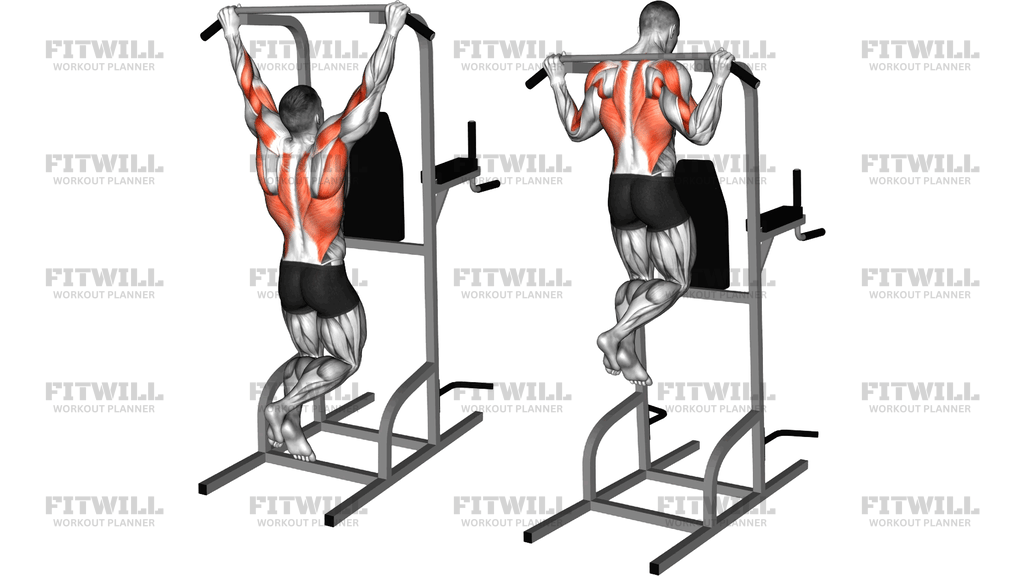
Jumping Pull-Up is a bodyweight pulling exercise performed on a pull-up bar with a small jump to help you reach the top position. It is a practical way to train the vertical pulling pattern when a strict pull-up is not yet available, while still teaching the same shoulder, elbow, and scapular control you need for stronger pulling work. The jump should assist the first part of the rep, not replace the pull.
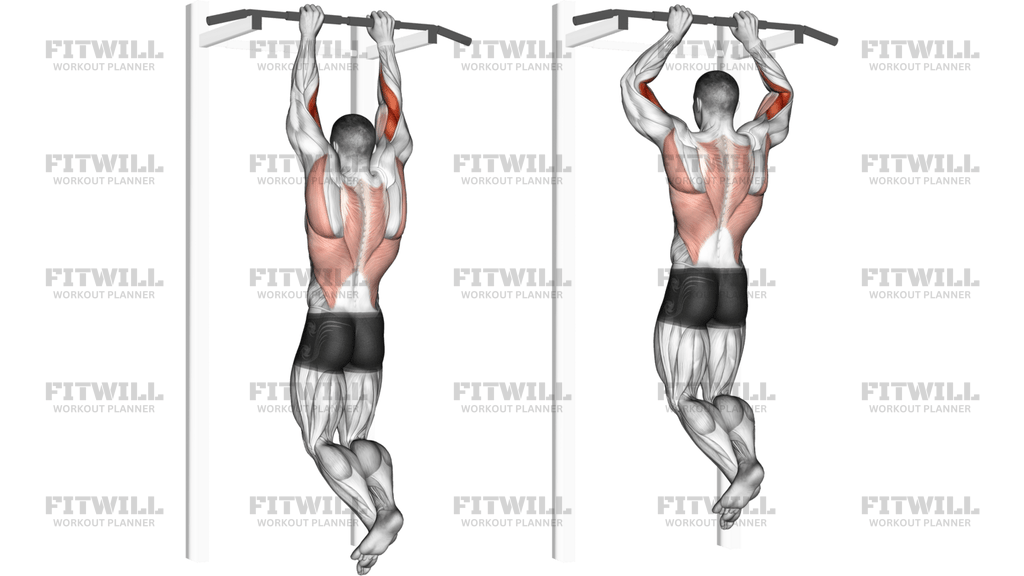
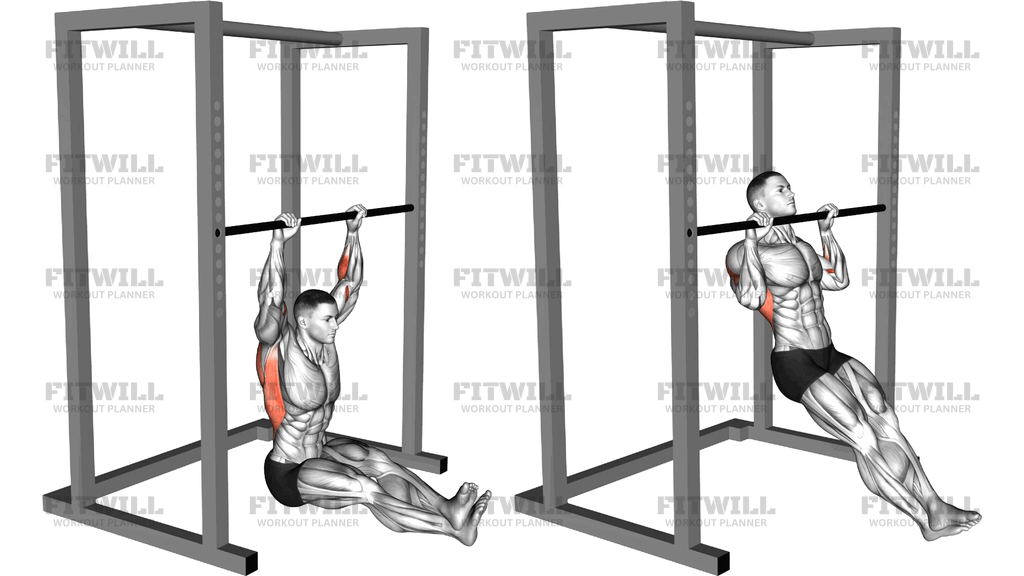
The main emphasis is on the lats, with the upper back, biceps, and forearms helping to stabilize the shoulder blades and control the elbows. In anatomy terms, the primary work centers on the Latissimus dorsi, with assistance from the Rhomboids, Biceps brachii, and Forearm flexors. The quality of the exercise depends on how cleanly you set the body before takeoff: a tall torso, an overhand grip, and a controlled jump make the top position much easier to hold without shrugging or swinging.
From the floor, stand directly under the bar, take a grip slightly wider than shoulder width, and use a small hop to bring your chin over the bar. At the top, keep the chest lifted and the shoulders packed while you pull the elbows down and back. Then lower slowly to straight arms with control, letting the shoulders open under tension instead of collapsing. The movement should look smooth and repeatable, with the jump staying small and consistent from rep to rep.
This exercise is useful for beginners building toward full pull-ups, for accessory volume when strict reps are limited, and for warmups or technique blocks that need a vertical pull without heavy loading. It can also be used to reinforce a controlled eccentric, which is often where pull-up strength is built fastest. Keep the motion honest: if the legs are doing most of the work, if the body swings, or if the shoulders shrug into the ears, reduce the jump or switch to a different progression. Clean position matters more than rep count here.
Fitwill
Log Workouts, Track Progress & Build Strength.
Achieve more with Fitwill: explore over 9600 exercises with images and videos, access built-in and custom workouts, perfect for both gym and home sessions, and see real results.
Start your journey. Download today!




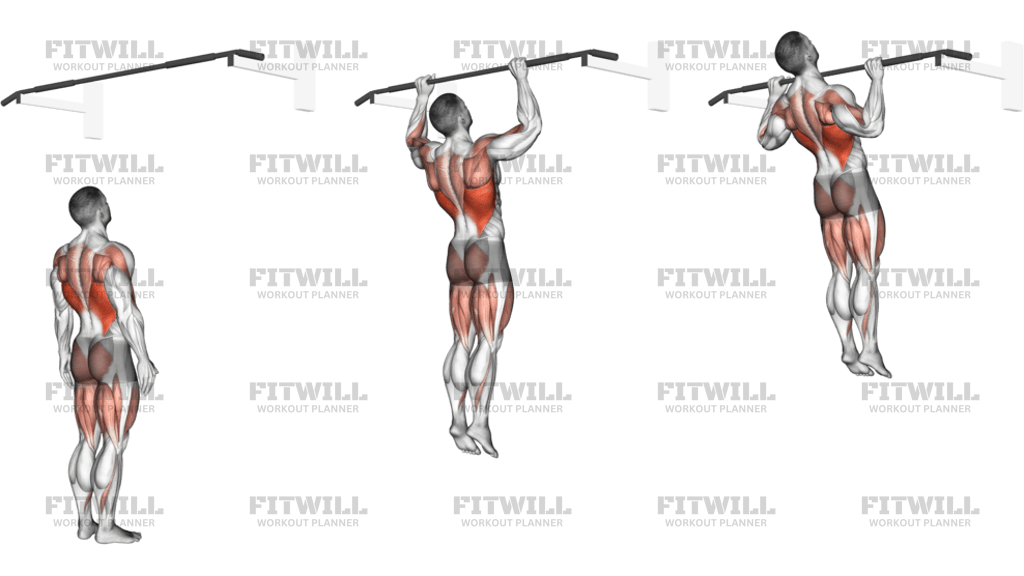
Instructions
- Stand directly under the pull-up bar and take an overhand grip slightly wider than shoulder width.
- Set your feet under your hips, bend your knees a little, and keep your torso tall before you jump.
- Brace your midsection, keep your ribs down, and let your shoulders stay away from your ears.
- Use a small jump to bring your chin over the bar without swinging your legs behind you.
- Pull your elbows down and back so your chest stays proud at the top position.
- Pause briefly with control at the top instead of bouncing straight back down.
- Lower yourself slowly until your arms are straight and your shoulders are controlled.
- Reset your feet under the bar and repeat for the planned number of repetitions.
Tips & Tricks
- Use the smallest jump that still gets your chin above the bar.
- Keep the grip just outside shoulder width so the elbows can drive down cleanly.
- Think about pulling the bar to your upper chest instead of yanking your chin forward.
- If your shoulders creep toward your ears, reduce the jump and reset the top position.
- Take two to four seconds on the lowering phase to build more pulling strength.
- Keep your legs quiet; any big kick usually means the jump is too aggressive.
- Exhale as you pull up and keep the torso braced while you lower.
- Stop the set when you can no longer control the descent or hold the top position.
Frequently Asked Questions
What muscle does Jumping Pull-Up target most?
The lats are the primary target, with the upper back, biceps, and forearms assisting.
Can beginners perform this exercise?
Yes. It is often used as a progression toward strict pull-ups because the jump reduces the amount of bodyweight you have to lift.
How is a jumping pull-up different from a regular pull-up?
The jump helps start the rep, so you can focus on the top pull and the controlled lower instead of grinding the full ascent.
Should I jump hard to get higher?
No. A small jump is usually enough; if you explode upward, the legs take over and the pulling muscles do less of the work.
What should I feel at the top of the rep?
You should feel the lats and upper back holding you in place while the elbows stay pulled down and the shoulders stay packed.
Can I use an underhand grip instead?
You can, but that turns it into more of a chin-up pattern and shifts the emphasis toward the biceps.
Why do my shoulders feel shrugged during this exercise?
That usually means the jump is too big or the top position is collapsing. Reduce the assistance and keep the chest tall.
How do I progress beyond jumping pull-ups?
Use a smaller jump, lengthen the lowering phase, add pauses at the top, and eventually move to band-assisted or strict pull-ups.