Cable Vertical Pallof Press
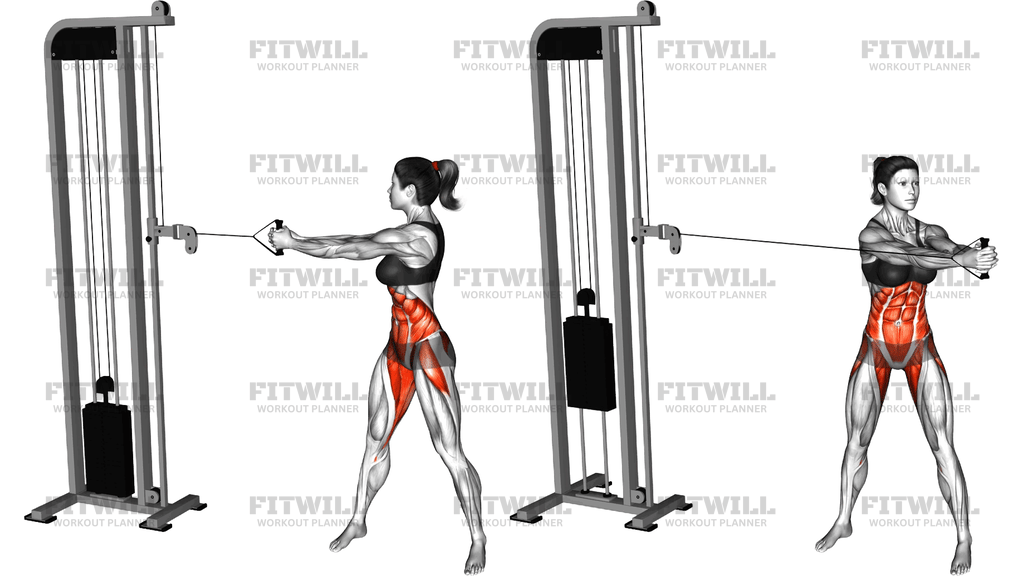
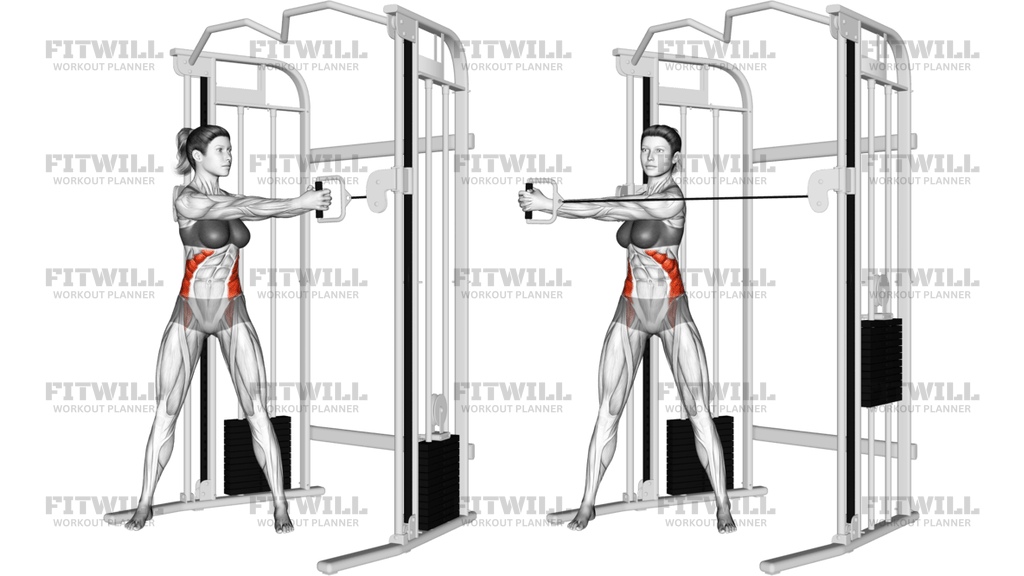
Cable Vertical Pallof Press is a cable core exercise built around resisting rotation and side bend while you press a handle from chest height to overhead. The cable wants to pull you sideways, so each repetition asks your obliques, deep abdominals, and trunk stabilizers to keep the ribs, pelvis, and shoulders stacked while the arms travel vertically.
The setup is the whole exercise. You stand sideways to the cable machine with the handle attached to a low pulley, then hold the handle close to the sternum before pressing it straight up. If your stance is too narrow, the cable line is too slack, or your torso is already leaning toward the stack, the rep turns into a compensation drill instead of a core-strength exercise. A stable base and a clean starting angle let the trunk do the work.
On the press, the handle should travel in a controlled line overhead rather than drifting forward or out to the side. Keep the glutes lightly engaged, ribs down, and chin neutral so the low back does not arch to fake extra range. The goal is not just to move the load up; it is to keep the body quiet while the cable tries to rotate and bend you away from the machine.
This movement fits well in a warm-up, core block, or accessory slot when you want anti-rotation strength that carries over to presses, carries, lunges, and overhead work. It can be scaled easily with lighter resistance and a shorter range, but it should still feel strict on both sides. If the shoulders shrug, the torso leans, or the hips twist to finish the rep, reduce the load and recheck the cable angle before continuing.
[ Workout Log & Planner ]
Put your next workout in Fitwill
Keep your plan and training log ready when you are.


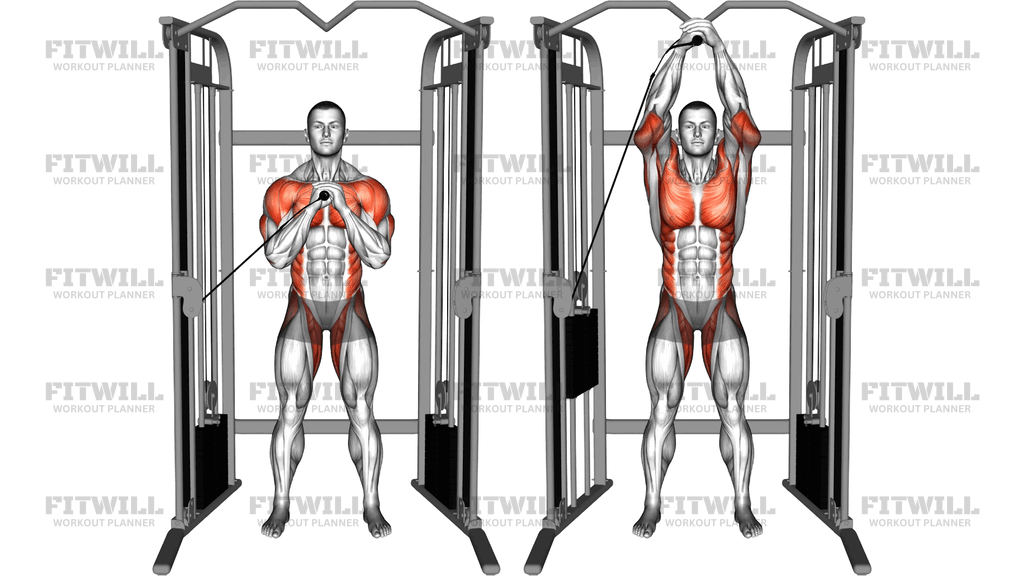
Instructions
- Set a single handle on a low cable pulley and stand sideways to the machine at arm's length from the stack.
- Hold the handle at upper-chest height with both hands, elbows close, and feet about hip width apart.
- Step out until the cable has steady tension and your torso stays tall without leaning toward the stack.
- Brace your midsection, soften your knees, and keep your ribs stacked over your pelvis.
- Press the handle straight up overhead on a vertical line while resisting the cable's sideways pull.
- Finish with the arms extended overhead, shoulders level, and no twist through the hips or rib cage.
- Lower the handle back to the chest along the same path under control.
- Complete all reps on one side, then turn around and repeat on the other side.
Tips & Tricks
- If the cable yanks you sideways at the start, step a little farther out before you begin pressing.
- Keep the handle path vertical; if it drifts forward, you are turning the move into a shoulder press.
- Do not let the ribs flare at lockout, because that usually means the lower back is stealing the finish.
- Squeeze the glutes lightly so the pelvis stays level while the arms move.
- Press in a slow, even tempo; this exercise is about resisting rotation, not driving a fast rep.
- Use a load that lets you keep the torso square on both the concentric and lowering phases.
- Breathe out as the handle travels overhead, then inhale as you lower it back to the chest.
- Stop the set if the shoulder closest to the machine hikes up or the torso starts to twist.
Frequently Asked Questions
What does Cable Vertical Pallof Press train most?
It mainly trains the obliques and deep core muscles to resist rotation and side bending while the arms press overhead.
Why do I stand sideways to the cable machine?
Standing sideways creates the sideways pull that your trunk has to resist. That force is what makes the exercise work.
Should the handle move in a straight line overhead?
Yes. The handle should travel vertically from the chest to overhead without drifting forward, back, or out toward the stack.
Can beginners use this variation?
Yes. Start with a light load and a stable stance, then shorten the range if the overhead position feels hard to control.
What is the most common form mistake?
The biggest mistake is leaning or twisting to finish the press instead of keeping the ribs and pelvis stacked.
Why does this exercise sometimes feel like a shoulder drill too?
Your shoulders still have to press the handle overhead, but the torso should stay quiet. If the shoulders do all the work and the trunk collapses, the load is too heavy.
How heavy should the cable be?
Light to moderate. You should be able to press smoothly without the stack pulling you out of position or forcing a rib flare.
What should I do if my low back arches at the top?
Lower the load, keep the ribs down, and stop just before your torso starts to extend. The rep should finish with the trunk stacked, not arched.