Underhand-Grip Inverted Back Row
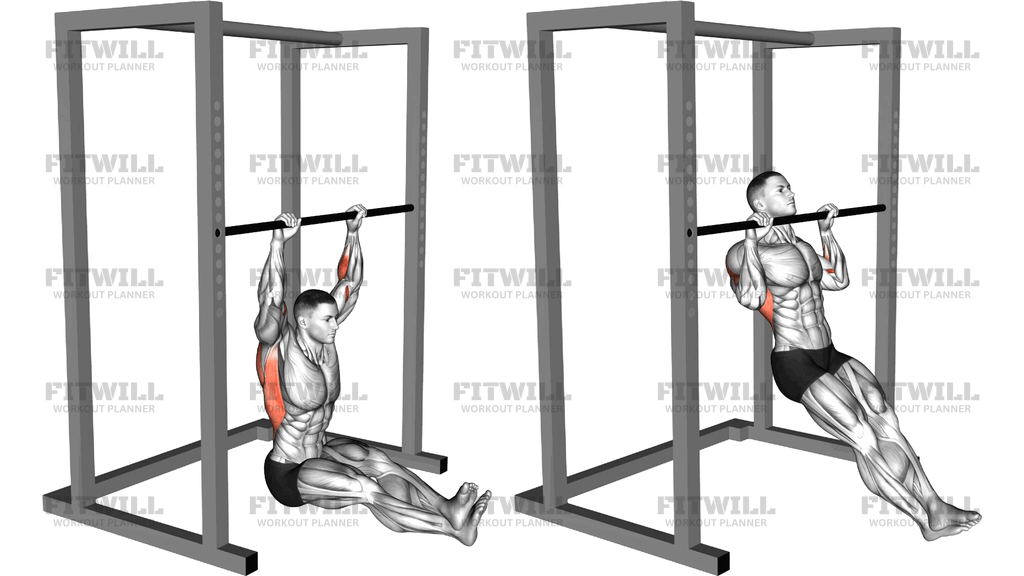
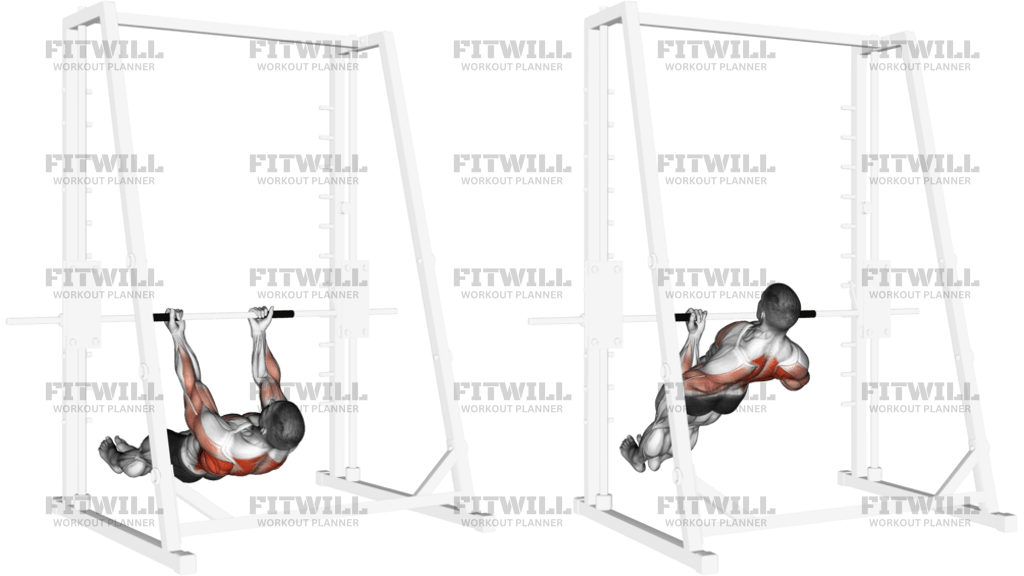
Underhand-Grip Inverted Back Row is a bodyweight row performed under a fixed bar with a supinated grip, and the image shows a straight-body position with the heels planted on the floor while the chest travels up toward the bar. It is a useful back and arm exercise for building horizontal pulling strength, upper-back control, and the ability to keep the torso rigid while the elbows drive back.
The underhand grip changes the feel of the row. Compared with an overhand grip, this version usually lets you keep the elbows a little closer to the ribs and puts more work on the biceps along with the lats, rhomboids, and mid traps. That does not mean it is only an arm exercise; the torso still has to stay braced so the pull comes from the upper back instead of from swinging or hips dropping.
The setup matters because the whole exercise depends on body angle and bar height. A lower bar and a more horizontal body make the row harder, while stepping the feet closer to the rack or bending the knees makes it easier. Start with the bar at a height that lets you hang underneath it with straight arms, then lock in a line from shoulders through hips to heels before the first pull. If the body sags or the ribs flare, the row stops being clean and turns into a loose shrug.
Each repetition should travel in a clear path: pull the chest toward the bar, keep the wrists stacked under the forearms, and finish with the shoulder blades squeezed without jamming the neck forward. Lower under control until the arms are straight again and the shoulders stay organized. Exhale as you row up, then inhale as you return to the start.
This exercise fits well as an accessory row, a beginner-friendly pulling option, or a way to train back volume without adding heavy external load. It is also easy to scale by changing foot position, body angle, or range of motion. Keep the movement strict and pain-free; if the shoulders feel pinched or the wrists complain, make the body more upright or reduce the load on the bar by changing the setup.
[ Workout Log & Planner ]
Put your next workout in Fitwill
Keep your plan and training log ready when you are.


Instructions
- Set a fixed bar or Smith bar at a height that lets you hang underneath it with straight arms and an underhand grip slightly narrower than shoulder width.
- Lie beneath the bar and plant your heels on the floor so your body forms one long line from shoulders to heels.
- Hold the bar with palms facing you, then lift the chest slightly, tighten the glutes, and keep the ribs down before you start the pull.
- Pull your chest toward the bar by driving the elbows back and down, not by shrugging the shoulders toward your ears.
- Keep the wrists straight and the forearms vertical as the bar moves toward your lower chest or upper ribs.
- Squeeze the shoulder blades together briefly at the top while keeping the neck long and neutral.
- Lower yourself slowly until the arms are straight again and the torso stays rigid.
- Breathe out on the pull, breathe in on the way down, and reset the body line before the next rep.
Tips & Tricks
- A more horizontal body angle makes the row harder; step the feet farther forward only if you can keep the torso from sagging.
- If you need an easier version, bend the knees or stand the body a little taller under the bar.
- Keep the chest moving to the bar, not the chin reaching forward first.
- Do not let the elbows flare wide; a slightly tucked path usually fits the underhand grip better.
- Pause for a beat at the top so the set is driven by back contraction, not a quick bounce.
- Keep the heels rooted into the floor so the pull does not turn into a hip thrust.
- Use a grip that feels secure in the wrists; if the forearms or wrists crank back, narrow the stance on the bar a little.
- Stop the set when you can no longer keep the body in a straight line on the lowering phase.
Frequently Asked Questions
What muscles does Underhand-Grip Inverted Back Row work most?
It targets the upper back and traps strongly, while the lats, rhomboids, and biceps help drive the row.
How does the underhand grip change the exercise?
A supinated grip usually keeps the elbows closer to the body and gives the biceps more help during the pull.
Should my heels stay on the floor during the row?
Yes, the image shows a heel-planted setup, and keeping the feet anchored helps preserve a rigid body line.
How high should I pull my chest?
Aim to bring the lower chest or upper ribs to the bar without craning your neck or losing torso tension.
What is the most common mistake with this row?
Letting the hips sag or the shoulders shrug usually turns the rep into momentum instead of a clean back pull.
Is this exercise beginner-friendly?
Yes, beginners can use a more upright body angle or bent knees to reduce the load and keep the movement strict.
How do I make the exercise harder?
Make the body more horizontal, step the feet farther from the bar, or slow the lowering phase while keeping the same grip.
Can I substitute a TRX or rings version?
Yes, a supinated suspension-row variation works similarly, but the fixed bar version usually feels more stable.