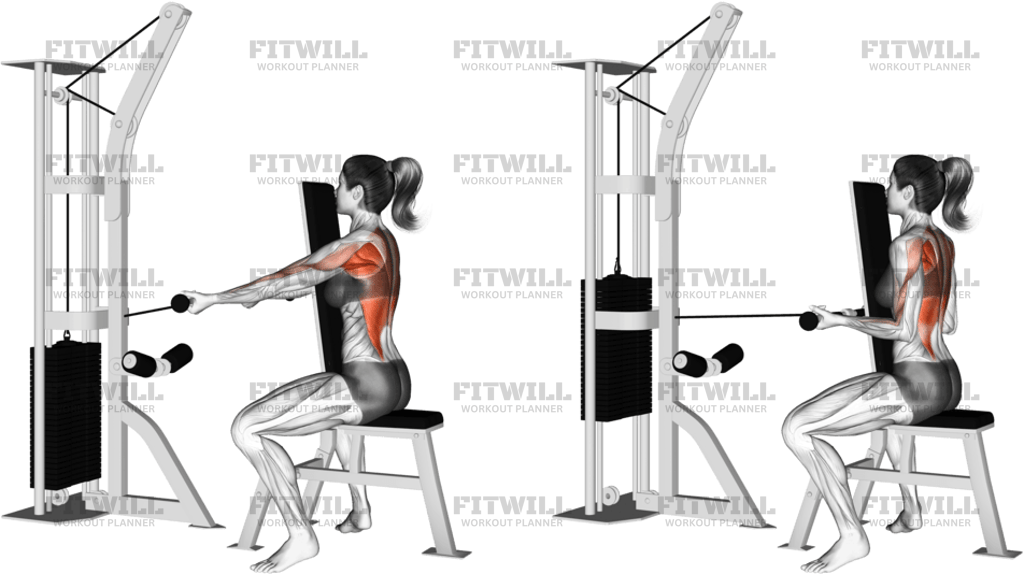
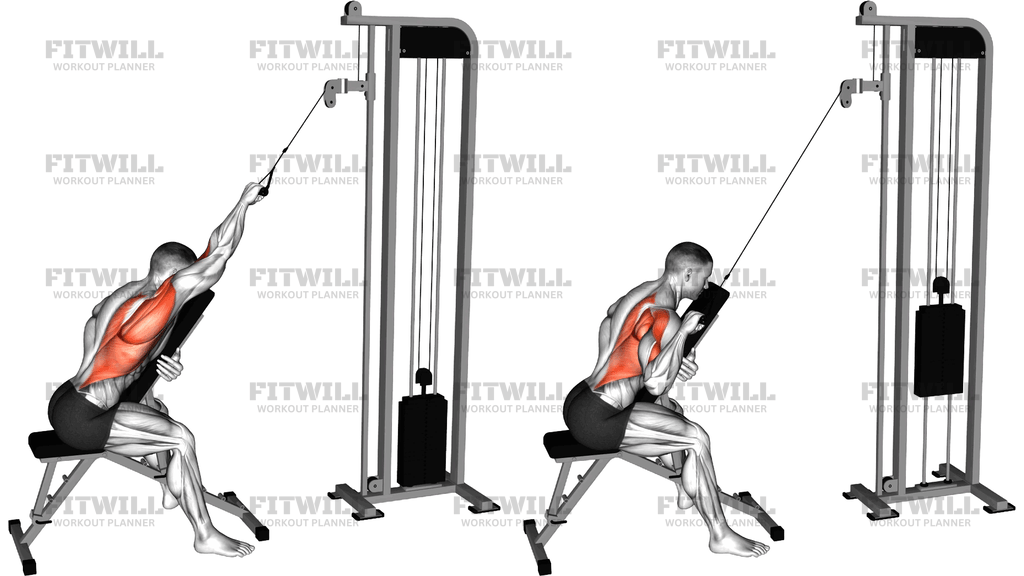
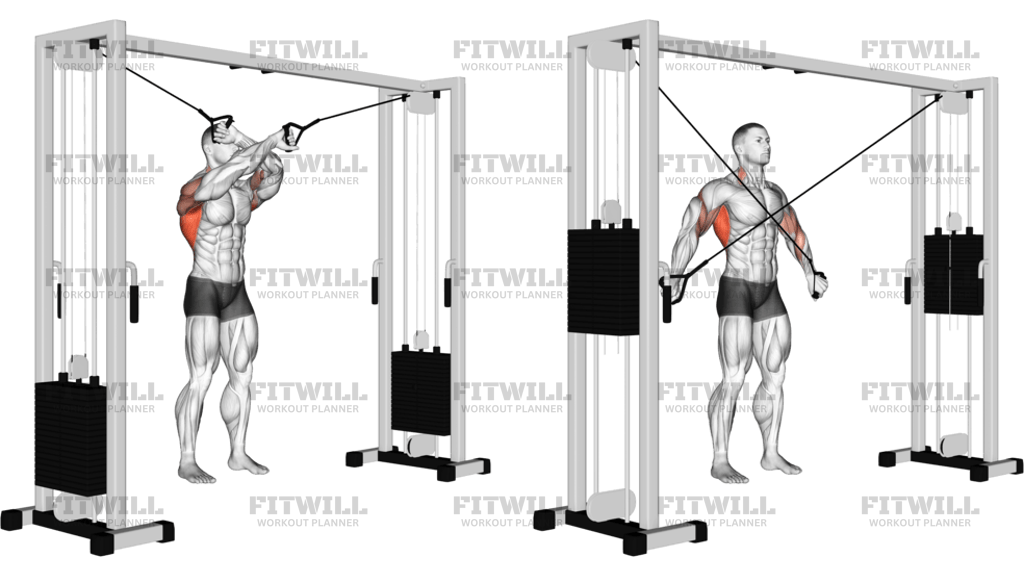
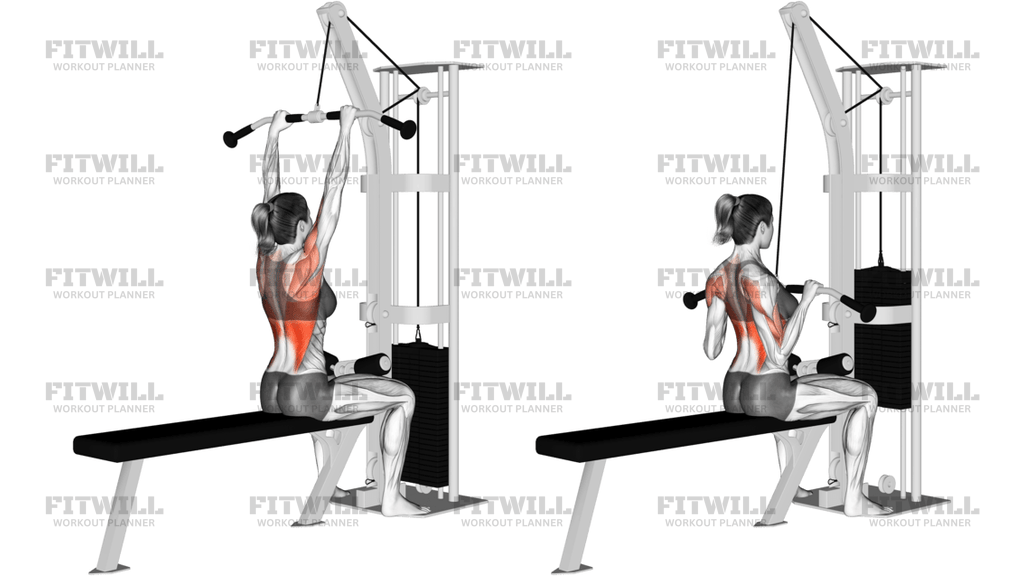
Cable Bent-Over Row With Bar
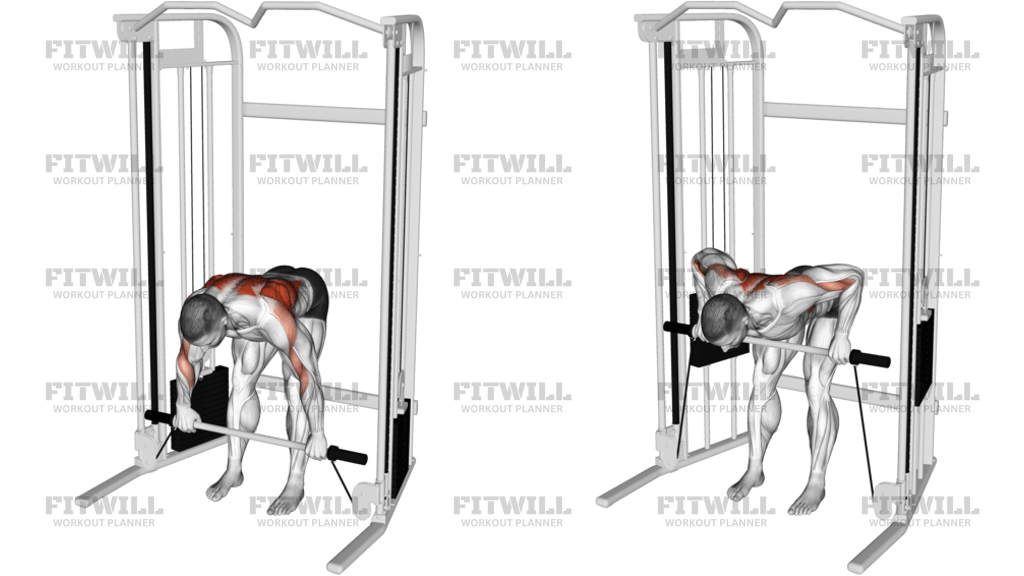
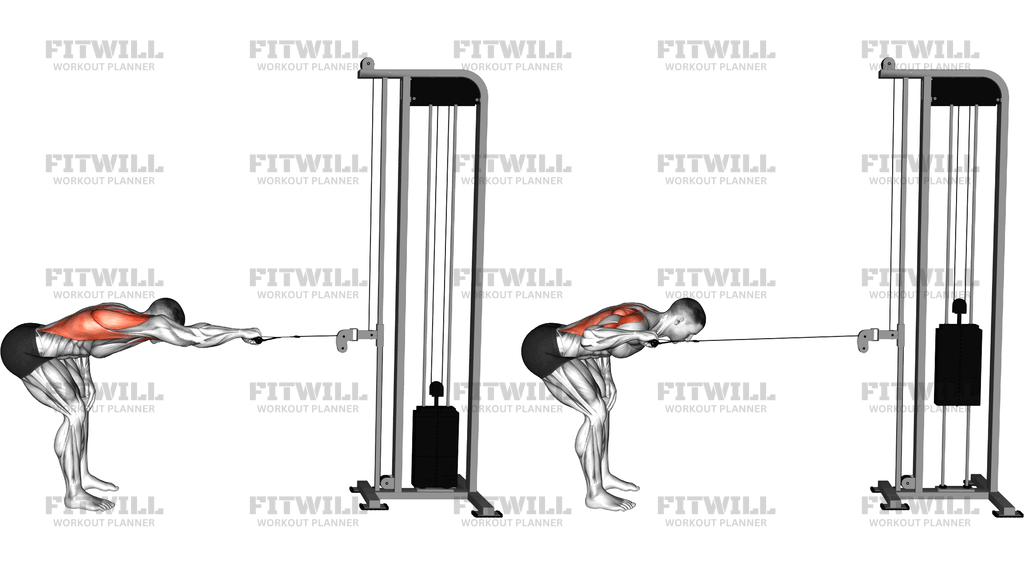
Cable Bent-Over Row With Bar is a hinged cable rowing exercise that keeps the lats, upper back, rear shoulders, biceps, and forearms working against steady tension from the low pulley. The straight bar gives you a fixed hand position, so the quality of the rep depends on how well you hold the torso angle, keep the bar path tight, and avoid turning the movement into a standing pull.
The main reason this exercise is useful is that it trains a strong rowing pattern without losing the load from the bottom position. With the torso pitched forward, the lats have to help initiate the pull while the rhomboids and mid-back finish the squeeze, and the cable keeps tension on the way back down. That makes Cable Bent-Over Row With Bar a practical choice for back hypertrophy, accessory work after heavy presses or deadlifts, and any session where you want strict pulling volume.
The setup matters more here than in many machine rows. Hinge at the hips, keep a soft bend in the knees, and set your torso close to parallel with the floor so the cable tracks cleanly toward your lower ribs or upper abdomen. If you stand too tall, the row becomes a partial upright pull; if you round the lower back, the set turns into a low-back endurance test instead of a back exercise.
During each rep, let the arms start long, then drive the elbows back while keeping the bar close to your body. The bar should travel in a controlled line toward the lower ribs, with the shoulders staying down instead of shrugging forward at the top. Breathe in as the bar lowers and exhale as you pull, then let the cable pull your arms forward under control without losing the hinge.
Cable Bent-Over Row With Bar is especially useful when you want repeatable technique and a clear feel for the lats and upper back, not just heavier loading. It is beginner-friendly if the hinge is shortened and the weight is kept honest, but the exercise stops being productive once the torso starts swinging or the lumbar spine starts taking over. Use the bar path, torso angle, and tempo to judge the set before the weight does.
[ Workout Log & Planner ]
Put your next workout in Fitwill
Keep your plan and training log ready when you are.


Instructions
- Attach a straight bar to the low cable pulley and stand facing the machine with your feet about hip-width apart.
- Grip the bar with an overhand hold slightly wider than shoulder width and let the bar hang in front of your thighs.
- Hinge your hips back until your torso is close to parallel with the floor, keeping a soft bend in your knees.
- Set your ribs down, brace your midsection, and keep your neck long with your eyes on the floor a few feet ahead.
- Start each rep with your arms straight and the bar hanging just below knee level or near the top of your shins.
- Pull the bar toward your lower ribs or upper abdomen by driving your elbows back and keeping them close to your sides.
- Squeeze your shoulder blades together briefly at the top without standing up or shrugging your shoulders.
- Lower the bar slowly until your arms are straight again and the cable has pulled your shoulders forward only as far as you can control.
- When the set is finished, step closer to the pulley, stand up by extending your hips and knees, and re-rack the bar with control.
Tips & Tricks
- Keep the torso angle fixed; if your chest rises every rep, the weight is too heavy for a true bent-over row.
- Think about pulling the elbows toward your back pockets to keep the lats involved instead of turning it into an upper-trap shrug.
- Let the bar skim close to the thighs on the way up and down so the cable does not pull you forward into a sloppy arc.
- A shoulder-width-plus grip usually keeps the wrists happier and gives the bar room to clear the torso at the top.
- Use straps if your grip gives out before your back does, especially on higher-rep sets.
- Pause only long enough to feel the upper-back squeeze; turning the top into a long hold often makes the lower back compensate.
- Lower the bar for about two to three seconds so the cable does not yank your shoulders out of position.
- If your lower back starts burning more than your mid-back, shorten the hinge slightly and reduce the load.
Frequently Asked Questions
What Muscles Does Cable Bent-Over Row With Bar Work?
The lats are the main target, with the rhomboids, rear shoulders, biceps, and forearms helping through the pull and return.
How Should The Bar Travel In Cable Bent-Over Row With Bar?
Pull the bar toward your lower ribs or upper abdomen, not your chest. Keeping the path tight to the body helps the lats and mid-back do the work.
Can Beginners Do Cable Bent-Over Row With Bar?
Yes, if they can hold a hip hinge without rounding the lower back. Start light, use a shorter range if needed, and keep the bar path strict.
Why Does My Lower Back Take Over On Cable Bent-Over Row With Bar?
Usually the load is too heavy or the torso angle keeps changing. Reduce the weight, hold the hinge steady, and let the elbows move instead of the whole body.
Should I Use A Pronated Or Supinated Grip On The Bar?
The standard version uses an overhand grip. A palms-up grip changes the feel and is only worth using if the machine setup allows it comfortably.
How Bent Over Should I Be For Cable Bent-Over Row With Bar?
Your torso should be close to parallel with the floor, with a soft knee bend and a neutral spine. If you stand too tall, the row stops loading the back the same way.
What If My Grip Fails Before My Back Does?
Use lifting straps or a slightly lighter load so grip does not cut the set short. The cable row should still feel anchored in the lats and upper back.
Is Cable Bent-Over Row With Bar Better Than A Machine Row?
It depends on the goal. The cable version gives more constant tension and usually asks more from your hinge and trunk position.