Bird Dog
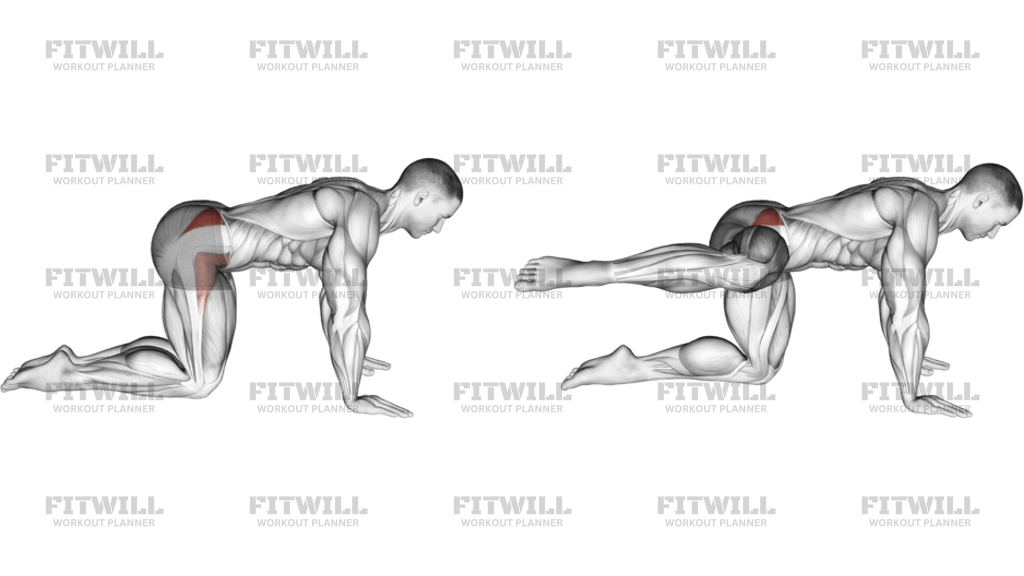
Bird Dog is a bodyweight floor exercise performed on hands and knees, where one arm and the opposite leg extend at the same time while the trunk stays quiet. It is a low-load way to train hip extension, trunk stiffness, and coordination without needing to chase big external resistance. The value of the movement comes from staying square through the pelvis and ribs while the limbs reach away from the body.
The main target is the glutes, with the hamstrings, deep core, and lower back helping keep the spine and pelvis from rotating or sagging. In anatomy terms, the prime mover is the Gluteus maximus, with support from the Biceps femoris, Rectus abdominis, and Erector spinae. That makes Bird Dog useful for glute activation, trunk control, and clean contralateral coordination.
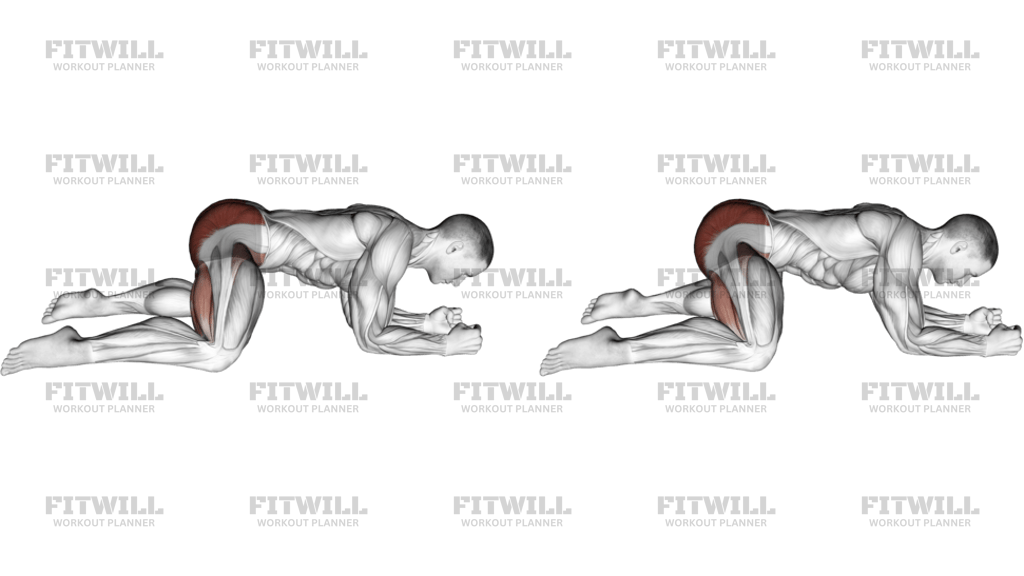
The setup matters more than most people expect. Start on all fours with your hands under your shoulders and knees under your hips, then spread the fingers and press the floor away so the upper back does not collapse. Brace lightly before each rep, keep the neck long, and set the pelvis in a neutral position before you lift either limb. If the base position is unstable, the rep usually turns into rocking instead of controlled extension.
On each repetition, reach one arm forward and the opposite leg back in a long line rather than swinging them up high. The goal is to lengthen through the fingertips and heel while keeping the torso level and the hips facing the floor. Hold the top briefly, then lower both limbs with control and reset before the next rep. Exhale through the reach and keep the breathing smooth enough that the brace never turns into a hard arch in the low back.
Bird Dog is a strong choice in warmups, core circuits, rehab-oriented training, or accessory work when you want control more than fatigue. It scales well for beginners because the floor position is stable, but the movement still exposes weak bracing, hip shift, and poor pelvic control. Clean reps should look calm and symmetrical, with the spine staying steady while the arm and leg do the work.
Fitwill
Log Workouts, Track Progress & Build Strength.
Achieve more with Fitwill: explore over 9600 exercises with images and videos, access built-in and custom workouts, perfect for both gym and home sessions, and see real results.
Start your journey. Download today!




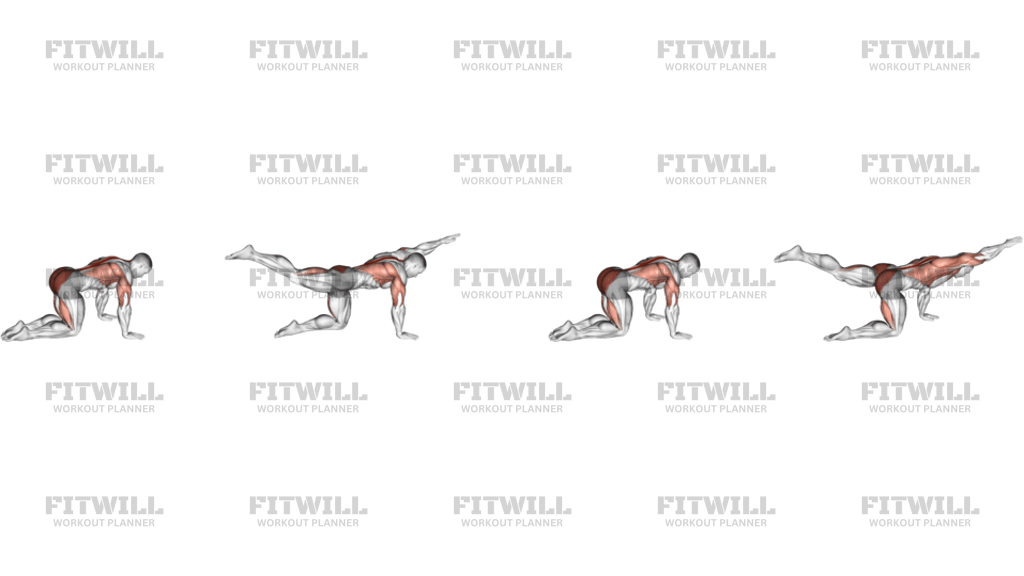
Instructions
- Start on hands and knees with your hands under your shoulders, knees under your hips, and your fingers spread on the floor or mat.
- Press the floor away through both palms, keep your neck long, and set your ribs and pelvis in a neutral position before you move.
- Brace lightly so your trunk stays steady when you lift one arm and the opposite leg.
- Reach one arm straight forward as the opposite leg extends straight back in one controlled line.
- Keep both hips level and avoid twisting or shifting weight onto the planted side.
- Pause briefly when the arm and leg are fully extended and the body is still.
- Lower both limbs back to the floor under control and reset the square position before the next rep.
- Repeat on the other side for the planned number of repetitions.
Tips & Tricks
- Think long reach, not high lift; the arm and leg should extend away from you without making the low back arch.
- If your hips rotate when the leg lifts, shorten the reach until you can keep both hip points aimed at the floor.
- Keep pressure through the planted hand and opposite knee so the support side does not collapse into the shoulder.
- Move slowly enough that you can freeze the top position for a full second without wobbling.
- Exhale as the arm and leg extend, then inhale as you return to the start.
- Use a mat or folded towel under the knees if the floor makes the setup unstable or uncomfortable.
- Stop the rep if you feel the movement mostly in the low back instead of the glute and core.
- Quality matters more than height or speed; a smaller, cleaner range is better than a big swing.
Frequently Asked Questions
What does Bird Dog train most?
It mainly trains the glutes and deep core while teaching the body to resist rotation through the trunk and pelvis.
How should my hands and knees be set up?
Place your hands under your shoulders and knees under your hips so the base is stable before you reach opposite arm and leg.
Should I lift the arm and leg high?
No. Reach them long and level instead of high so you keep the pelvis square and avoid dumping into the low back.
What is the most common Bird Dog mistake?
People usually rotate the hips or arch the lower back while trying to reach farther than they can control.
Is Bird Dog good for beginners?
Yes. The floor position is forgiving, but it still teaches bracing, balance, and opposite-limb coordination very clearly.
Where should I feel the working side?
You should feel the glute of the lifting leg and the core working to keep the torso from twisting.
How many reps should I do?
Use controlled reps on each side, with enough rest to keep every extension clean and symmetrical.
How can I make Bird Dog harder?
Make the pauses longer, slow the lowering phase, or add a light band only if you can keep the pelvis from shifting.