Flutter Kicks
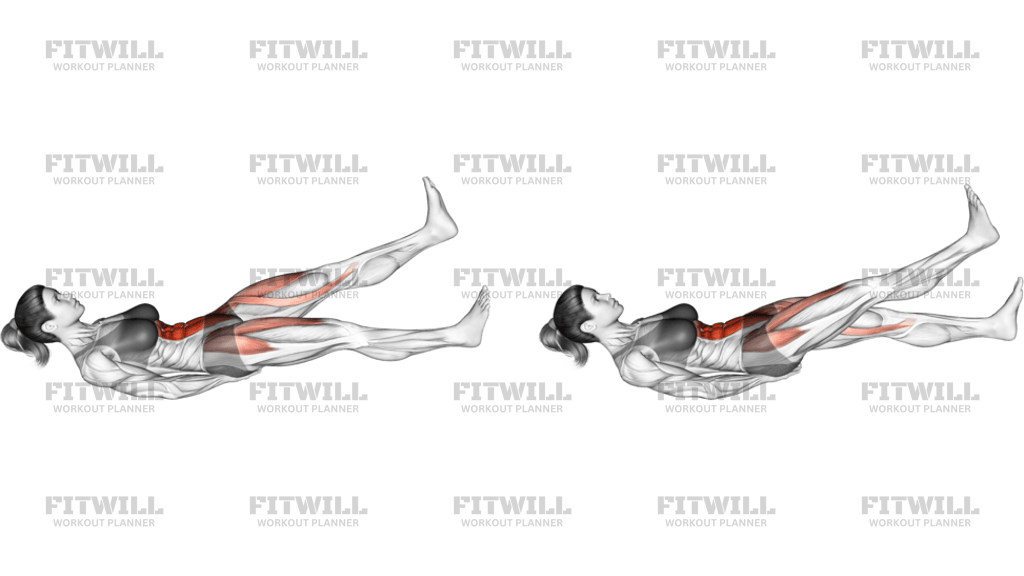
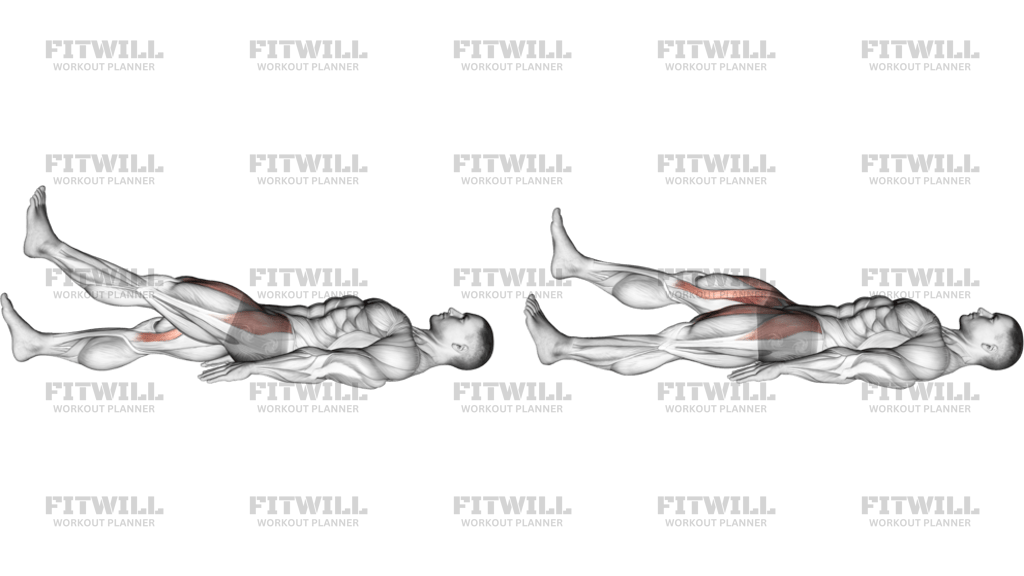
Flutter Kicks is a body-weight floor exercise for the lower abs and hip flexors that trains continuous tension through a small alternating leg pattern. The movement looks simple, but the training effect comes from keeping the torso quiet while the legs switch quickly enough to challenge endurance without turning into a sloppy bicycle kick. It is most useful when you want a core drill that builds control, not just burn.
The main emphasis is on the abs, especially the lower portion of the rectus abdominis, while the obliques and deep core help keep the pelvis from tipping forward. The hip flexors do plenty of work too, which is why flutter kicks feel intense even though no external load is involved. In anatomy terms, the main work centers on the Rectus abdominis, with assistance from the External obliques, Iliopsoas, and Transversus abdominis.
Set up on your back with your legs long, shoulders relaxed, and hands by your sides or under the hips if you need a little support. The key setup point is keeping the low back close to the floor before the legs start moving. That pelvic position keeps the abs involved and reduces the chance that the lower back takes over as the set goes on.
Each rep should be a small, controlled switch rather than a big swing. One leg lowers only until you can still keep the pelvis steady, then the other leg takes its turn. The torso should stay stacked and quiet while the legs alternate in a smooth scissor motion. If the low back starts to arch, the legs are going too low or the tempo is too fast.
Flutter Kicks fit well into core circuits, warmups, conditioning blocks, or finishers when you want time-under-tension without equipment. The exercise is beginner-friendly if the range stays short and the pace stays controlled, but it becomes much harder when the legs are kept straighter and lower to the floor. The safest progression is to keep the same pattern and improve control before trying to make the kicks larger or faster.
[ Workout Log & Planner ]
Put your next workout in Fitwill
Keep your plan and training log ready when you are.


Instructions
- Lie on your back on a mat with your legs extended, feet together or slightly apart, and your hands by your sides or tucked under your hips for support.
- Press your lower back gently into the floor and set your ribs down so your pelvis stays slightly tucked before you begin.
- Lift both legs a few inches off the floor so your heels hover and your torso stays still.
- Keep both knees mostly straight and start alternating the legs in a small scissor pattern.
- Lower one leg only as far as you can without your low back arching, then switch and raise it back as the other leg drops.
- Move the legs smoothly instead of kicking from the hips or swinging from the knees.
- Keep the shoulders relaxed and the neck long while your abs hold the body position steady.
- Breathe evenly through the set, exhaling as the legs switch and inhaling under control on the return.
- Finish the set if the low back comes off the floor or the leg motion gets too big to control.
Tips & Tricks
- Keep the flutter small; the lower the leg drops, the harder the abs and hip flexors have to work to hold the pelvis down.
- If your low back starts lifting, raise both legs slightly and shorten the range before the set gets messy.
- Pointing the toes is fine, but do not let the feet turn into the driver of the movement.
- Think about freezing the rib cage while the legs move underneath it.
- Straight knees make the drill harder; a tiny bend is acceptable if it helps you keep the pelvis stable.
- Do not turn it into a bicycle kick with big knee bends and forward-backward leg circles.
- If your hip flexors cramp, take a short break and restart with the legs higher off the floor.
- Use a steady rhythm you can hold for the entire set instead of speeding up early and losing position.
Frequently Asked Questions
What muscles do Flutter Kicks work most?
They primarily train the abs, with strong involvement from the hip flexors and a stabilizing role from the obliques.
Can beginners perform this exercise?
Yes. Beginners should keep the legs higher, use a smaller range, and stop the set as soon as the low back starts to arch.
Where should my hands go during Flutter Kicks?
Place them by your sides or under your hips if you need extra support under the pelvis.
How low should the legs go?
Only as low as you can keep your lower back close to the floor. The range should get smaller, not bigger, if your posture starts to change.
How is this different from bicycle kicks?
Flutter Kicks keep the legs straighter and move in a short up-and-down alternation. Bicycle kicks use more knee bend and a larger cycling path.
Why do my hip flexors feel this so much?
Because they help hold each leg up while the abs keep the pelvis from tipping forward. Some hip flexor fatigue is normal.
What is the most common mistake with this exercise?
Letting the legs drop too low and arching the lower back. That usually turns the rep into momentum instead of core control.
How can I make Flutter Kicks harder?
Keep the legs straighter, lower the kick slightly, and slow the switches so the abs have to hold tension longer.