Hollow Hold
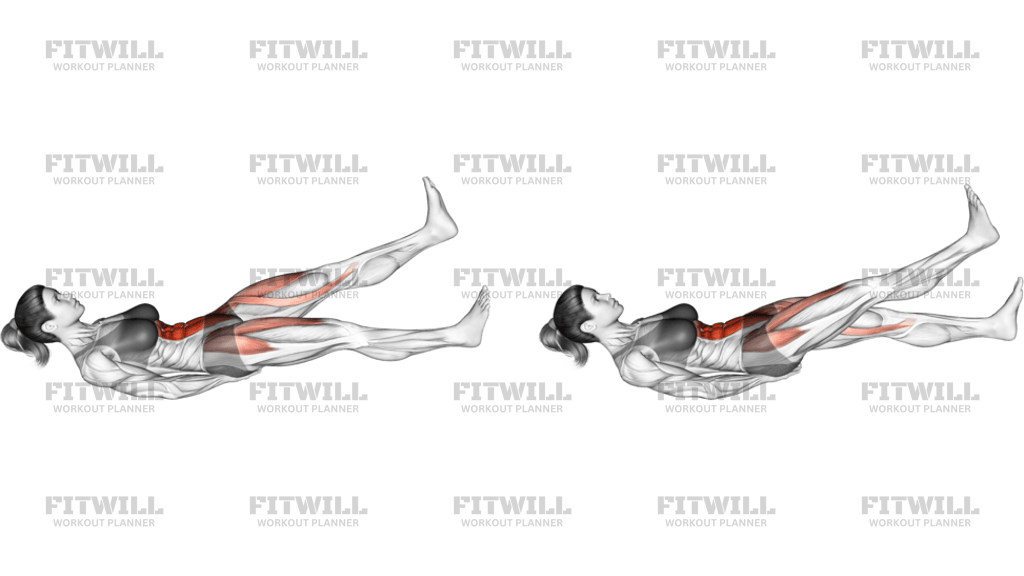
Hollow Hold is a bodyweight anti-extension exercise that teaches you how to keep the ribs down, pelvis tucked, and lower back anchored while the arms and legs reach away from each other. In the pictured version, the body is in a long hollow shape: shoulders slightly off the floor, legs straight and low, arms extended overhead, and the torso held rigid without arching through the lumbar spine.
The main training effect is core bracing. Rectus abdominis works hardest, with help from the obliques, transverse abdominis, and hip flexors to keep the trunk from opening up into a back arch. That makes the movement useful for gymnasts, calisthenics work, running mechanics, and any program that needs better trunk position under tension. It is not about moving fast or chasing reps; it is about holding a precise shape long enough for the abs to do the work.
Setup matters more here than on many floor exercises. Lie flat, press the low back gently into the floor, and tilt the pelvis so the belt line feels heavy. From there, reach the arms long overhead and lift the shoulders and heels just enough to hover while keeping the spine pinned down. If the low back lifts, the legs are too low, the arms are too far back, or the brace is not strong enough yet. The best rep is the one where the body stays organized from start to finish.
A good hollow hold feels like a hollowed-out boat shape, not a crunch. The ribs stay knit down, the chin stays slightly tucked, and the neck stays long so the shoulders can reach without shrugging. Breathing should be short and controlled, usually through small exhales that keep the brace intact instead of a full relaxed breath that breaks the position. The hold ends when the lower back arches, the legs start dropping, or the shoulders can no longer stay lifted with control.
Use Hollow Hold as a core primer, an accessory isometric, or a skill-builder before harder calisthenics and gymnastics progressions. Beginners can shorten the lever by bending the knees or holding one leg at a time, while advanced lifters can extend the arms farther overhead or hold the position for longer with perfect spinal control. If the exercise is done well, it should build clean tension through the front of the trunk without creating neck strain or low-back compression.
Fitwill
Log Workouts, Track Progress & Build Strength.
Achieve more with Fitwill: explore over 9600 exercises with images and videos, access built-in and custom workouts, perfect for both gym and home sessions, and see real results.
Start your journey. Download today!




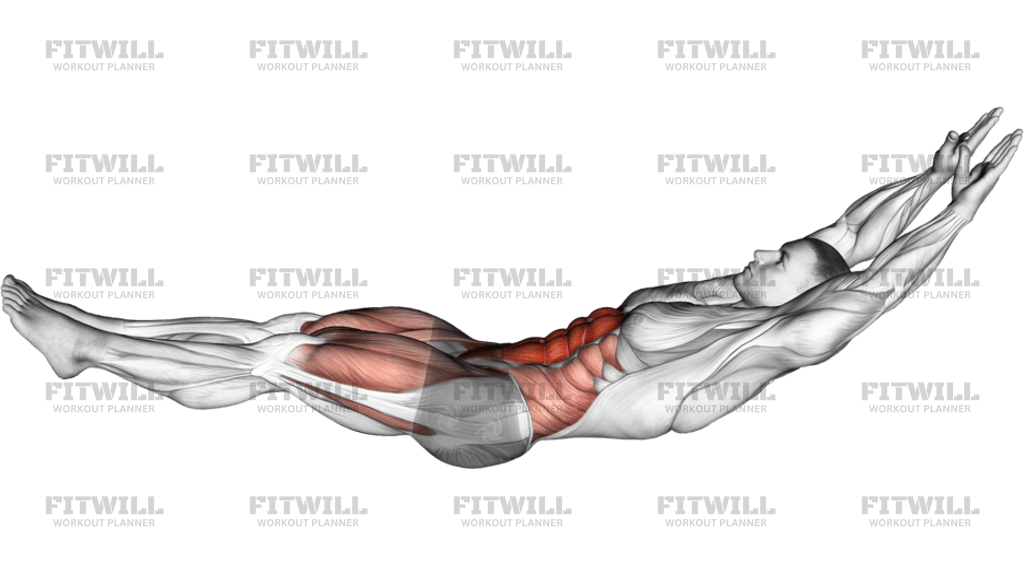
Instructions
- Lie face up on the floor or a mat and press your lower back gently into the ground.
- Tuck your pelvis so your ribs drop down and your torso feels long rather than arched.
- Extend both arms overhead with your biceps near your ears and your legs straight out together.
- Exhale, brace your abs, and lift your shoulders and heels a few inches off the floor.
- Keep your low back glued to the floor as you reach through your fingertips and toes.
- Hold the hollow shape without letting your ribs flare or your legs drift higher and lower.
- Breathe in short, controlled breaths while keeping the brace and spinal position unchanged.
- Lower your shoulders and heels together when the hold is complete or when form starts to break.
Tips & Tricks
- If your low back lifts, bend the knees slightly or bring the legs higher before trying again.
- Keep the arms just in front of the ears if full overhead reach makes your ribs pop up.
- Think about pulling the front of the rib cage toward the pelvis instead of trying to crunch higher.
- A harder hollow hold comes from longer levers, not from holding your breath or flaring the chest.
- Keep the legs squeezed together and the toes pointed to stop the lower body from drifting apart.
- Short, clean holds of 10 to 30 seconds are usually better than long sets that turn into an arch.
- The neck should stay quiet; if it strains, tuck the chin slightly and keep the gaze upward.
- Stop the set the moment the lower back leaves the floor, even if the timer is not finished.
Frequently Asked Questions
What muscle does Hollow Hold target most?
The rectus abdominis is the main driver, with the obliques and transverse abdominis helping keep the trunk from arching.
Why is my lower back lifting off the floor?
The lever is probably too long for your current strength. Raise the legs, bend the knees, or shorten the arm reach until you can keep the pelvis tucked.
Do I need to keep my legs fully straight?
No. Straight legs are the harder version, but a bent-knee or one-leg variation is a better choice if it helps you keep the low back pressed down.
Should the arms stay overhead the whole time?
Yes for the standard version, but you can bring them slightly forward if overhead reach causes your ribs to flare or your neck to tense.
How do I know I am doing the hold correctly?
Your shoulders and heels should hover while the low back stays pinned down, the ribs stay closed, and the body feels long and steady.
What is the biggest mistake people make on Hollow Hold?
Letting the low back arch is the main error, usually followed by holding the breath or letting the shoulders collapse back to the floor.
Is Hollow Hold safe for beginners?
Yes, if you start with a shortened version and stop before the low back starts to lift. The full straight-body hold is the advanced version.
How long should I hold the position?
Use a time that lets you keep perfect shape, often 10 to 30 seconds. Quality matters more than chasing a long burn.