Barbell Decline Pullover
Barbell Decline Pullover is a decline-bench pullover performed with a barbell held above the chest and lowered in an arc behind the head. The decline angle gives the shoulders and rib cage enough support to keep the motion honest, while the long lever of the bar makes small changes in grip, elbow angle, and range of motion very noticeable. Done well, it trains the chest through a deep stretch and a controlled pullback, with the shoulders and arms working hard to stabilize the bar.
The exercise is useful when you want a chest-focused accessory that asks for precision instead of heavy pressing. The primary emphasis stays on the pecs, with the anterior delts, triceps, and trunk helping to steady the torso and guide the bar path. In anatomy terms, the main work centers on the Pectoralis major, with assistance from the Anterior deltoid, Triceps brachii, and Rectus abdominis. That combination makes the pullover feel part stretch, part pull, and part anti-extension core drill.
Setup matters more here than on many other chest movements. Lie fully supported on the decline bench, plant the feet, and choose a grip that keeps the wrists stacked and the elbows slightly bent. The bar should start above the chest, not drifting toward the face, and the shoulders should stay packed enough that the first rep already feels controlled. A clean setup lets you lower the bar in a smooth arc without turning the movement into a shrug, a triceps extension, or a loose pullover with the ribs flaring up.
Each repetition should follow the same path: lower the bar behind the head until you feel a strong but tolerable stretch across the chest and shoulders, then bring it back over the chest without losing the elbow angle or bouncing at the bottom. Keep the neck relaxed, the rib cage controlled, and the breathing steady so the torso does not arch to steal range. This exercise works best as a technical accessory, chest-builder, or upper-body finisher with moderate loads and deliberate tempo, not as a max-strength lift. If the shoulders complain before the chest does, shorten the range and keep the rep path cleaner rather than forcing depth.
Fitwill
Log Workouts, Track Progress & Build Strength.
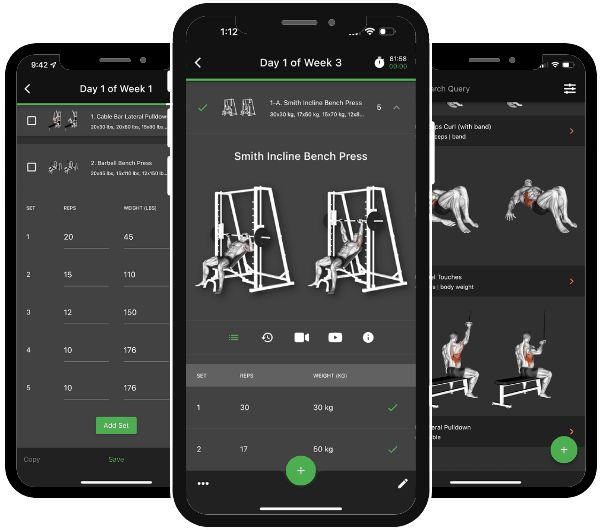
Achieve more with Fitwill: explore over 5000 exercises with images and videos, access built-in and custom workouts, perfect for both gym and home sessions, and see real results.
Start your journey. Download today!


Instructions
- Set the decline bench so your head and shoulders are fully supported, then lie back with your feet anchored and your eyes under the bar.
- Grip the barbell overhand at about shoulder width and stack your wrists over your forearms before you unrack it.
- Start with the bar above the middle of your chest and keep a slight bend in both elbows from the first rep to the last.
- Brace your ribs down against the bench so your lower back does not take over when the bar starts to travel backward.
- Lower the bar in a smooth arc behind your head until you feel a strong stretch across the chest and front of the shoulders.
- Stop the descent before the shoulders roll forward or the elbows start to bend more to chase extra range.
- Pull the bar back over the chest along the same arc, finishing with the bar stacked above the sternum and the shoulders still controlled.
- Exhale as you bring the bar up, reset your breath at the top, and repeat for the planned number of reps.
Tips & Tricks
- A shoulder-width grip usually keeps the bar path cleaner than a very wide or very narrow grip.
- Keep the elbows softly bent and fixed; turning the movement into a press or a triceps extension changes the load.
- Let the bar travel only as far back as your shoulders can control without pinching or losing scapular position.
- If your rib cage pops up, shorten the range and slow the lowering phase until the torso stays quiet.
- The decline angle should support the upper back, not turn the setup into a partial sit-up between reps.
- Use a lighter bar than you would for presses; the long lever makes this exercise feel much heavier than it looks.
- Keep the bar close to the same arc on the way down and up instead of drifting toward your face or belly.
- Stop the set when the wrists start to bend back or the shoulders begin to shrug to finish the rep.
Frequently Asked Questions
What muscle does Barbell Decline Pullover target most?
The chest is the main target, especially the pecs through the lowered and returned portion of the rep.
Can beginners perform this exercise?
Yes, but only with a very light barbell and a short, controlled range until the shoulder path feels stable.
How wide should my grip be on the barbell?
Use about shoulder width so the bar stays balanced and the elbows can keep a small, consistent bend.
How far behind my head should the bar go?
Only as far as your shoulders can control without losing the chest stretch, shrugging, or overextending the lower back.
Should my elbows bend more on the way down?
No. Keep the bend small and nearly fixed so the movement stays a pullover, not a bent-arm press.
Why use a decline bench instead of a flat bench?
The decline bench gives the upper body more support and makes it easier to keep the bar path smooth and repeatable.
What is the most common mistake with this movement?
Letting the ribs flare and the shoulders drift forward so the bar bounces out of the bottom.
How can I progress Barbell Decline Pullover safely?
Add small amounts of load only after you can keep the same arc, elbow angle, and torso position on every rep.