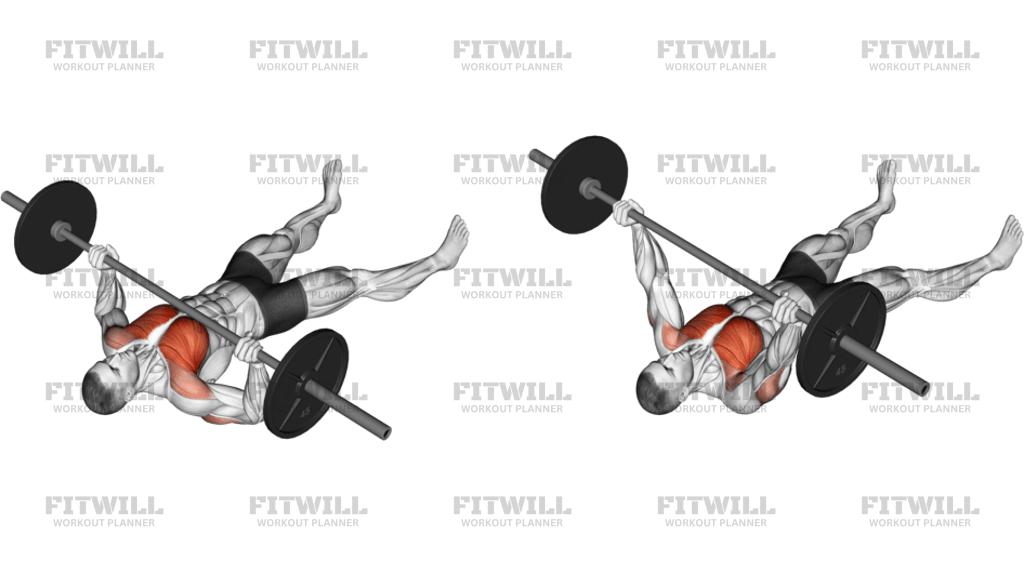
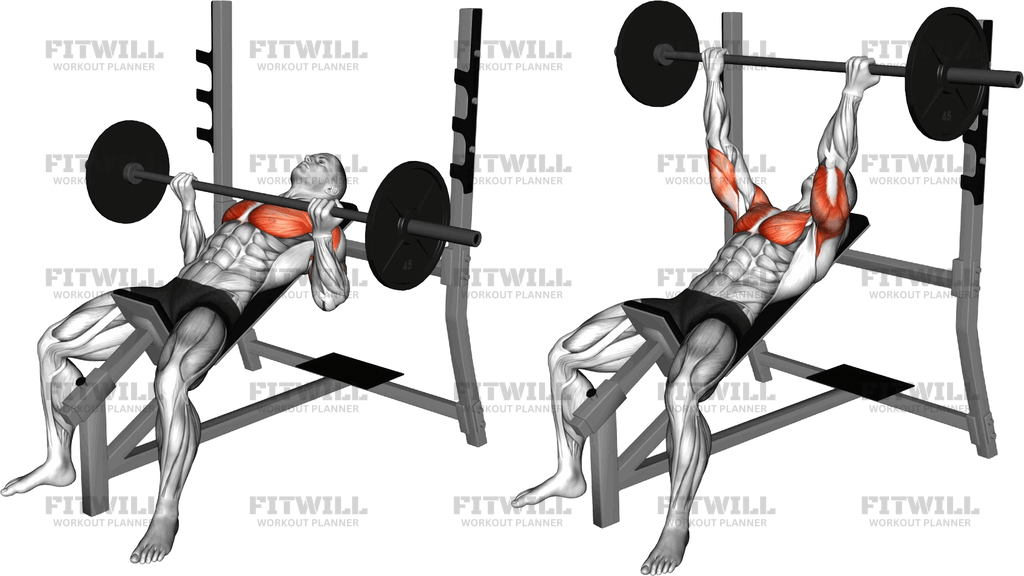
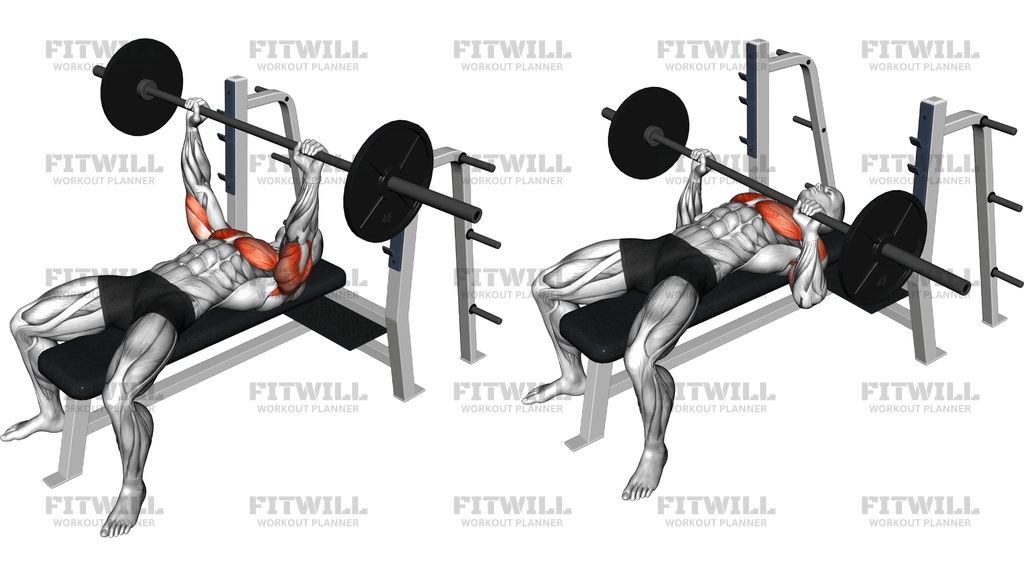
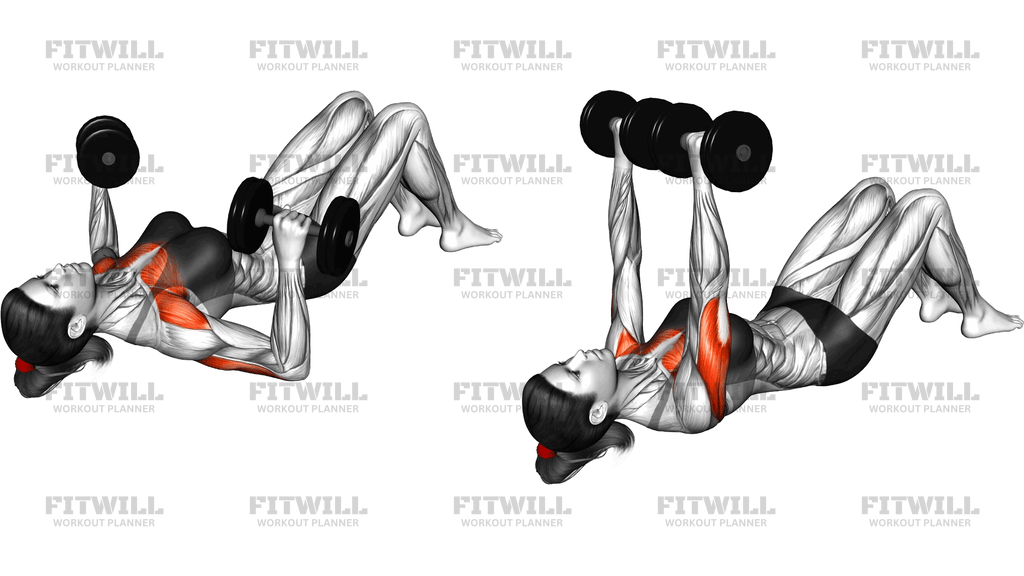
Barbell Reverse-Grip Decline Bench Press
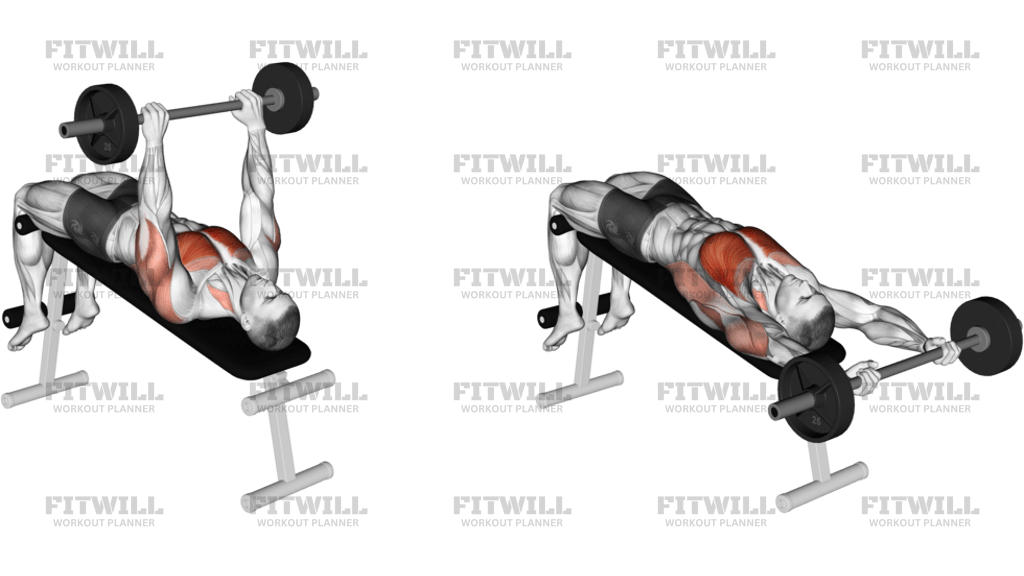
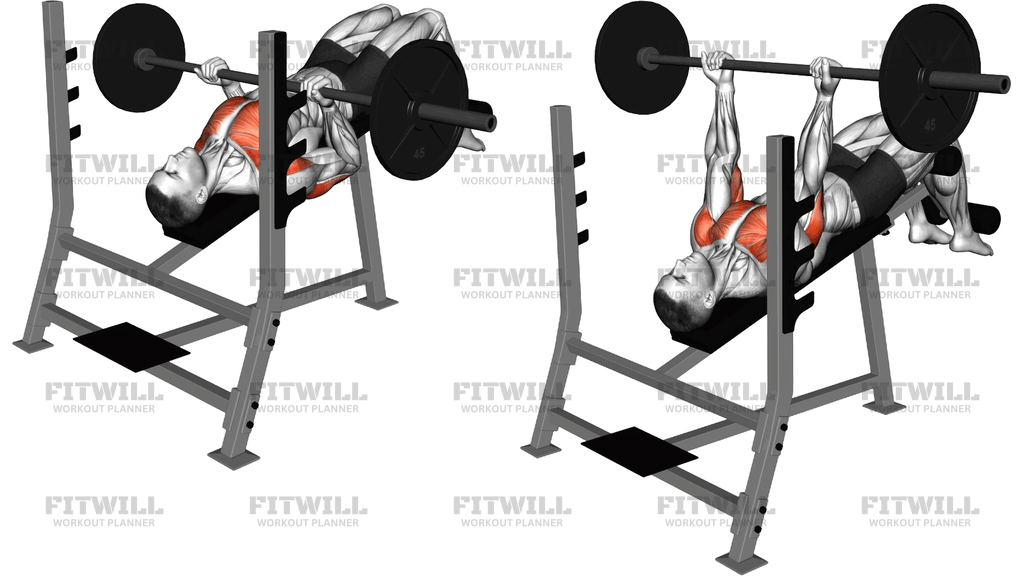
Barbell Reverse-Grip Decline Bench Press is a decline pressing variation that uses an underhand grip to load the chest while the torso is fixed on a decline bench. The reverse grip changes the elbow and wrist angle, which often makes it easier to keep the upper arms tucked and to press with a strong chest line rather than turning the movement into a shoulder-dominant press.
The decline setup matters because your torso angle, leg support, and bar path all affect how stable the rep feels. With the hips anchored on the bench and the feet secured under the pads, you can create a more solid pressing base and keep the ribcage from flaring as the bar moves. The main training emphasis is on the pectoralis major, with the anterior deltoids, triceps brachii, and trunk muscles assisting through the press and stabilization.
This exercise is best performed with a controlled unrack, a steady descent, and a smooth press back to the rack line. The bar should travel toward the lower chest or upper sternum area on the way down, then return along the same path without drifting toward the face or bouncing off the chest. The reverse grip puts more demand on wrist position and control, so the load should stay moderate enough that the hands, elbows, and shoulders can stay stacked through the full range.
Use this variation when you want a chest-focused barbell press with a different shoulder feel than a standard overhand bench press. It can be useful as accessory work or as a primary press for lifters who tolerate the reverse grip well, but it still needs careful spotting and setup because the underhand grip makes the unrack and re-rack less forgiving. Keep the movement clean, pain-free, and repeatable; if the wrists, elbows, or front shoulders start to lose position, reduce the load or switch to a safer pressing variation.
[ Workout Log & Planner ]
Put your next workout in Fitwill
Keep your plan and training log ready when you are.


Instructions
- Set the decline bench so your head is lower than your hips, then lie back with your feet locked under the pads and your eyes under the bar.
- Take a reverse, shoulder-width grip with palms facing you, wrap the thumbs securely, and stack your wrists over your forearms before unracking.
- Pull your shoulder blades together, keep your chest lifted against the bench, and unrack the bar to straight arms above the lower chest line.
- Lower the bar under control toward the lower chest or upper sternum area, keeping the elbows tucked and the forearms vertical.
- Touch lightly or stop just above the chest if your setup calls for it, without bouncing or relaxing the upper back.
- Press the bar upward along the same line, driving through the chest and triceps while keeping the wrists from folding back.
- Finish with the arms straight and the bar stable over the shoulders, then re-rack it with the same controlled path.
- Breathe in on the descent, exhale as you press, and stop the set if the grip, wrists, or shoulders lose position.
Tips & Tricks
- Keep the bar in the heel of the palm so the wrists stay stacked instead of bending sharply backward under load.
- Use a thumbless-looking but secure reverse grip only if you can control the bar; otherwise wrap the thumbs and reduce the load.
- Tuck the elbows enough to keep the shoulders comfortable, but do not pin them so tightly that the press turns into a narrow triceps press.
- Lower the bar slowly enough that the touch point stays consistent on every rep, usually a little lower than in a flat reverse-grip press.
- If the bar drifts toward your face on the way down, reset the bench position and bar path before adding weight.
- Keep the upper back tight against the bench so the chest stays high without over-arching the lower back.
- Use a spotter or safety arms when possible, because the reverse grip makes re-racking less forgiving than a standard bench press.
- Choose a range of motion you can own cleanly; if the shoulders or wrists feel unstable at the bottom, shorten the depth and rebuild control.
Frequently Asked Questions
What does the reverse grip add to this decline bench press?
The underhand grip changes the arm path and usually makes it easier to keep the elbows tucked while the chest does more of the work.
What part of the chest does Barbell Reverse-Grip Decline Bench Press emphasize?
It targets the chest overall, with the lower-to-mid chest line usually feeling the strongest tension on the press.
Where should the bar touch on the way down?
Aim for the lower chest or upper sternum area, then press back along the same line without bouncing.
Is this harder on the wrists than a regular bench press?
It can be, because the underhand grip asks more of wrist stacking and forearm alignment, so the load should stay conservative.
Can beginners use this exercise?
Yes, but only with light weight, a secure setup, and a spotter or safety arms until the unrack and re-rack feel controlled.
What are the main muscles worked besides the chest?
The triceps, front deltoids, and trunk muscles help stabilize and finish the press.
Why is the decline bench important here?
The decline angle changes the pressing line and support position, which can make the chest feel more involved and the setup more stable.
What is the safest way to progress it?
Add load only after the grip, bar path, and re-rack are consistent for every rep.