Barbell Wide Reverse-Grip Bench Press
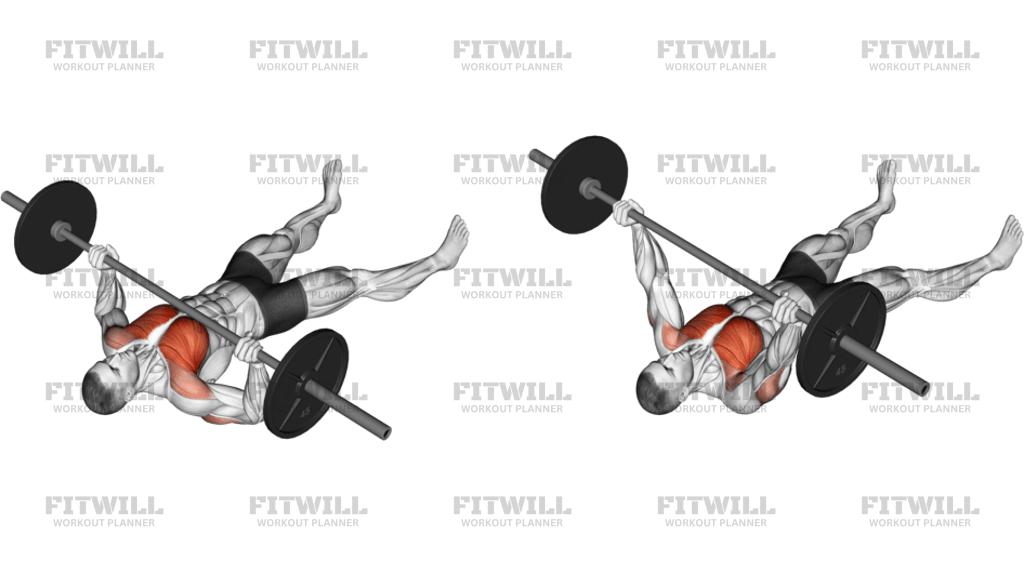
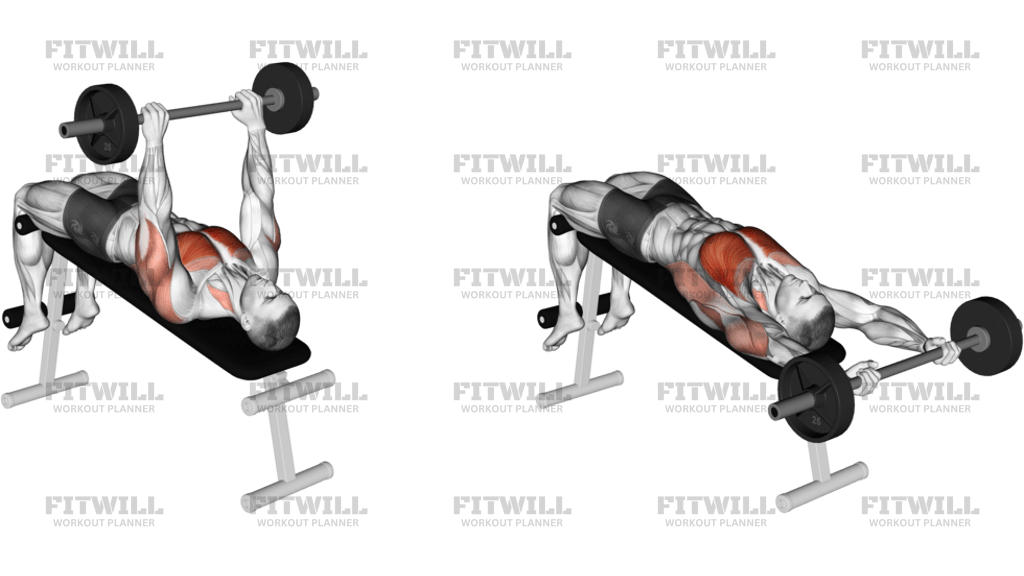
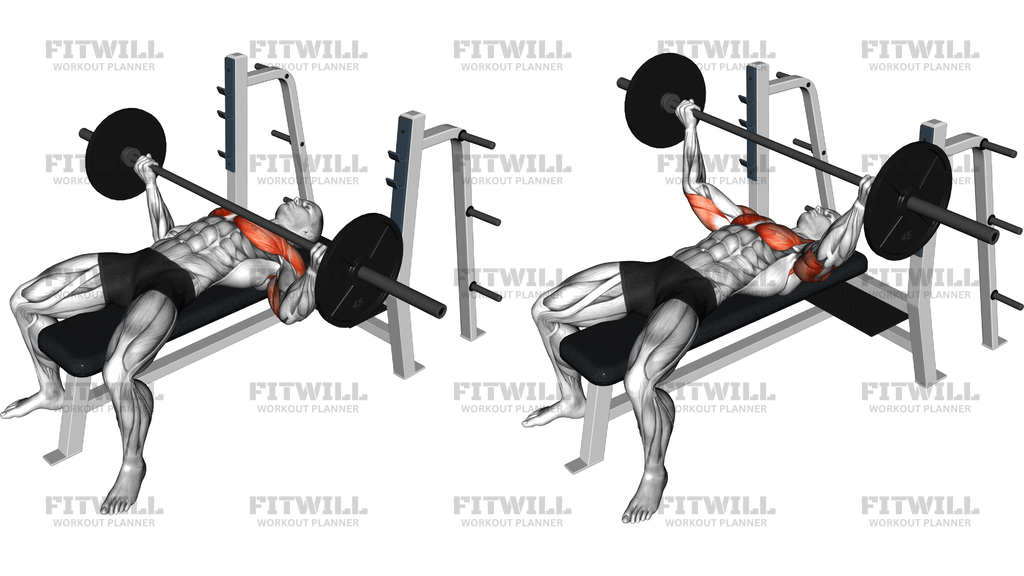
Barbell Wide Reverse-Grip Bench Press is a flat-bench press done with an underhand grip and a wider hand position than a standard bench press. The image shows a lifter lying on a bench with the bar lowered under control toward the upper-to-mid chest, then pressed back up over the shoulders. That setup changes the feel of the press and shifts the emphasis toward the chest while still involving the triceps and front delts.
The reverse grip is the part that makes this exercise different, so the hand placement and wrist position matter from the start. The bar should sit securely in the palm with the wrists stacked, thumbs wrapped, shoulder blades pulled back and down, and the feet planted firmly for leg drive and stability. Because the grip is supinated, the bar can feel less stable than a regular bench press, which is why lighter loading and a clean setup are more important than ego lifting.
During each repetition, lower the bar in a controlled path to the lower chest or upper sternum area, keep the elbows from flaring too far, and press the bar up and slightly back to the rack position. The chest stays lifted, the upper back stays tight against the bench, and the shoulders do not roll forward at the bottom. A smooth descent and a deliberate press help keep the bar path consistent and reduce stress on the shoulders and wrists.
This exercise is useful when you want a chest-focused press with a different loading angle than a conventional barbell bench press. It can be a strong accessory movement for pressing strength or hypertrophy, especially for lifters who tolerate the underhand grip well and want to vary their benching pattern. It is also a movement where control matters more than speed, so a spotter or rack safeties are a smart choice.
If the bar feels unstable, the wrists bend back, or the shoulders feel pinchy, the load is too heavy or the setup is off. Use a weight you can lower cleanly, pause briefly on the chest without bouncing, and finish each rep with the bar fully under control before racking it. Treated that way, the exercise becomes a precise pressing variation instead of a risky novelty lift.
[ Workout Log & Planner ]
Put your next workout in Fitwill
Keep your plan and training log ready when you are.


Instructions
- Set a flat bench in a rack with the bar above your eyes, then lie back with your feet flat, shoulder blades pulled back and down, and a small natural arch in your upper back.
- Grip the bar wider than shoulder width with an underhand grip, wrap your thumbs around the bar, and let the bar rest low in the palm with the wrists stacked over the forearms.
- Unrack the bar to straight arms over the shoulder line, keeping your chest high and your upper back pinned to the bench.
- Take a breath and brace, then lower the bar in a smooth arc toward the lower chest or upper sternum.
- Keep your elbows slightly tucked and your forearms close to vertical as the bar descends.
- Touch the chest lightly or pause just above it without bouncing, while keeping the shoulders from rolling forward.
- Press the bar up and slightly back toward the rack, driving through the chest and triceps until the elbows are fully extended.
- Exhale near the top, take another brace before the next rep, and rerack the bar only after it is locked out and steady over the hooks.
Tips & Tricks
- Start much lighter than your normal bench press because the reverse grip makes the bar feel less stable.
- Keep the bar in the heel of the palm and the thumbs wrapped; letting it drift toward the fingers increases the chance of the bar rolling.
- Aim to touch the lower chest or upper sternum, not the collarbone, so the press stays on a stable path.
- Keep your wrists stacked instead of bent back; the forearm should look like a straight support column under the bar.
- Let the elbows tuck slightly on the way down so the shoulders stay loaded without flaring hard.
- Pause briefly on the chest rather than bouncing the bar, especially if you are using a wider reverse grip.
- Use a spotter or rack safeties for the first working sets because the underhand grip makes failed reps awkward to escape.
- If your shoulders feel pinchy or your wrists cannot stay straight, shorten the range or switch to a different press variation.
Frequently Asked Questions
What muscles does the wide reverse-grip bench press work?
It primarily works the chest, with strong help from the triceps and front delts. The upper back and core also work to keep the bench position stable.
Why use an underhand grip on the bar?
The underhand grip changes the pressing angle and can shift the feel of the rep toward the chest. It also changes how the wrists and elbows line up, so the setup has to be precise.
Where should the bar touch on each rep?
Aim for the lower chest or upper sternum area, then press the bar back up and slightly toward the rack. If the bar drifts too high, the shoulders usually take over.
How wide should my hands be?
Wider than shoulder width, but not so wide that your wrists collapse or your forearms angle badly. The goal is to keep the bar stacked over the forearms at the bottom.
Is this harder on the shoulders than a normal bench press?
It can feel different rather than strictly harder, but the underhand grip can expose shoulder or wrist irritation if your setup is off. Start light and keep the shoulder blades pinned.
Can a beginner do this exercise?
Yes, but only with very light weight, a controlled descent, and a setup that feels stable. A spotter or safeties are strongly recommended.
What is the biggest form mistake?
Letting the bar roll toward the fingertips or bouncing it off the chest are the two biggest problems. Both make the lift less controlled and less safe.
What can I use instead if the reverse grip feels awkward?
A standard barbell bench press, dumbbell bench press, or neutral-grip press is usually easier to control. Pick the version that lets you keep the wrists and shoulders comfortable.