Lever Unilateral Row
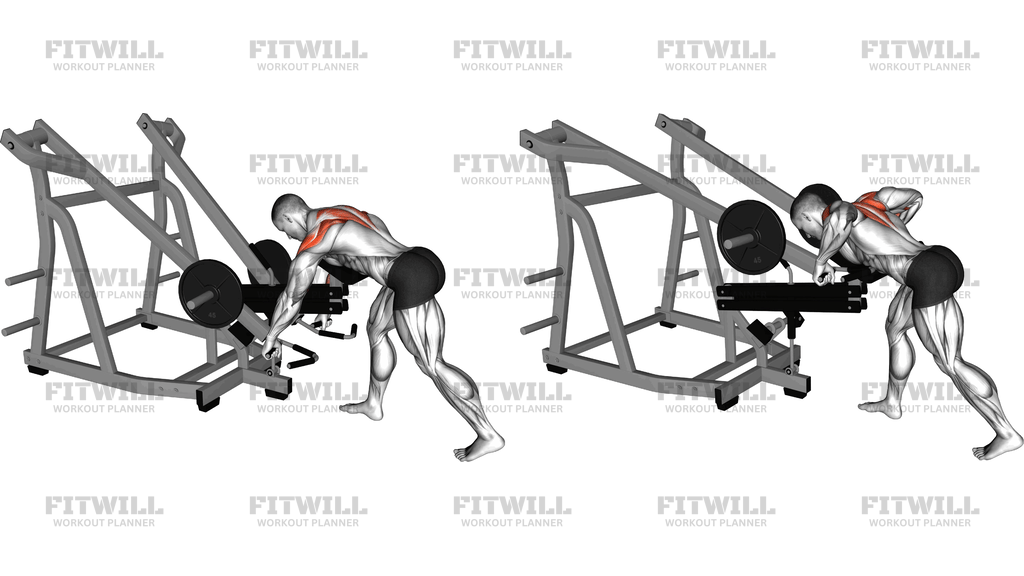
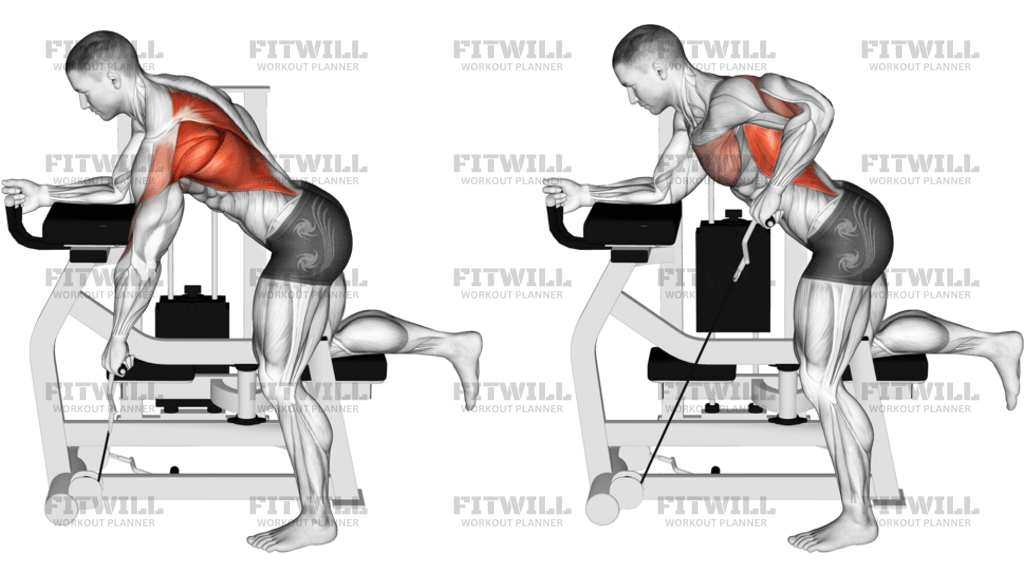
Lever Unilateral Row is a single-arm rowing exercise on a leverage machine. It trains the upper back, lats, rear shoulder, and arm flexors while the machine keeps the pull path smooth and repeatable. Because each side works on its own, it is useful for building balanced rowing strength and for noticing whether one shoulder or lat gives out earlier than the other.
The setup matters because the machine locks in the line of pull. Brace the support side on the pad or handle, keep the working foot planted, and hinge forward with a long neutral spine so the torso stays stable. Let the working shoulder reach forward under control at the bottom, but do not let the ribs twist open or the lower back take over just to get more range.
On the pull, drive the elbow back toward the lower ribs or hip pocket instead of yanking the handle high toward the shoulder. As the handle comes in, the shoulder blade should move back and down, then settle into a brief squeeze without shrugging. The return should be slow and controlled so the back stays loaded through the full reach instead of turning into a bounce.
This row fits well in back strength work, hypertrophy blocks, or any session where you want unilateral pulling volume without balancing a dumbbell row. It is especially useful after your main compound lifts, when you want to clean up side-to-side differences or add targeted back work with less setup noise. The fixed machine path helps, but only if you keep the torso quiet and let the elbow drive the movement.
Use a load that lets you reach a real stretch, a solid contraction, and a smooth lowering phase without jerking the stack or machine arm. If the shoulder feels pinchy, shorten the bottom range slightly and keep the elbow closer to the body. The best repetitions look calm from the outside and feel like the back is doing the work while the rest of the body stays organized.
[ Workout Log & Planner ]
Put your next workout in Fitwill
Keep your plan and training log ready when you are.


Instructions
- Adjust the machine so the working handle sits comfortably in the lowered position and the support pad lets you brace without reaching.
- Place the support-side hand on the brace or handle and the support-side knee on the pad or bench; plant the working foot firmly on the floor.
- Hinge forward with a long neutral spine, square hips, and a relaxed neck before you start the first rep.
- Reach the working arm forward under control until you feel a stretch across the upper back and lat.
- Exhale, brace, and drive the elbow back toward the lower ribs or hip pocket.
- Keep the torso quiet and finish the pull with the shoulder blade back and down, not shrugged up.
- Lower the handle slowly until the arm nearly straightens and the shoulder can reach forward again.
- Repeat all reps on one side before resetting the brace and switching sides.
Tips & Tricks
- Keep the chest heavy so the ribs do not flare when the handle comes in.
- Think about pulling the elbow, not curling the handle with the hand.
- If your torso rotates to finish the rep, the load is too heavy for this side.
- Pause for a beat in the squeezed position instead of bouncing the machine arm.
- Keep the elbow close to the side to keep tension on the upper back and lat.
- Stop the bottom stretch before the shoulder rolls forward or feels pinchy.
- Use a slow return so the loaded stretch stays on the back instead of the joint.
- Choose a load that lets both sides match in range and speed.
Frequently Asked Questions
What muscle does Lever Unilateral Row target most?
It mainly targets the upper back and lats, with traps, rhomboids, rear delts, and biceps helping.
Can beginners perform this exercise?
Yes. The guided machine path makes it beginner-friendly as long as the load stays light enough to keep the torso still.
Where should the handle end up on each rep?
Aim to bring it toward the lower ribs or hip pocket on the working side, not high toward the chest.
Should my torso stay still during the row?
Mostly yes. A small hinge is fine, but twisting or heaving the body usually means the load is too heavy.
What if I feel this mostly in my biceps?
Lower the load, slow the lowering phase, and think about driving the elbow back while keeping the wrist relaxed.
Can I train both sides back to back?
Yes. Complete one side, reset your brace, then switch to keep the range and effort even.
What should I do if the bottom stretch feels pinchy?
Shorten the reach slightly and keep the elbow closer to your body so the shoulder does not collapse forward.
What is a good substitute for this exercise?
A single-arm cable row or a chest-supported dumbbell row is the closest alternative.