Barbell Bent Arm Pullover
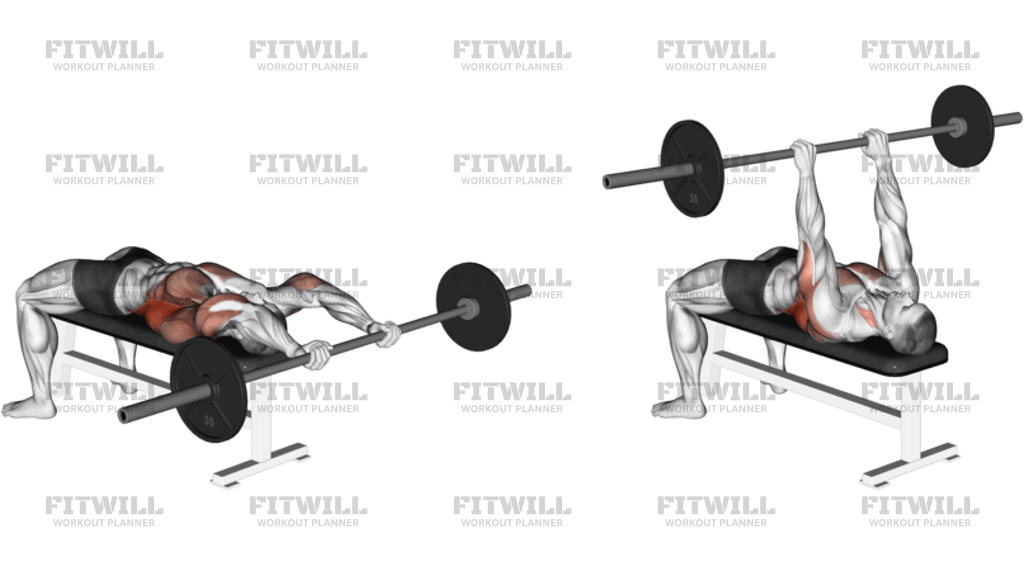
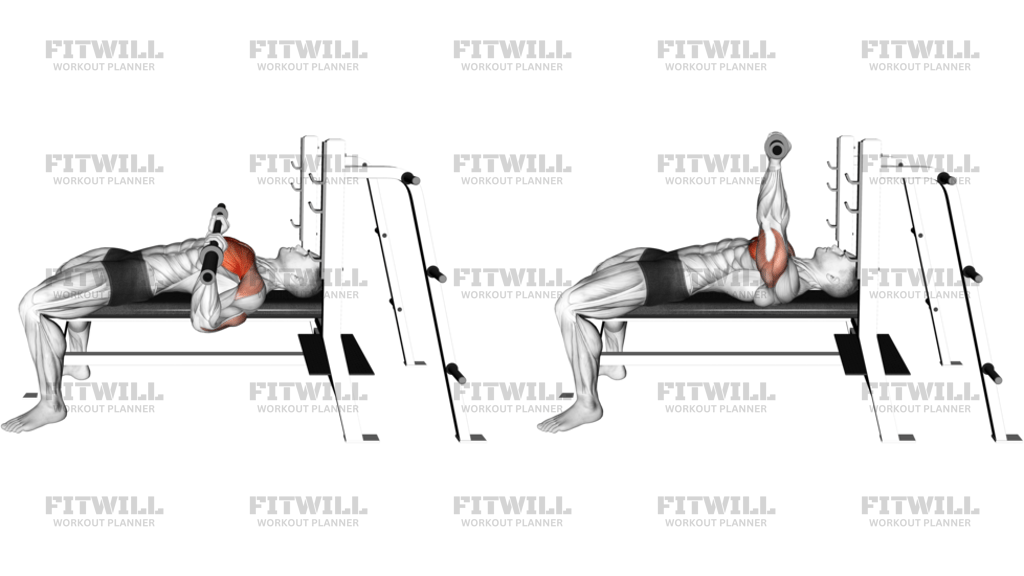
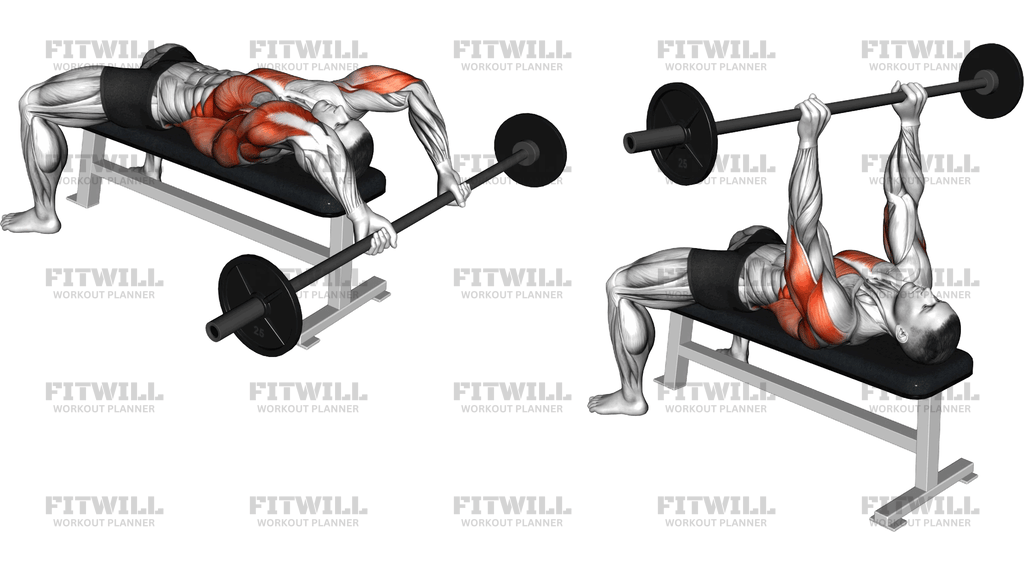
Barbell Bent Arm Pullover is a flat-bench upper-body accessory that loads the lats through a long arc while the elbows stay softly bent. In the starting position, you lie on the bench with the bar over the chest, then lower it behind the head and bring it back over the torso without turning the rep into a press or a triceps extension. The image shows the classic pullover setup: shoulders and upper back supported on the bench, feet planted, and the bar traveling in a smooth arc from above the chest to behind the head.
The exercise is most often used to build lat strength, shoulder-extension control, and a strong stretch-and-contract pattern through the rib cage, serratus, and upper back. Because the arms stay relatively fixed, the movement asks the lats to manage the bar path while the chest, long head of the triceps, forearms, and scapular stabilizers help keep the bar steady. That makes the setup important: if your ribs flare or your shoulders drift forward, the load shifts away from the lats and the shoulder position becomes less predictable.
A good pullover keeps the torso organized from the first rep. Lightly set the shoulder blades on the bench, brace the trunk, and maintain a small natural arch rather than exaggerating the lower back. Lower the bar only as far as your shoulders can control while the elbows remain in the same soft bend. The goal is a long, even path with no jerking at the bottom and no bouncing off the top. Smooth breathing helps here: inhale on the lowering phase, then exhale as you pull the bar back over the chest.
This movement fits well after pressing or pulling work, or as an accessory when you want to challenge the lats without another heavy row or pulldown. It is also useful when you want to train the shoulder in overhead extension with more feedback than a free-flowing dumbbell movement. Beginners can use it, but only with a light bar and a conservative range of motion. If the shoulders feel pinchy or the lower back takes over, shorten the arc, reduce the load, and keep the rep strict.
[ Workout Log & Planner ]
Put your next workout in Fitwill
Keep your plan and training log ready when you are.


Instructions
- Lie on a flat bench with your upper back and head supported, feet planted on the floor, and a slight natural arch in your lower back.
- Grip the barbell a little wider than shoulder width and hold it directly above your chest with your elbows softly bent.
- Set your ribs down, keep your wrists stacked over the bar, and brace before the first lowering phase.
- Inhale and lower the bar in a smooth arc behind your head while keeping the elbow angle nearly fixed.
- Stop the descent when you feel a strong lat stretch or when your shoulders start to lose position.
- Exhale and pull the bar back over your face and chest by driving the upper arms through the same arc.
- Finish with the bar above the mid-chest, shoulders still supported, and no hard elbow lockout or rib flare.
- Reset your breath and repeat for the planned reps with the same tempo on every repetition.
Tips & Tricks
- Choose a lighter barbell than you think you need; this lift becomes sloppy fast when the load is too heavy for the shoulder arc.
- Keep the elbow bend almost identical from start to finish so the rep stays a pullover instead of drifting into a triceps extension.
- Lower the bar only until the upper arms are near your ears or the shoulders start to lose a clean line on the bench.
- If your lower back arches hard, shorten the range and keep the ribs more down so the lats do the work instead of the lumbar spine.
- Think about sweeping the bar back over the chest rather than pressing it up; that cue usually keeps tension in the lats.
- Keep the wrists neutral and directly over the bar to avoid letting the hands collapse backward during the stretch phase.
- A brief pause near the bottom can help you own the stretched position without bouncing the bar off the change of direction.
- Stop the set when the bar path starts wandering or the shoulders feel pinchy, especially on the return from behind the head.
Frequently Asked Questions
What muscle does Barbell Bent Arm Pullover target most?
The lats are the main target, with the serratus, chest, upper back, and long head of the triceps helping control the bar path.
Is this more of a back exercise or a chest exercise?
It is mainly a back exercise. The bar path loads shoulder extension through the lats, while the chest helps stabilize the descent and return.
How far should I lower the bar behind my head?
Lower it only as far as you can keep your elbows softly bent, ribs controlled, and shoulders comfortable. Do not force a deeper stretch just to reach the bench line.
Should my elbows stay bent the whole time?
Yes. Keep a small, mostly fixed bend in the elbows so the movement stays a pullover and does not turn into a pressing motion.
Can beginners do this with a barbell?
Yes, but only with a light barbell and a short, controlled range. If the bar feels awkward overhead, a dumbbell or cable version is usually easier to learn.
Why are my feet planted on the floor?
Planting the feet helps keep the ribs and pelvis steady, which makes it easier to keep tension on the lats instead of drifting through the lower back.
What should I do if the exercise bothers my shoulders?
Reduce the range, lighten the load, and stop the bar higher behind the head. A shoulder-friendly pullover should feel like a long lat stretch, not a pinch in the joint.
Where does this fit in a workout?
It works well as accessory work after presses, rows, or pulldowns, especially when you want a controlled lat-focused finisher.