Barbell Wide Pullover
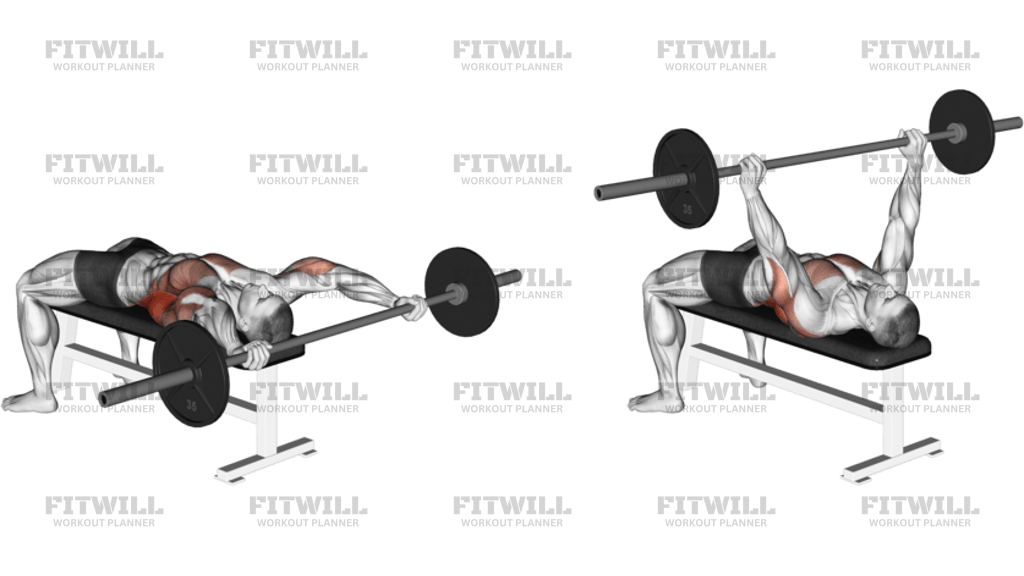
Barbell Wide Pullover is a flat-bench pullover variation performed with a wide overhand grip and a controlled arc behind the head. It is used to load the lats, chest, serratus, and long head of the triceps through shoulder flexion and extension while the torso stays anchored on the bench. The movement looks simple, but the setup matters: the grip width, bench contact, elbow angle, and rib position all change how much of the work stays on the shoulder girdle instead of turning into low-back compensation.
This exercise is best thought of as a controlled upper-body lever movement, not a fast pullover swing. You start with the bar over the chest, lower it in a smooth arc until the upper arms reach a deep but comfortable stretch behind the head, then pull it back over the chest without changing the elbow bend. The shoulders should move freely while the ribcage stays stacked and the lower back does not overarch to fake extra range.
The wide grip usually reduces elbow bend and shifts the line of pull toward the lats and serratus, while still involving the chest as the arms travel overhead. Because the arms stay relatively long, lighter loads are usually more productive than heavy loading. Clean control matters more than range chasing, especially at the bottom where the shoulders are most vulnerable if the bar drops too far or the elbows flare uncontrollably.
Use this exercise when you want a chest-and-back accessory that keeps the shoulder joint under tension through a long path, or when you want a pullover pattern that is less machine-dependent and more strict than a sloppy dumbbell version. It fits well in an accessory block, a chest/back session, or as a technique-focused finisher. Stop the set if the bar starts drifting, the elbows bend and straighten, or the lower back takes over the movement.
[ Workout Log & Planner ]
Put your next workout in Fitwill
Keep your plan and training log ready when you are.


Instructions
- Lie face up on a flat bench with your upper back and head supported, feet planted on the floor, and your hips steady on the pad.
- Hold the barbell with a wide overhand grip and start with the bar stacked over your mid-chest, elbows slightly bent rather than locked.
- Set your shoulder blades gently down the bench and keep your ribs from flaring as you brace before each rep.
- Lower the bar in a slow arc back over your face and behind your head, letting the shoulders open while the elbows keep the same soft bend.
- Continue until you feel a strong stretch through the lats and chest without losing contact between your torso and the bench.
- Reverse the path by pulling the bar back over your head and chest, leading with the upper arms rather than straightening the elbows.
- Finish with the bar above the chest again and keep the wrists stacked over the elbows instead of letting the bar drift forward or backward.
- Exhale as you pull the bar back to the start, then reset your brace before the next repetition.
Tips & Tricks
- A lighter bar usually works better here; if the elbows start bending more on the way up, the load is too heavy.
- Keep the same elbow angle on the descent and the ascent so the movement stays a pullover, not a triceps press.
- Let the upper arms travel, but do not dump the bar so far back that the shoulders lose control or the ribcage pops up.
- Plant your feet and keep your glutes lightly on the bench to prevent the lower back from turning the rep into a bridge.
- Think about pulling the upper arms around the ribcage rather than simply lifting the bar with the hands.
- If your wrists collapse backward under the bar, narrow the load slightly or reduce weight to keep the forearms stacked.
- Pause only briefly in the stretched position; a long bounce at the bottom usually steals tension and irritates the shoulders.
- Stop the set when the bar path becomes shaky or the neck starts craning forward to chase the bar.
Frequently Asked Questions
What muscles does the Barbell Wide Pullover work?
It mainly loads the lats, chest, and serratus, with the triceps and shoulders helping to control the long overhead arc.
Why use a wide grip on the barbell?
A wider grip reduces elbow bend and makes the rep feel more like a strict shoulder-girdle pullover instead of a short pressing motion.
How far should the bar travel behind my head?
Lower it only until you feel a strong stretch and can still keep the ribs down and the shoulders in control. You do not need to force the bar to touch the floor or go excessively deep.
Should my elbows stay locked during the rep?
No. Keep a small, fixed bend in the elbows so the arms stay long without turning the movement into a straight-arm press or a triceps extension.
Is this a beginner-friendly exercise?
Yes, if you start light and keep the range controlled. Beginners should prioritize the arc and bench position before trying to load it heavily.
What is the biggest form mistake?
Letting the lower back arch and the ribs flare to fake extra range is the most common problem.
What can I use instead of a barbell?
A dumbbell or cable pullover can fill the same role if the barbell feels awkward on the shoulders or wrists.
Should I pause at the bottom?
A brief pause is fine if you can hold the stretch without bouncing, but the rep should stay smooth and controlled.