Barbell Reverse-Grip Incline Row
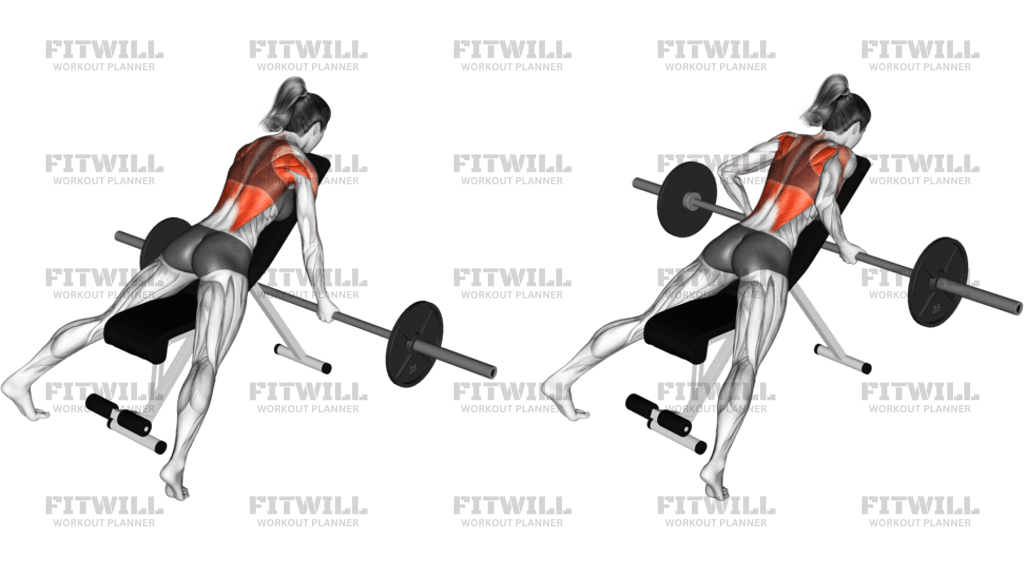
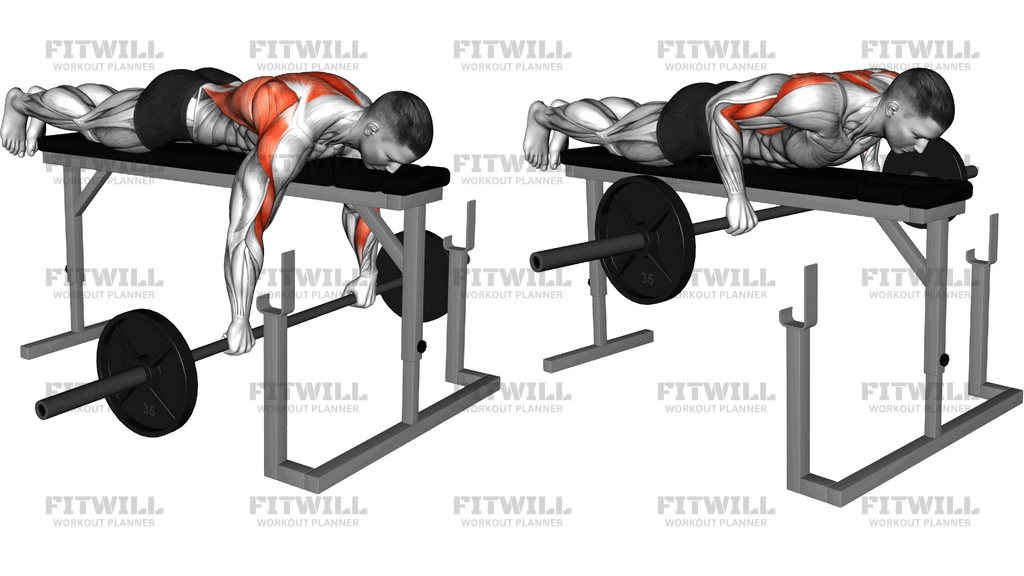
Barbell Reverse-Grip Incline Row is a chest-supported rowing exercise that places your torso on an incline bench while you pull a barbell with an underhand grip. The setup reduces cheating from hip drive and shifts more of the work to the lats, mid-back, rear delts, and elbow flexors while still demanding strong scapular control.
The incline bench is the key part of the movement. With your chest and upper stomach anchored to the pad, your spine stays braced and your torso angle stays consistent from rep to rep. The reverse grip lets your elbows travel closer to your sides and encourages a stronger elbow flexion pattern, which often makes the lower lats and biceps feel more involved than a pronated row.
Each rep should start from a long reach at the bottom, then pull the bar toward your lower ribs or upper abdomen without losing contact with the bench. Think about driving the elbows back, squeezing the shoulder blades only after the bar starts moving, and lowering the weight slowly until the arms are fully extended again. The bench should control your body; the back and arms should move the load.
This exercise works well as a hypertrophy or accessory row when you want strict upper-back work without loading the lower back heavily. Use a load you can row smoothly, keep the neck neutral, and stop the set if your hips lift, your chest peels off the pad, or the bar starts bouncing. It is a useful option for lifters who want a controlled row variation with a clearer pulling path and steady torso support.
[ Workout Log & Planner ]
Put your next workout in Fitwill
Keep your plan and training log ready when you are.


Instructions
- Set an incline bench around 30-45 degrees and position it so your chest can rest on the pad with the bar directly beneath you.
- Lie face down with your chest and upper stomach supported, feet planted wide behind you for balance, and take a shoulder-width underhand grip on the bar.
- Let your arms hang straight down at the bottom and reach long through the shoulders without losing contact with the bench.
- Brace your abs and keep your ribs down before you begin the pull.
- Drive your elbows back toward your hips and row the bar toward your lower ribs or upper abdomen.
- Squeeze your shoulder blades at the top without shrugging your shoulders up toward your ears.
- Lower the bar slowly until your arms are straight again and the shoulders can move forward under control.
- Reset your brace, repeat for the planned reps, and step off the bench safely when the set is finished.
Tips & Tricks
- Keep your chest glued to the bench; if your torso lifts, the row turns into a loose cheat movement.
- Choose an underhand grip that lets your wrists stay straight instead of cranking them back.
- Pull to the same touch point every rep, usually the lower ribs for more lat emphasis or the upper abdomen for more mid-back work.
- Do not bounce the bar off the bottom position; keep tension through the full range.
- If your biceps take over, think about driving the elbows back rather than curling the bar up.
- A slower lowering phase usually gives better control than trying to yank the bar upward.
- Keep your feet planted and glutes lightly engaged so the bench stays stable under load.
- Use a load that lets you keep the same chest contact and elbow path from the first rep to the last.
Frequently Asked Questions
What muscles does Barbell Reverse-Grip Incline Row work?
It primarily trains the lats, mid-back, rear delts, and biceps, with the bench and trunk muscles stabilizing the body.
Why use a reverse grip instead of an overhand grip?
The underhand grip usually keeps the elbows closer to the body and can make the lats and elbow flexors feel more involved.
How high should the incline bench be?
A moderate incline, usually around 30-45 degrees, gives enough chest support without forcing the shoulders into an awkward position.
Where should the bar touch?
Most lifters should aim for the lower ribs or upper abdomen, as long as the bar path stays smooth and the chest stays on the bench.
Can beginners do this exercise?
Yes, if they start light and keep the torso glued to the pad. The fixed support makes it easier to learn than a bent-over row.
What is the most common mistake?
Lifting the chest off the bench or turning the row into a hip-driven yank is the main form breakdown.
Should I feel this in my lower back?
Not much. The bench should offload most of the lower-back demand; if your back is doing the bracing and pulling, the setup is off.
How can I make it harder without cheating?
Add a pause at the top, slow the lowering phase, or increase the load only after the bar path and chest contact stay consistent.