Cable Incline Bench Row
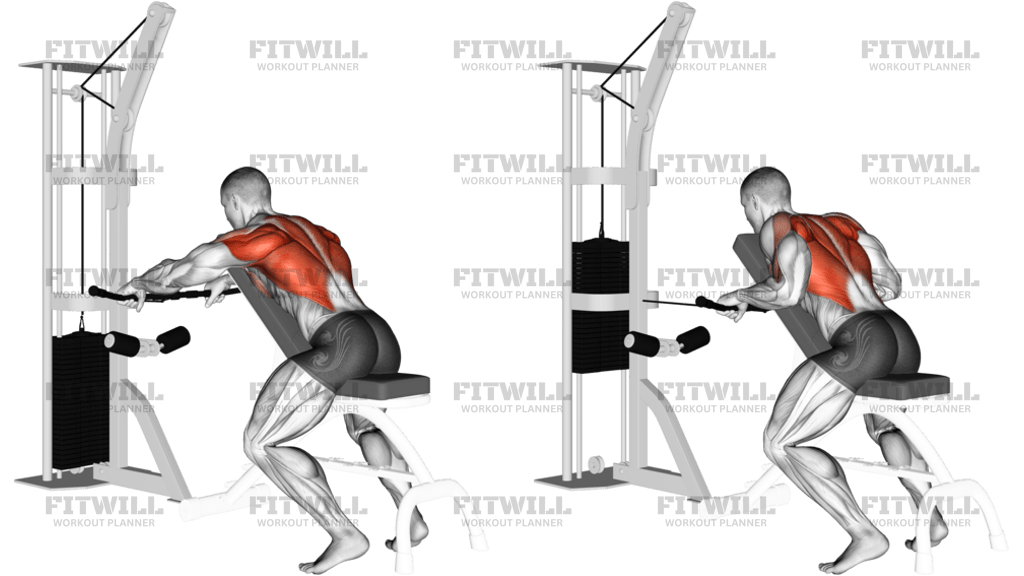
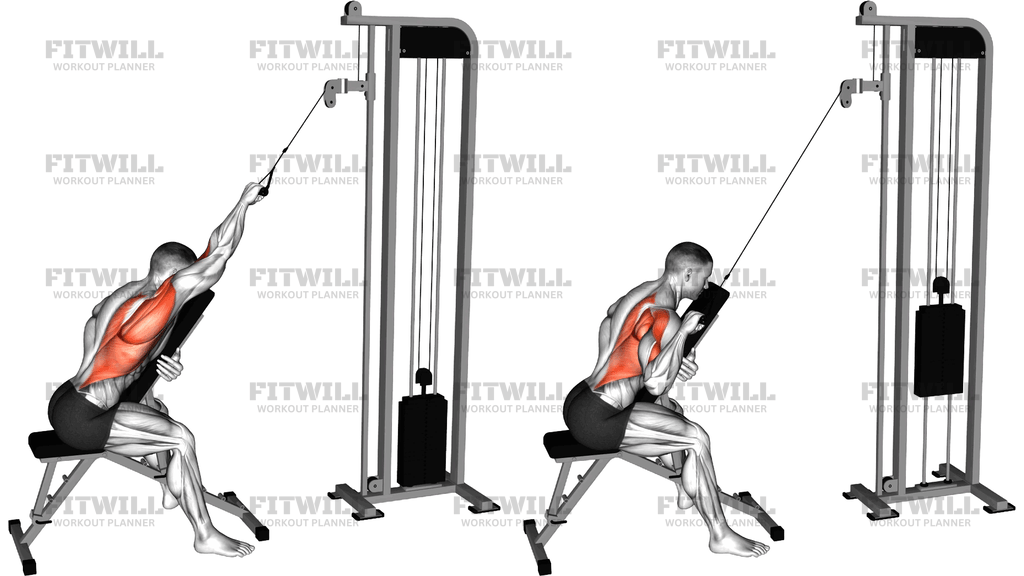
Cable Incline Bench Row is a chest-supported pulling exercise done with an incline bench set in front of a low cable pulley and a handle attachment. The bench takes momentum out of the lift so the back has to do the work instead of the hips and lower back. That makes the movement useful for building upper-back strength, improving scapular control, and teaching a cleaner row pattern.
The image shows a torso-supported row with the chest resting against the incline pad, feet braced on the floor, and the handle moving from arm's length toward the lower ribs. That setup shifts the emphasis toward the trapezius, rhomboids, rear shoulder area, lats, and biceps while keeping the spine in a more fixed position. Because the torso is supported, small changes in elbow path and shoulder blade motion matter more than cheating the weight up.
A good rep starts before the cable moves. The bench angle, foot position, and chest contact should make you feel balanced enough to reach forward without losing pressure against the pad. From there, pull the handle by driving the elbows back and letting the shoulder blades retract and depress naturally. The finish should feel like a strong squeeze across the upper back, not a shrug into the neck. Return the handle slowly until the arms are long again and the shoulders stay controlled.
This exercise fits well in back-focused sessions, upper-body accessories, or any program that needs strict horizontal rowing without torso swing. It is also useful when you want to reduce lower-back fatigue while still training hard. Keep the load honest: if the chest pops off the bench, the elbows flare wildly, or the neck tightens, the weight is probably too heavy or the bench is too low/high for your build.
Use Cable Incline Bench Row when you want repeatable tension, a clear pulling path, and a stable setup that helps you feel the upper back work through the full rep. It is beginner-friendly when loaded conservatively, but it still rewards attention to bench height, grip, elbow path, and the controlled return to the start.
[ Workout Log & Planner ]
Put your next workout in Fitwill
Keep your plan and training log ready when you are.


Instructions
- Set an incline bench in front of a low cable pulley and attach a handle that you can hold with both hands or a neutral grip.
- Sit on the bench with your chest against the upper pad, feet planted wide and firm, and the handle reaching forward at arm's length.
- Keep your neck long, ribs down, and shoulders set away from your ears before you start the pull.
- Pull the handle toward your lower ribs or upper waist by driving your elbows back along the sides of the bench.
- Squeeze your shoulder blades together at the top without arching your lower back or shrugging your shoulders.
- Pause briefly in the contracted position while keeping pressure through your chest and feet.
- Lower the handle slowly until your arms are straight and your shoulders stay controlled in the stretched position.
- Breathe out as you pull and breathe in as you return, then repeat for the planned number of reps.
Tips & Tricks
- Set the bench high enough that your chest can stay glued to the pad while your arms fully reach the cable.
- Choose a grip that lets your wrists stay neutral; if the handle twists your wrists, switch to a different attachment.
- Keep the elbows moving slightly back and out from the torso instead of yanking them straight behind your body.
- Think about pulling the shoulder blades back and down, not just bending the arms harder.
- If the chest leaves the pad on every rep, reduce the load before you change the tempo.
- Use a controlled return of about two to three seconds so the cable never pulls you out of position.
- Stop the set when your neck starts to shrug or the low back starts helping to finish the rep.
- Let the upper back finish the movement; do not turn it into a hip-driven row.
Frequently Asked Questions
What does Cable Incline Bench Row train most?
It primarily trains the upper back, especially the traps and rhomboids, with help from the lats and biceps.
Why use an incline bench for this cable row?
The bench supports your torso so the rep stays strict and the lower back does not have to stabilize the whole pull.
Where should the handle finish on each rep?
Most lifters do best pulling the handle toward the lower ribs or upper waist, with the elbows tracking back beside the bench.
How far should my chest be from the bench pad?
Your chest should stay in contact with the pad for the whole rep, with just enough space to reach forward without losing position.
Can I use a single D-handle or do I need a special attachment?
A neutral-grip handle works well, and many lifters can use a D-handle or similar attachment as long as the wrist stays comfortable.
What should I avoid if my neck feels tight during this row?
Usually the load is too heavy or the shoulders are shrugging. Keep the neck long and pull the shoulders down before you row.
Is this exercise good for beginners?
Yes. The chest-supported setup makes it easier to learn a clean row pattern with light to moderate resistance.
What is a good substitute if I do not have an incline bench and cable machine?
A chest-supported dumbbell row or machine row is the closest substitute because it keeps the torso supported while you pull.