Close-Grip Chin-Up
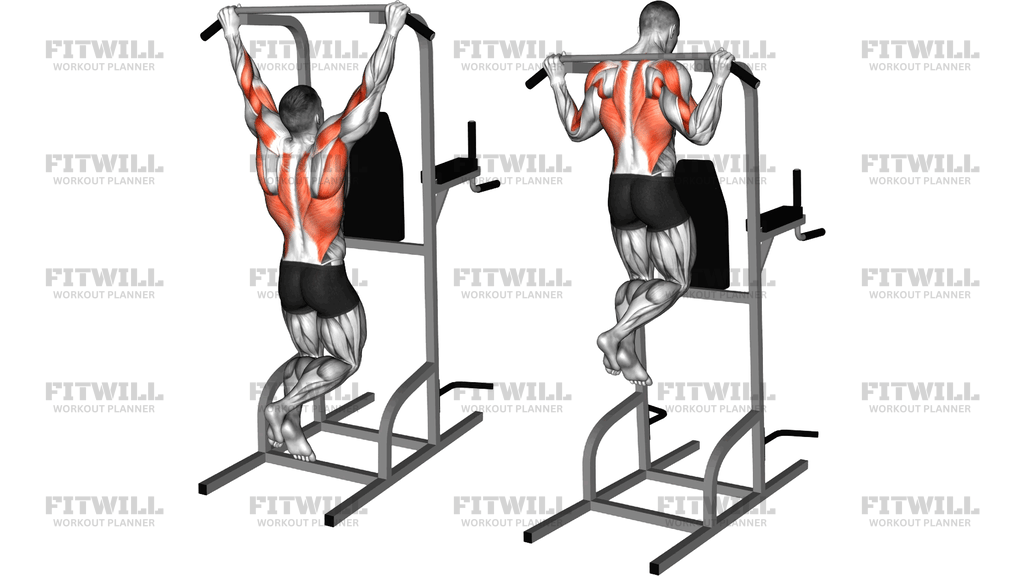
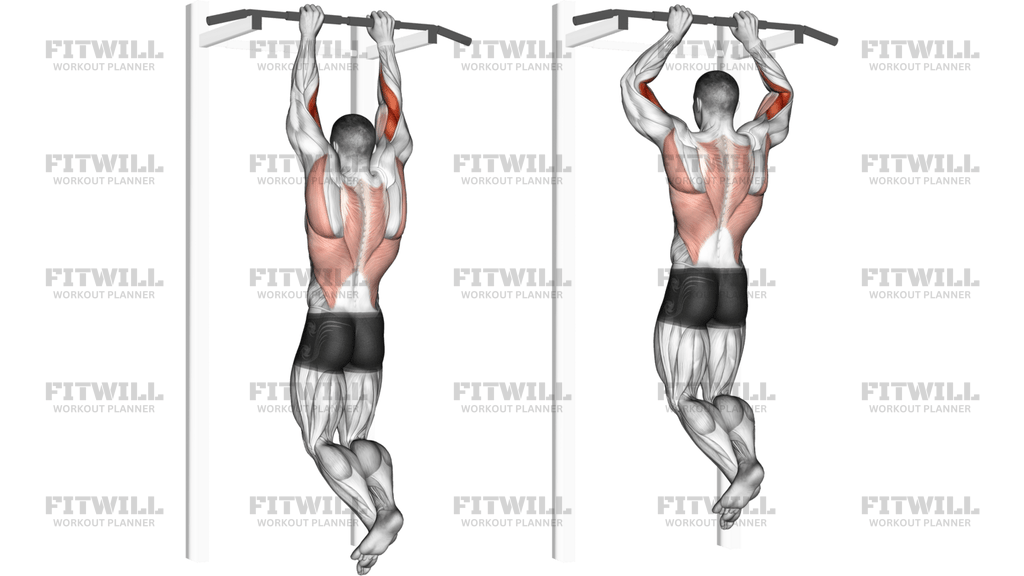
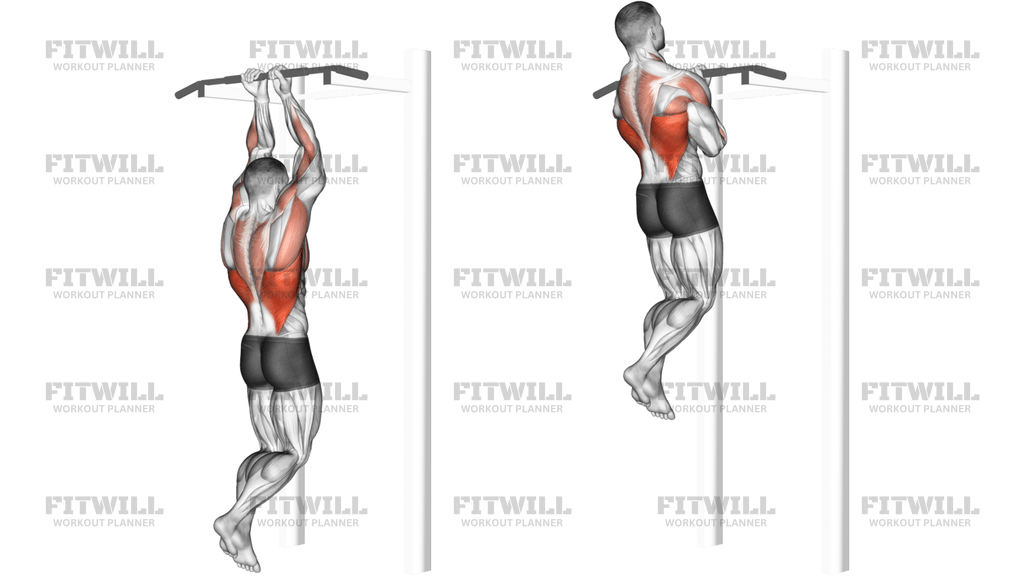
Close-Grip Chin-Up is a body-weight pulling exercise built around a narrow grip and a controlled vertical pull. On the setup shown here, the hands are close together on the multi-grip bar and the body hangs in a tight line with the feet crossed behind the body to reduce swing. That narrow hand position shifts more demand onto the lats, biceps, forearms, and the muscles that keep the shoulder blades organized as you rise and lower.
The exercise is simple in concept but demanding in execution because the start position is already a loaded hang. A good rep begins with the shoulders set down away from the ears, the ribs stacked over the pelvis, and the torso braced so the body does not turn the pull into a kip. Whether your bar uses a supinated close grip or the angled neutral handles shown in the image, the goal is the same: pull straight up with the elbows, not with momentum.
Close-grip chin-ups are especially useful when you want a back-focused vertical pull that also challenges elbow flexion strength. Compared with a wider pull-up, the narrow grip usually lets the elbows stay closer to the torso and can make it easier to keep the chest tall and the rep strict. That makes it a strong choice for back training, upper-body strength work, and advanced body-weight programming, as long as the shoulder position stays comfortable.
The best reps finish when the chin clears the bar or the upper chest reaches the handles without the torso swinging forward. On the way down, control matters as much as the pull: lower until the elbows are straight, keep the shoulders active, and avoid dropping into a loose dead hang if that irritates the shoulders. If full body-weight reps are not yet solid, use a band, assisted machine, or eccentric-only work so the movement stays clean.
Because the grip is close and the shoulders are overhead, this exercise rewards patience with setup and tempo. Small changes in hand spacing, body tension, and scapular control can completely change how the rep feels. Treat each repetition as a strict climb up and a controlled descent back to the hang, and the movement will train the lats and arms without unnecessary swing or joint stress.
[ Workout Log & Planner ]
Put your next workout in Fitwill
Keep your plan and training log ready when you are.


Instructions
- Grip the close handles or close underhand bar with your hands about shoulder-width or slightly narrower, then hang with straight arms and your feet crossed behind you.
- Let the shoulders set down away from your ears and stack your ribs over your pelvis before you start the pull.
- Brace your midsection so your torso stays still instead of swinging or kipping.
- Pull your elbows down and in toward your sides as you drive your chest up toward the bar.
- Keep the neck long and the lower body quiet while you rise.
- Finish with your chin over the bar or your upper chest close to the handles without jerking.
- Lower yourself under control until the elbows are straight and the shoulders are still active.
- Reset the shoulders at the bottom before starting the next rep.
Tips & Tricks
- Set the hands close enough that the elbows stay under the wrists, but not so narrow that the shoulders feel pinched at the top.
- Think about pulling the elbows to your front pockets; that usually keeps the lats doing the work instead of the arms alone.
- A small hollow-body shape is useful here: ribs down, glutes lightly tight, and legs crossed to limit swinging.
- If your reps start to turn into a kick, stop the set and reduce the difficulty rather than letting the torso do the work.
- Use a controlled descent of about 2 to 3 seconds so the shoulders learn to stabilize through the full range.
- If the close underhand grip bothers your wrists or elbows, try the angled neutral handles shown in the image.
- Stop just short of a loose shoulder hang if the bottom position feels uncomfortable; keep tension in the upper back.
- Choose assistance that lets you keep the same hand spacing and body line on every rep.
Frequently Asked Questions
What muscle does Close Grip Chin-Up target most?
The lats are the main target, with the biceps, forearms, and upper back helping throughout the pull.
Can beginners perform this exercise?
Yes, but most beginners should use assistance first, such as a band, machine, or slow eccentrics, so the body stays strict.
How wide should my hands be on the bar?
Use a close grip that is about shoulder-width or a little narrower, which matches the setup shown here.
Should I use an underhand grip or neutral handles?
Either can work if the bar is built that way. The key is keeping the grip close and pulling with the elbows rather than swinging.
Why do my shoulders shrug up at the top?
That usually means the shoulder blades are not staying set down before the pull. Start each rep with the shoulders active and away from the ears.
Do I need to touch my chest to the bar?
No. In a strict close-grip chin-up, getting the chin over the bar with control is enough if the shoulder position stays clean.
Why are my elbows and biceps feeling it so much?
That is normal with a close chin-up because the narrow grip increases elbow flexion demand while the lats still drive the pull.
What is the safest way to lower back down?
Lower slowly until your arms are straight, keep the shoulders controlled, and avoid dropping into a loose hang if that bothers your shoulders.