Lever T-Bar Reverse-Grip Row
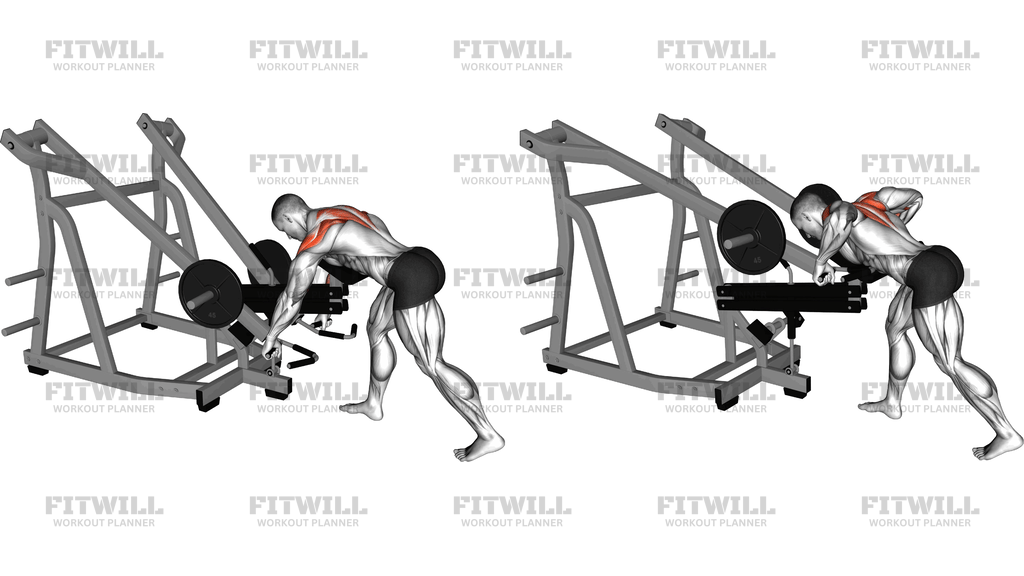
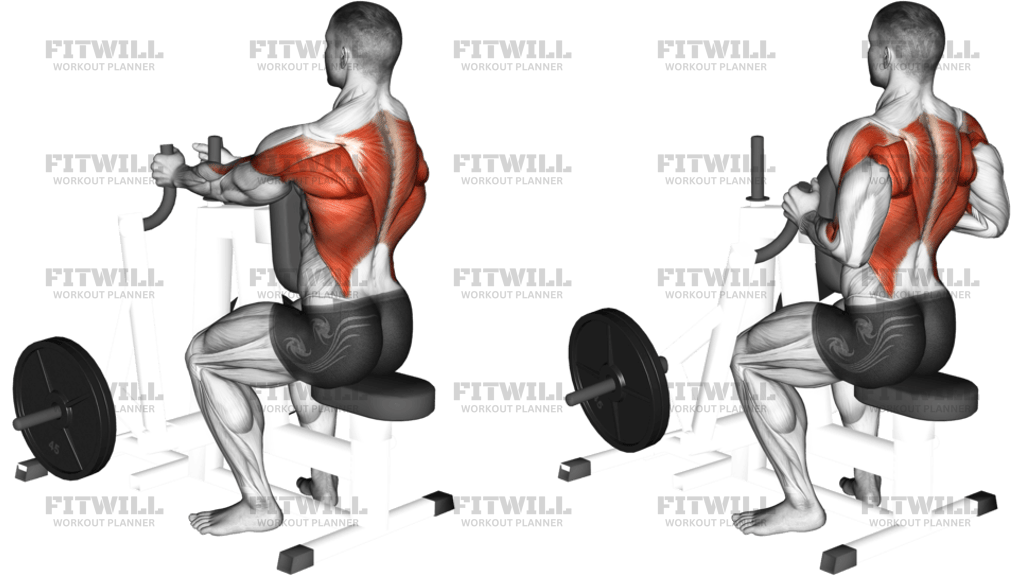
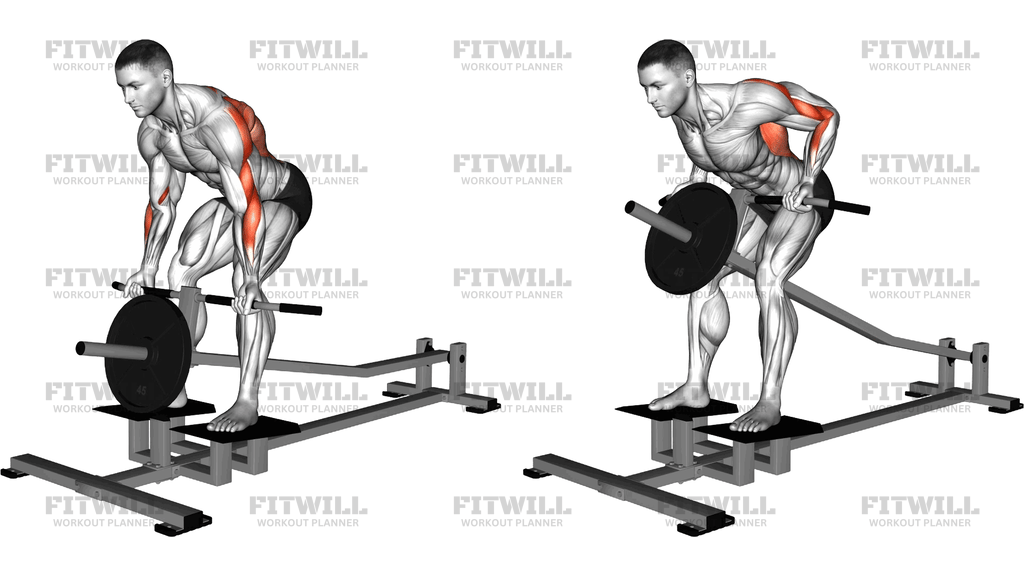
Lever T-Bar Reverse-Grip Row is a standing, plate-loaded pulling exercise that uses a leverage machine to train the upper back, lats, and arms through a fixed bar path. The reverse-grip setup shifts the elbows slightly closer to the torso and makes it easier to drive the handles toward the lower ribs or upper waist, which is why the movement feels different from an overhand row. The image shows a hinged stance over the machine with the chest angled forward, so the body position matters just as much as the pulling effort.
This exercise is useful when you want hard back work without having to stabilize a free barbell through a loose path. The primary emphasis in this record is the traps, while the rhomboids, lats, and biceps help control the pull and the return. In practice, that means the shoulder blades should move smoothly, the elbows should track back, and the torso should stay braced instead of rocking through the rep.
The setup is the part that makes or breaks the set. Stand on the foot platform, hinge at the hips, and take the underhand grip on the handles before you start pulling. If your feet are too far forward, the machine will feel awkward and you will lose leverage; if your torso rounds, the pull turns into a shrug and a heave. A solid brace lets the back muscles do the work instead of turning the set into a full-body yank.
Each repetition should begin with the shoulders set, the chest supported by your own hip hinge, and the arms long but not loose. Pull the handles toward your lower ribs or upper abdomen, squeeze the shoulder blades, and stop the rep when the elbows can no longer travel back without the torso drifting upward. Lower the handles under control until the arms are extended again, then reset your brace before the next rep.
Lever T-Bar Reverse-Grip Row is especially useful as a back-building accessory on upper-body or pull days because it combines a stable machine path with a grip that still challenges the biceps and upper back. Use it for moderate to heavy sets when you want strict tension, or lighter sets when you are teaching rowing mechanics and scapular control. Keep the motion smooth, keep the neck long, and let the machine load move because the back is working, not because the body is swinging.
[ Workout Log & Planner ]
Put your next workout in Fitwill
Keep your plan and training log ready when you are.


Instructions
- Stand on the machine platform with your feet planted and hinge forward so your torso is angled over the handle path.
- Take the reverse grip on the handles, set your shoulders down and back, and keep your wrists straight above the handles.
- Brace your midsection before the first pull so your lower back stays long and your chest does not collapse toward the floor.
- Pull the handles toward your lower ribs or upper abdomen by driving your elbows back alongside your torso.
- Squeeze your shoulder blades together at the top without jerking your shoulders up toward your ears.
- Pause briefly when the handles reach the body and the machine arm stops moving cleanly.
- Lower the handles in a controlled arc until your arms are extended and your back position is still set.
- Reset your brace and breathing before the next repetition instead of bouncing immediately into the next pull.
- Finish the set by returning the handles to the start under control and stepping off the platform carefully.
Tips & Tricks
- Keep the chest angled forward from the hips; standing up tall turns the pull into a shrug instead of a row.
- Drive the elbows back, not down, so the handles travel toward the lower ribs instead of drifting toward the thighs.
- If the upper traps take over too early, think about pulling the shoulder blades back before you bend the elbows hard.
- Do not let the wrists curl back on the reverse grip; stacked wrists keep the forearms from leaking force.
- A slightly narrower underhand grip usually keeps the elbows closer and makes the lats easier to feel.
- Use a load you can lower slowly, because the return phase reveals whether the back is actually controlling the machine.
- Keep the neck long and your gaze a few feet ahead of the machine so the spine does not crane upward on the pull.
- Stop the set when your torso starts rising to meet the handles, since that usually means the machine is too heavy.
- A short pause at the top makes this row much harder without needing to add more plates.
Frequently Asked Questions
What muscle does Lever T-Bar Reverse Grip Row target most?
The row hits the upper back hard, with this record emphasizing the traps while the rhomboids, lats, and biceps assist.
Can beginners perform this exercise?
Yes. Beginners usually do best with a light load and a controlled hip hinge so they can learn the fixed machine path without swinging.
Where should the handles travel on Lever T-Bar Reverse-Grip Row?
Aim the handles toward the lower ribs or upper abdomen. If they drift too low, the pull usually turns into a body swing instead of a back-driven row.
What is a common mistake on the reverse grip?
Letting the wrists bend back or the elbows flare wide. Keep the wrists stacked and the elbows close enough that the pull stays tucked.
Should my torso stay still during Lever T-Bar Reverse-Grip Row?
It should stay mostly fixed. A small hinge is normal, but if your chest keeps rising each rep, the set is too heavy.
Is this exercise more for the lats or the traps?
It trains both, but the machine row pattern also loads the upper back and scapular retractors strongly, which is why the traps are listed as primary here.
Do I need to lock my knees on this movement?
No. Keep a soft knee bend and a stable stance so you can hold the hip hinge without drifting forward or backward.
How can I make Lever T-Bar Reverse-Grip Row harder without adding much weight?
Pause for a full second at the top or slow the lowering phase. Both options increase upper-back tension without changing the setup.