One-Arm Against Wall
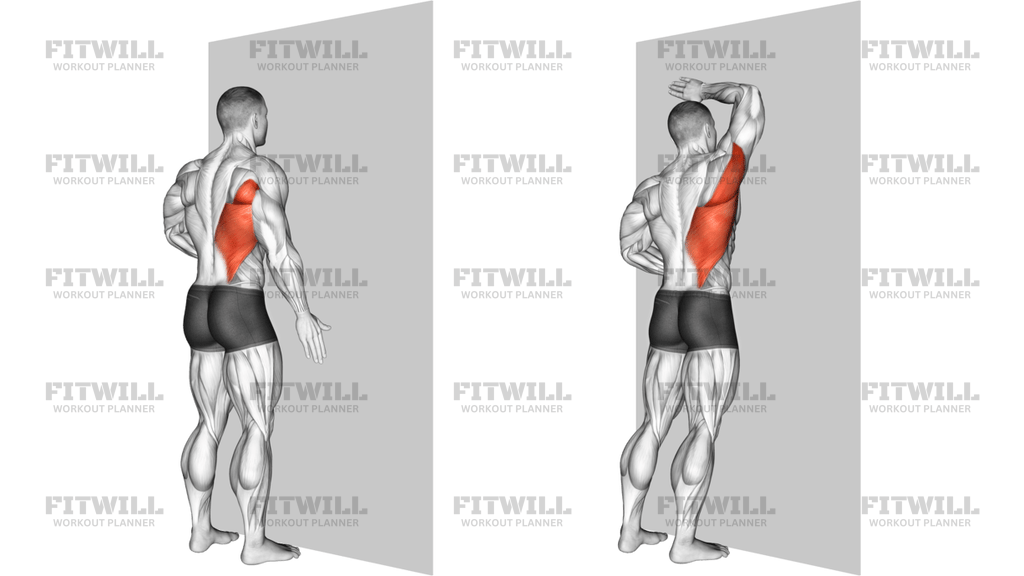
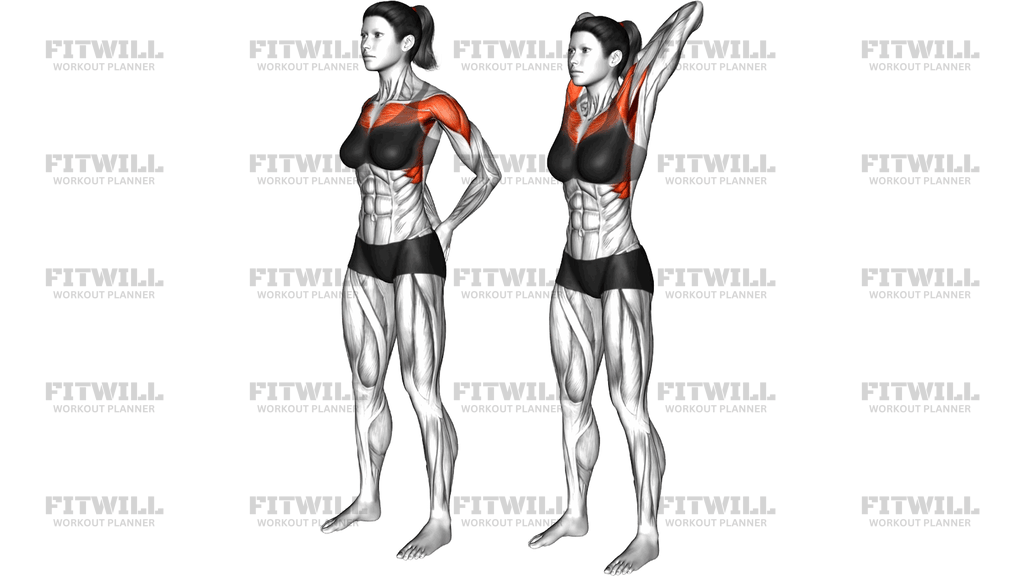
One-Arm Against Wall is a wall-assisted lat and side-body stretch that uses your own body position to open the line from the rib cage to the armpit and shoulder. The setup matters because this movement is less about forcing range and more about placing the shoulder, ribs, and pelvis in a position where the lats can lengthen without the lower back taking over.
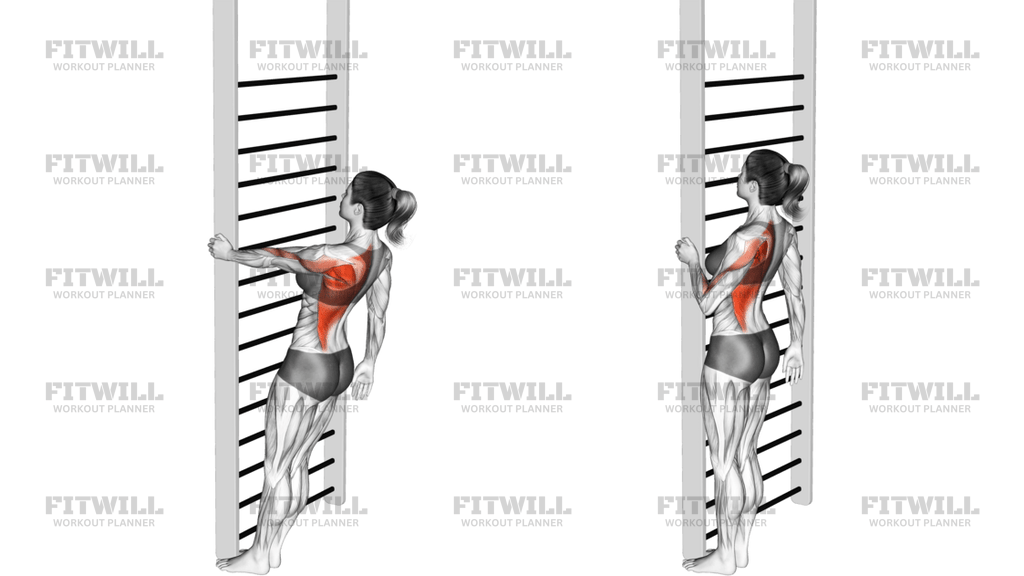
The image shows a single arm reaching up the wall while the torso stays tall and the hips shift away from the hand. That makes this especially useful for people who feel tightness overhead, notice their rib cage flaring when they raise an arm, or want a simple way to improve shoulder flexion and lat mobility before pressing, pulling, climbing, or overhead work. The stretch should travel through the outer back, under the armpit, and into the side of the torso rather than being jammed into the shoulder joint.
The main target is the latissimus dorsi, with help from the teres major, lower shoulder girdle, and the side-body muscles that keep the trunk organized. In practical terms, you should feel a lengthening sensation along the side of the back and armpit, not a sharp pinch in the front of the shoulder. Keeping the elbow long but not locked, the ribs stacked, and the neck relaxed is what makes the position productive instead of irritating.
Use this as a mobility drill, a warmup reset between upper-body sets, or a cooldown stretch when the lats and triceps feel shortened from training. It works best when the breath stays slow and the pressure into the wall stays light. If the stretch feels too aggressive, lower the hand, step closer to the wall, or reduce the angle of the lean so you can keep the movement smooth and pain-free.
Fitwill
Log Workouts, Track Progress & Build Strength.
Achieve more with Fitwill: explore over 9600 exercises with images and videos, access built-in and custom workouts, perfect for both gym and home sessions, and see real results.
Start your journey. Download today!




Instructions
- Stand side-on to a wall and place one hand high on the wall with the arm reaching overhead.
- Keep the working elbow mostly straight, with only a soft bend if your shoulder needs it.
- Step the feet into a staggered stance so you can shift your hips away from the wall.
- Keep your chest tall and your ribs stacked instead of arching your lower back.
- Let the shoulder blade glide upward as the arm reaches long through the wall.
- Slowly move your hips away from the wall until you feel a stretch along the lat and side rib cage.
- Hold the end position and breathe into the side of your back for the planned time or reps.
- Ease out of the stretch with control, then switch sides and repeat.
Tips & Tricks
- Keep the hand high on the wall, but do not force it higher if the shoulder starts to pinch.
- Shift the hips away from the wall rather than cranking the torso backward.
- Feel the stretch in the lat and side rib cage, not in the front of the shoulder.
- If the elbow locks painfully, keep a small bend and focus on length through the fingertips.
- Avoid flaring the ribs; a stacked rib cage usually gives a cleaner lat stretch.
- Use slow nasal or controlled mouth breathing to help the torso relax into the position.
- Lower the hand on the wall if the overhead angle feels too aggressive.
- Stop short of any sharp pain, tingling, or numbness in the arm or shoulder.
- A slight turn of the chest away from the wall can change the line of pull, but keep the movement small and controlled.
Frequently Asked Questions
What does One-Arm Against Wall stretch the most?
It mainly targets the latissimus dorsi and the side of the torso under the armpit.
Should my arm be straight against the wall?
A mostly straight arm is fine, but a small bend in the elbow can make the shoulder feel much more comfortable.
Where should I feel the stretch on the wall?
You should feel it through the outer back, armpit, and side ribs, not as a sharp pinch at the front of the shoulder.
Why do my ribs want to flare when I reach overhead?
That usually means the lats are limiting the reach, so keep the ribs stacked and move the hips away from the wall instead of arching hard.
Is One-Arm Against Wall a warmup or a stretch?
It can be used as both. Many people use it before overhead lifting or as a cooldown after pulling and pressing work.
Can beginners do this stretch?
Yes. Beginners usually do best with a lower hand position, a smaller lean, and relaxed breathing.
What is the most common mistake with the wall position?
People often push the hand high and then twist or arch the lower back instead of using a clean side-body stretch.
Does this help overhead mobility?
Yes, it can improve how freely the arm reaches overhead when tight lats are part of the limitation.
How long should I hold each side?
Short holds of 15 to 30 seconds work well for mobility, or you can repeat controlled breaths in the position for a few rounds.