Sphinx
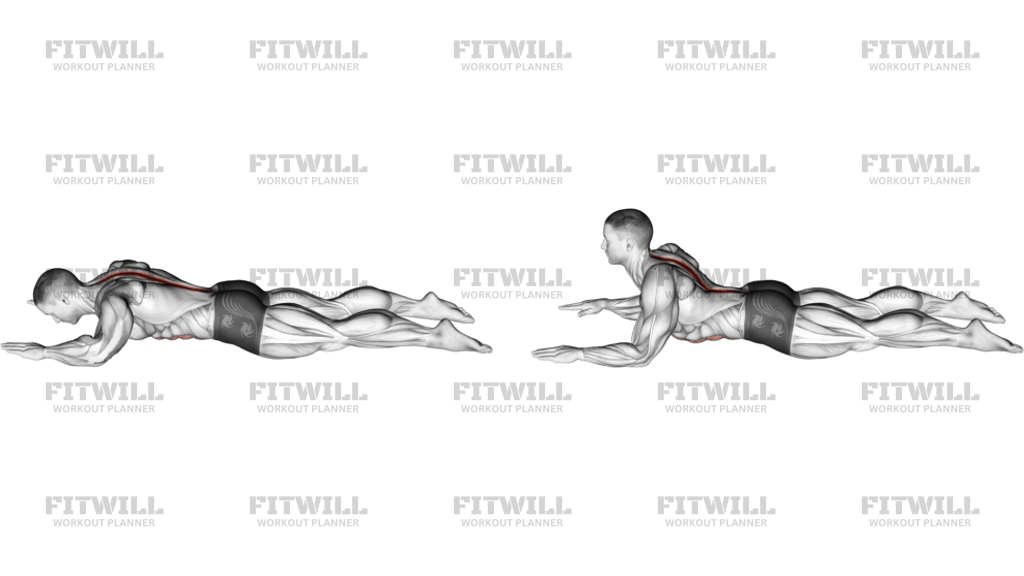
Sphinx is a prone bodyweight stretch and back-extension drill done with the forearms on the floor and the chest lifted gently off the mat. It is a controlled way to open the front of the body, especially the abdomen and hip flexors, while teaching you to support spinal extension without collapsing into the lower back. The position is simple, but the setup matters because a few centimeters of difference in elbow placement or chest height can turn it from a useful mobility drill into a pinchy lumbar stretch.
The image shows a low, supported extension rather than a full cobra or press-up. That means the pelvis, thighs, and tops of the feet stay grounded while the forearms create the lift. In practical terms, the stretch should be felt through the rectus abdominis, with the shoulders, upper back, and forearms helping you hold a steady, relaxed shape. The goal is not to force the highest chest position possible. The goal is to find a position you can breathe in without bracing hard or losing the line from hips to ribcage.
Good Sphinx work starts on the floor. Lie face down, set the forearms parallel, and place the elbows under or slightly in front of the shoulders so the upper body can rise without jamming the joints. From there, press the forearms down, lengthen through the spine, and let the chest float up only until you feel a strong but manageable opening through the front of the torso. Keep the glutes lightly active, the neck long, and the lower ribs from flaring forward.
Because this is a stretch as much as a posture drill, breathing changes the effect. Slow nasal breathing or long exhales help the abdomen soften so the front of the body can open more naturally. If you feel the stretch mostly in the low back, reduce the height, move the elbows a little farther forward, and keep the pelvis heavier. If you feel it mostly in the shoulders, widen the forearms slightly and back off the range until the load is shared more evenly.
Sphinx fits well as a warm-up for extension work, a recovery drill after sitting, or a controlled mobility break between strength sets. It can also be used as a regression for people who are not ready for a deeper backbend. Beginners usually do best with short holds and conservative range, while experienced lifters can use it to restore posture and get the trunk ready for training that asks for thoracic extension, overhead work, or repeated hip flexion. The best reps are calm, repeatable, and easy to breathe through.
[ Workout Log & Planner ]
Put your next workout in Fitwill
Keep your plan and training log ready when you are.


Instructions
- Lie face down on a mat with your legs long, the tops of your feet on the floor, and your forearms resting in front of you.
- Set your elbows under or slightly in front of your shoulders, with your forearms parallel and your palms flat on the floor.
- Keep your hips, pubic bone, and thighs heavy against the mat before you lift your chest.
- Press both forearms down and gently raise your chest until you feel a controlled stretch through the abdomen and front of the hips.
- Keep your neck long and your gaze slightly forward so you do not crank your head back.
- Lightly squeeze your glutes and lower ribs in so the lift comes from spinal extension, not a hard lumbar pinch.
- Breathe slowly while you hold the top position or perform the repetition; keep the breath smooth and unforced.
- Lower your chest back to the floor with control, reset the forearms, and repeat for the planned time or reps.
Tips & Tricks
- The farther forward your elbows are, the less intense the backbend will feel; move them forward if the low back feels jammed.
- Keep the pubic bone and front of the thighs heavy so the stretch stays supported instead of turning into a low-back hinge.
- If the chest feels cramped, widen the forearms a little and let the shoulders sit down away from the ears.
- Think about lengthening the abdomen and hip flexors rather than forcing the sternum as high as possible.
- Use long exhales to soften the front line of the body; do not hold your breath at the top.
- A small lift that you can breathe through is better than a higher position that creates pinching or rib flare.
- On repeated reps, lower and rise smoothly instead of bouncing off the floor.
- Stop the set if you feel sharp compression in the lower back or tingling in the arms.
Frequently Asked Questions
What should I feel most in Sphinx?
You should feel a gentle opening through the abdomen and hip flexors, with light support from the shoulders, forearms, and upper back.
Is Sphinx the same as Cobra?
No. Sphinx is a lower, more supported back-extension stretch with the forearms on the floor, while Cobra uses the hands and usually lifts the chest higher.
Where should my elbows be?
Place them under your shoulders or slightly in front of them so the chest can lift without jamming the lower back.
Why does my lower back feel it more than my abs?
Usually the chest is too high or the pelvis has come off the floor. Lower the lift and keep the thighs and pubic bone heavy.
Can a beginner do this exercise?
Yes. Beginners should keep the range small, hold for a short time, and stop well before any pinching appears.
What muscles does Sphinx work?
It mainly stretches the rectus abdominis and hip flexors while the shoulders, forearms, and spinal muscles support the position.
How long should I hold the stretch?
A controlled hold of about 20 to 45 seconds is common, but the right time is whatever you can breathe through without strain.
When is Sphinx useful in training?
It works well in a warm-up, after long periods of sitting, or after workouts that need a little more front-body opening.