Single Leg Sit Wall
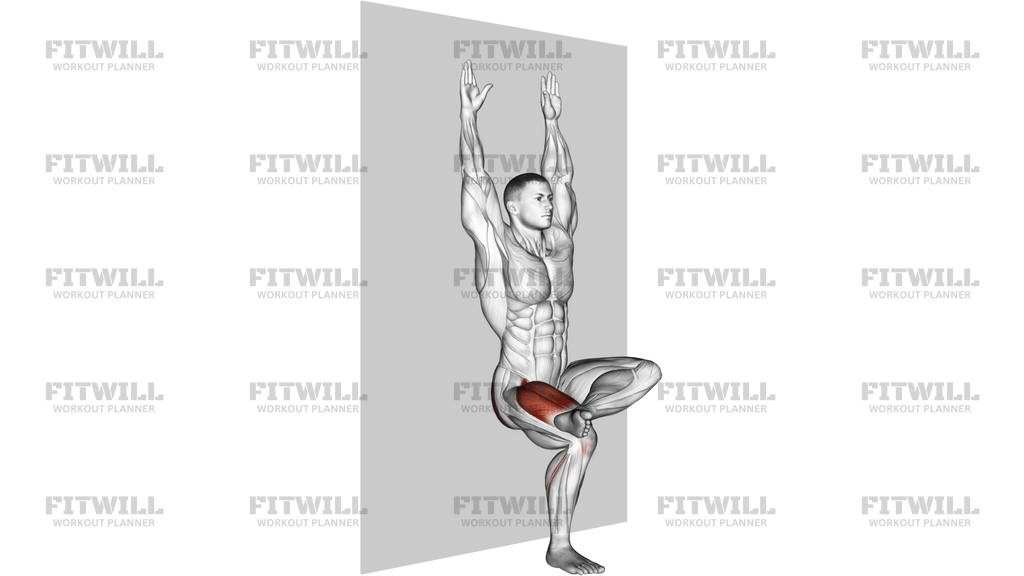
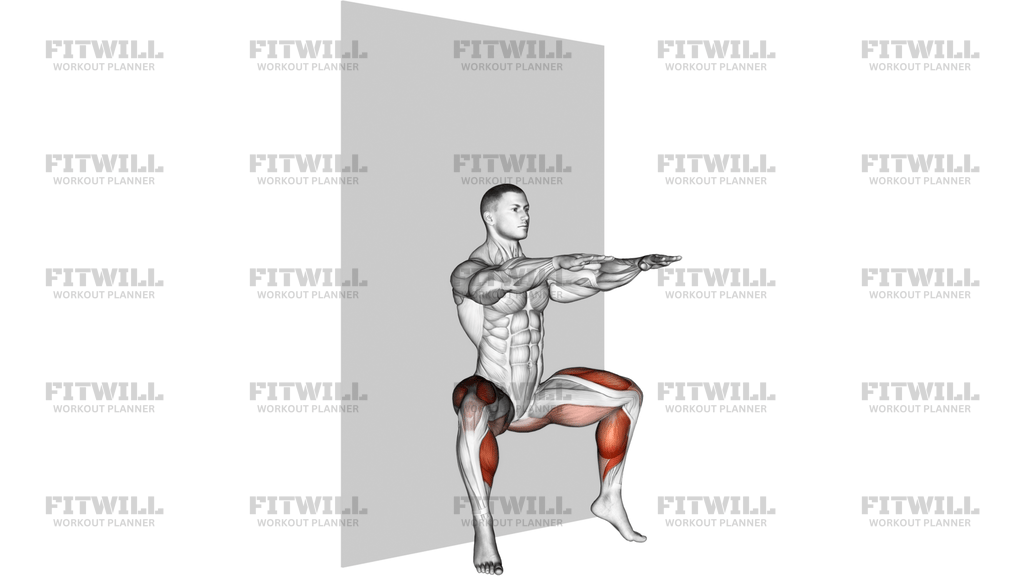
Single Leg Sit Wall is a wall-supported unilateral leg exercise that shifts most of the load to the quads while reducing the balance demands you would get in a free-standing single-leg squat. It is useful when you want one leg to work harder than the other, clean up knee tracking, or add targeted quad volume without a machine. The wall lets you stay organized so you can focus on pressure through the foot, hip position, and torso control instead of fighting for balance.
Start with your upper back and pelvis lightly pressed into a wall, then place the working foot on the floor so the heel stays down and the knee can bend without collapsing inward. Lift the other leg and keep it bent in front of you, with the thigh clear of the floor and the foot relaxed so it does not help you bounce out of the bottom. Your goal is a stacked position: ribs down, hips square, and the support foot far enough forward that the ankle, knee, and hip can share the load.
From that setup, slide into the sit until the support thigh is near parallel to the floor or as low as you can hold without losing the wall contact. Keep pressure through the whole support foot, especially the heel and big toe, and let the knee travel in line with the second toe instead of drifting inward. If you are using rep-based sets, move only a few inches at a time and keep the quad under tension; if you are using timed holds, stay steady and breathe behind a brace instead of relaxing into the bottom.
The main demand is on the quads, but the glutes, adductors, calves, and trunk all help keep the pelvis level and the knee stable. That makes Single Leg Sit Wall a useful accessory for lifters who need more unilateral leg strength, runners who want better single-leg control, or anyone who wants a knee-dominant drill with a clear bottom position. It also works well later in a session because the wall keeps the exercise honest when fatigue starts to blur your alignment.
The best version of this exercise looks quiet and controlled. If your low back arches off the wall, your support heel starts to lift, or your free leg swings to create momentum, shorten the range and reset the stance before the next rep. Build the challenge by adding time, depth, or reps only after you can keep the same knee angle, foot pressure, and pelvis position from start to finish.
[ Workout Log & Planner ]
Put your next workout in Fitwill
Keep your plan and training log ready when you are.


Instructions
- Stand with your upper back against a wall and place one working foot on the floor a half-step in front of your hips.
- Keep that support foot flat, then lift the other leg and bend the knee so the thigh stays in front of you without touching the floor.
- Slide down the wall until the support knee bends to about 90 degrees and your hips stay square to the wall.
- Press your shoulders and pelvis into the wall, then brace your torso before starting the rep.
- Lower a little deeper into the sit by bending the support knee while keeping the heel down and the knee lined up over the middle toes.
- Keep the lifted leg quiet and relaxed instead of using it to push, swing, or brace the movement.
- Pause briefly at the bottom or stay in the hold for the prescribed time without letting your lower back arch off the wall.
- Drive through the whole support foot to rise under control, then reset your stance before the next rep or step out carefully when the set ends.
Tips & Tricks
- Place the support foot far enough from the wall that the heel stays down, but not so far that you lose a deep knee bend.
- Keep the lifted foot quiet; if it starts swinging, shorten the hold and rebuild control.
- Push through the heel, big toe, and little toe of the support foot so the knee does not collapse inward.
- Use the wall to stay upright, but do not let your lower back arch hard off the surface.
- If the standing knee caves in, turn the toes out slightly and think about tracking over the second toe.
- A shorter hold with clean shape is better than a longer hold that turns into a hip shift or bounce.
- Keep both hips level; if one side hikes up, reset the pelvis before continuing.
- Use this as a quad finisher after squats or lunges, not as a balance drill you try to max out.
Frequently Asked Questions
What muscles does Single Leg Sit Wall work most?
The quads do most of the work, with the glutes, adductors, calves, and core helping keep the position steady.
Is Single Leg Sit Wall the same as a regular wall sit?
No. The single-leg version loads one leg more heavily and asks for better knee and hip control.
How bent should my support knee be?
About a right angle is a good target if you can keep the heel down and the knee tracking cleanly.
What should I do with the lifted leg?
Keep it bent and quiet in front of you so it does not help you bounce out of the bottom.
Can beginners do Single Leg Sit Wall?
Yes, but start with a shallower sit and shorter holds before adding depth or longer time under tension.
Why does my low back arch off the wall?
Your stance is probably too close to the wall or you are trying to stay upright by overextending. Step the support foot slightly forward and keep the ribs down.
Should I feel this more in my quads or glutes?
The quads should be the main driver, with the glutes helping stabilize the hip and keep the knee from drifting inward.
How do I make Single Leg Sit Wall easier?
Reduce the depth, hold the free foot lower, or use shorter intervals with both feet down between sets.
Can I use this before or after leg day?
It works well both as a warm-up drill for knee control and as a finisher after heavier leg work.