Spine Stretch
Spine Stretch is a seated Pilates-style mobility drill that asks you to round the spine segment by segment while keeping the legs long and the pelvis anchored. The movement looks simple, but the value comes from how carefully you organize the setup and how smoothly you control the fold and the return. It is useful for improving thoracic and lumbar articulation, hamstring awareness, and the ability to keep the torso quiet while the arms reach forward.
With the legs extended on the mat and the arms held straight in front, Spine Stretch trains the back line and the deep trunk muscles to work without rushing. The shoulders, arms, and upper back stay active enough to hold the reach, while the core and spinal stabilizers guide the rounding pattern. Because the exercise is bodyweight-based, the quality of the shape matters much more than how far you can reach.
The starting position is important: sit tall, lengthen through the crown of the head, and keep both sit bones heavy on the mat before you begin to move. If the pelvis tips backward too early, the stretch usually turns into a collapse instead of a controlled spinal flexion. A clean rep starts with a calm exhale, then a gradual fold where the chin nods, the ribs soften, and the abdomen draws back as the hands travel toward the feet.
At the bottom, aim for a rounded spine rather than a hinge at the hips. Reach forward only as far as you can keep the shoulders relaxed and the neck long, then reverse the motion by stacking the spine back up one section at a time. The return should feel just as deliberate as the descent, with no bouncing, no jerking, and no grabbing through the shoulders or neck.
Spine Stretch fits well in Pilates sessions, warmups, mobility work, or low-load core training when you want controlled trunk flexion instead of brute strength. It is especially helpful for people who sit a lot, runners who need better posterior-chain mobility, or lifters who want more awareness through the spine and pelvis. Keep the movement pain-free and smaller if the hamstrings are tight, the low back feels compressed, or the body starts to round and collapse instead of lengthening.
Fitwill
Log Workouts, Track Progress & Build Strength.
Achieve more with Fitwill: explore over 9600 exercises with images and videos, access built-in and custom workouts, perfect for both gym and home sessions, and see real results.
Start your journey. Download today!




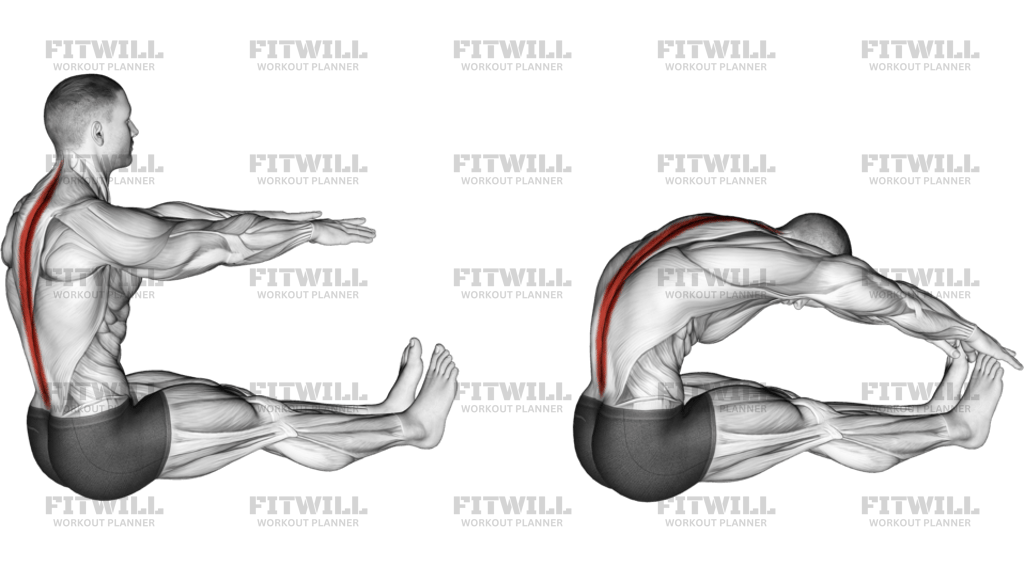
Instructions
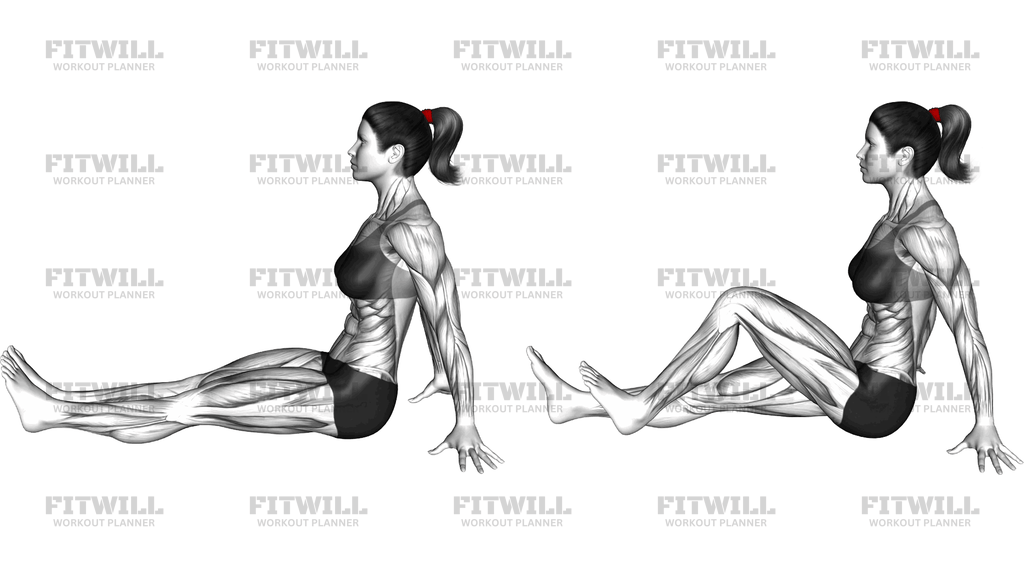
- Sit on an exercise mat with both legs extended in front of you, feet flexed, and the legs about hip-width apart.
- Reach both arms straight forward at shoulder height, palms facing down, and sit tall on your sit bones.
- Lengthen the back of your neck, soften your ribs, and keep your chest broad before you begin the fold.
- Exhale and nod your chin slightly as you start rounding the upper back toward the floor.
- Continue curling the spine segment by segment, letting the arms travel forward as the torso folds over the legs.
- Keep both hips heavy on the mat and avoid letting the pelvis roll backward to chase extra range.
- Reach toward your feet only as far as you can keep the shoulders relaxed and the abdomen pulled back.
- Inhale and restack the spine back to upright one vertebra at a time, finishing tall over the sit bones.
- Reset the shoulders, re-lengthen the neck, and repeat for the planned number of controlled reps.
Tips & Tricks
- Think about peeling the spine forward one section at a time instead of hinging from the hips.
- Keep the sit bones grounded; if they lift, you are reaching too far for your current hamstring length.
- Let the exhale start the fold so the ribs can soften without forcing the neck or low back.
- Hold the arms active at shoulder height instead of letting them drop toward your shins.
- If your hamstrings tug hard, bend the knees slightly and keep the pelvis more upright.
- Keep the chin gently tucked so the neck follows the curve of the upper back instead of cranking forward.
- Stop the reach before the shoulders creep toward the ears, especially at the bottom position.
- Move slower on the way back up than feels necessary; the stacked return is part of the exercise.
- A smaller, cleaner fold is better than a deep collapse that turns the movement into a stretch-and-yank.
- If the low back feels pinched, reduce the forward range and keep more lift through the crown of the head.
Frequently Asked Questions
What does Spine Stretch work most?
It mainly trains spinal mobility and trunk control, with the back line, core, and postural muscles working to organize the fold and the return.
Is Spine Stretch the same as a seated toe touch?
No. A toe touch usually turns into a simple reach, while Spine Stretch emphasizes a controlled segment-by-segment rounding of the spine.
Should my knees stay straight in Spine Stretch?
They can be straight if your hamstrings allow it, but a small knee bend is better than letting the pelvis tuck under and lose control.
How far forward should I reach?
Reach only until you can still keep the shoulders soft, the neck long, and both sit bones rooted to the mat.
Why do my shoulders tense up during Spine Stretch?
That usually happens when you reach too aggressively. Keep the arms long, the chest broad, and the shoulders away from the ears as you fold.
Can beginners do Spine Stretch?
Yes. Beginners should use a smaller range, a light knee bend if needed, and slow breathing so the spine stays organized.
What should I feel at the bottom position?
You should feel a strong lengthening through the back of the body and a controlled abdominal wrap, not a sharp pull in the low back.
How do I return to sitting tall without jerking up?
Start the return by lifting the pelvis and stacking the lower back, then the mid-back, then the upper back until you are upright again.
Can I use Spine Stretch in a warmup?
Yes. It works well in a warmup or mobility block because it opens the spine without needing load or fast tempo.