Decline Diamond Push-Up
Decline Diamond Push-Up is a bodyweight pressing exercise performed with the feet elevated on a bench or box and the hands placed close together under the chest in a diamond shape. The decline angle shifts more load onto the upper chest, triceps, front shoulders, and trunk than a standard floor push-up, while the narrow hand position asks the elbows and wrists to stay organized through a tighter pressing path.
The setup matters because the whole movement depends on a rigid body line. Your feet stay on the bench, your hands stay under the sternum, and your shoulders, hips, and ankles should move together as one unit. If the hips sag or the rib cage flares hard at the bottom, the press turns into a sloppy shoulder and low-back compensation instead of a controlled chest and triceps repetition.
This exercise is usually used for strength, hypertrophy, or bodyweight pressing capacity when a standard push-up is no longer challenging enough. The decline position increases the effective load, and the diamond hand position makes the lockout and mid-range press feel more demanding. That makes it a useful accessory for athletes and lifters who want harder push-up work without needing equipment beyond a bench.
Good reps come from a steady descent, a brief controlled pause near the bottom, and a strong press back to full elbow extension without losing the line from shoulders to heels. Keep your head neutral, let the elbows track close to the body, and breathe in on the way down before pressing out forcefully. If the wrists, shoulders, or lower back cannot stay stacked, reduce the foot height or switch to a simpler push-up variation until the pattern is clean.
Because the exercise combines elevation with a close-hand press, it can expose weak wrist tolerance, scapular control, or core endurance quickly. That is useful, but only if the movement stays pain-free and repeatable. Use it as a progression from regular push-ups, or as a targeted pressing accessory when you want more triceps and upper-chest emphasis without barbell loading.
[ Workout Log & Planner ]
Put your next workout in Fitwill
Keep your plan and training log ready when you are.


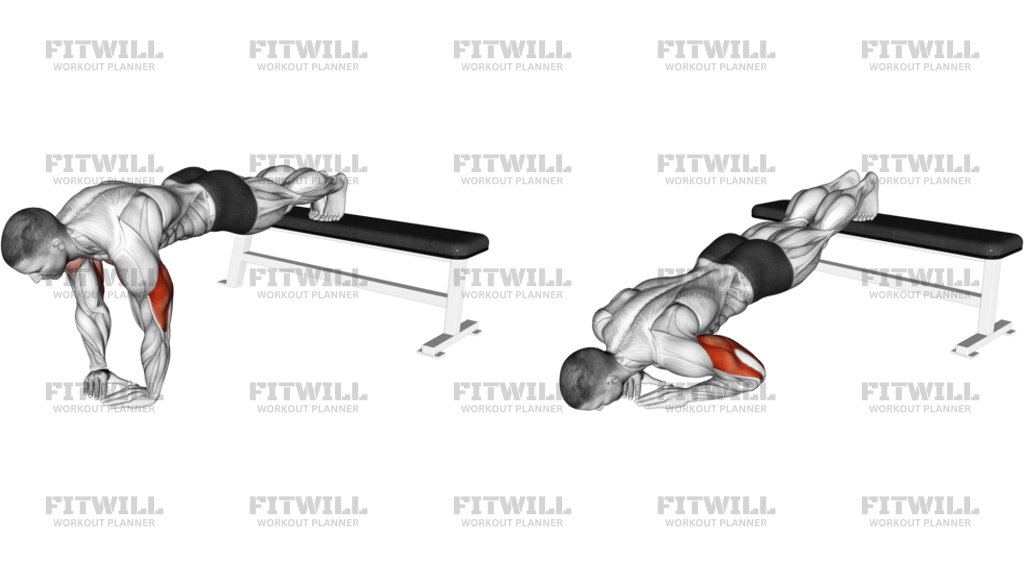
Instructions
- Place your feet on a bench or box behind you and set your hands on the floor directly under your chest in a diamond shape with your thumbs and index fingers close together.
- Lock your legs straight, squeeze your glutes, and hold a straight line from your shoulders through your hips to your heels.
- Stack your shoulders over your hands, keep your neck neutral, and brace your midsection before you start the first rep.
- Lower your chest toward the diamond by bending your elbows back and slightly out while keeping them close to your sides.
- Descend under control until your chest is just above your hands or as low as you can go without losing the straight-body position.
- Pause briefly at the bottom if you can keep tension and joint position stable.
- Press the floor away and drive back to full elbow extension while keeping your hips level and your core tight.
- Inhale on the way down and exhale as you press back to the top.
- Reset your shoulder position at the top before the next rep, then repeat for the planned set.
Tips & Tricks
- A higher foot elevation makes the press much harder; start with a low bench before moving to a taller box.
- Keep the diamond directly under the sternum so the press stays centered instead of drifting forward toward the shoulders.
- If your wrists feel irritated, widen the hand position slightly while keeping the close-grip press pattern.
- Do not let the elbows flare wide; a tucked elbow path keeps tension on the triceps and protects the shoulders.
- If your lower back arches, shorten the range and squeeze the glutes harder at the top of each rep.
- Think about moving your chest and shoulders together as one unit instead of leading with the head.
- Stop the set when the hips start piking or sagging, because that usually means the core can no longer hold the decline position.
- A controlled pause near the bottom is useful, but only if you can keep the shoulder blades stable and avoid collapsing into the floor.
Frequently Asked Questions
What muscles does a decline diamond push-up train?
It emphasizes the triceps, upper chest, front shoulders, and deep trunk muscles, with the narrow hand position making the press feel tighter than a regular decline push-up.
Why are my feet elevated on a bench?
The decline increases how much bodyweight you have to press, which makes the exercise harder and shifts more demand to the upper chest and shoulders.
Where should my hands go in the diamond position?
Place the hands under the chest, not out in front of it. The thumbs and index fingers should form a small diamond or triangle so the press stays centered.
Can beginners do this version safely?
Yes, but only if they can already control a basic push-up. If the decline or diamond position feels unstable, lower the feet or use a standard close-grip push-up first.
What is the most common form mistake?
The usual breakdown is sagging hips or flaring elbows. Both mistakes steal work from the pressing muscles and make the rep less controlled.
How deep should I lower on each rep?
Lower only as far as you can while keeping the torso rigid and the shoulders stacked over the hands. Depth is useful only if the body line stays intact.
Why do my wrists bother me on this exercise?
The close hand position puts more stress through the wrists than a normal push-up. A small hand-width adjustment or a push-up handle can make the position more comfortable.
How can I make the exercise easier or harder?
Make it easier by lowering the feet or doing the movement on an incline. Make it harder by raising the feet, slowing the descent, or adding a pause near the bottom.