Wide-Grip Rear Pull-Up
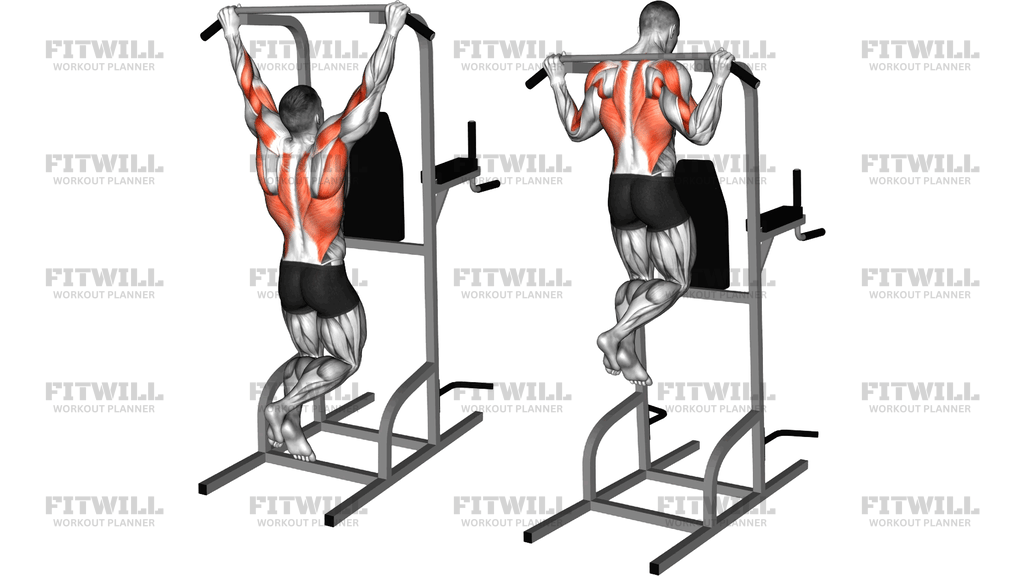
Wide-Grip Rear Pull-Up is a bodyweight pulling exercise that challenges the lats, upper back, biceps, and grip while asking the shoulders to work in a wide overhead position. The rear variation changes the line of pull so the elbows travel out and down and the upper back has to stay organized while the body moves toward the bar. That makes setup important: if the grip is too wide, the chest caves, or the neck cranes forward, the rep quickly turns into a shoulder-dominant yank instead of a clean back exercise.
This movement is best treated as a strict strength drill, not a momentum exercise. The starting hang should feel active, with the shoulder blades set down and the ribs stacked instead of flared. From there, the body rises as one unit while the elbows drive down and slightly back. The goal is to keep the torso controlled and let the lats and upper back create the pull rather than swinging the legs or arching the lower back to steal range.
Because the bar passes behind the head, shoulder mobility and pain-free positioning matter more than in a standard pull-up. A good rep should feel like the chest lifts and the back tightens while the neck stays long and relaxed. If the shoulders pinch, the grip is excessively wide, or the head has to jut forward to clear the bar, the range is too aggressive for that day and should be shortened or assisted.
Wide-Grip Rear Pull-Up fits well in back-focused sessions, upper-body strength work, or as a demanding bodyweight accessory after a primary lift. It can be scaled with assistance bands, a pull-up machine, or slower eccentrics, but the standard never changes: clean setup, no kipping, no neck strain, and a controlled descent. Used well, it builds strong vertical pulling mechanics and teaches the upper back to stay disciplined under load.
[ Workout Log & Planner ]
Put your next workout in Fitwill
Keep your plan and training log ready when you are.


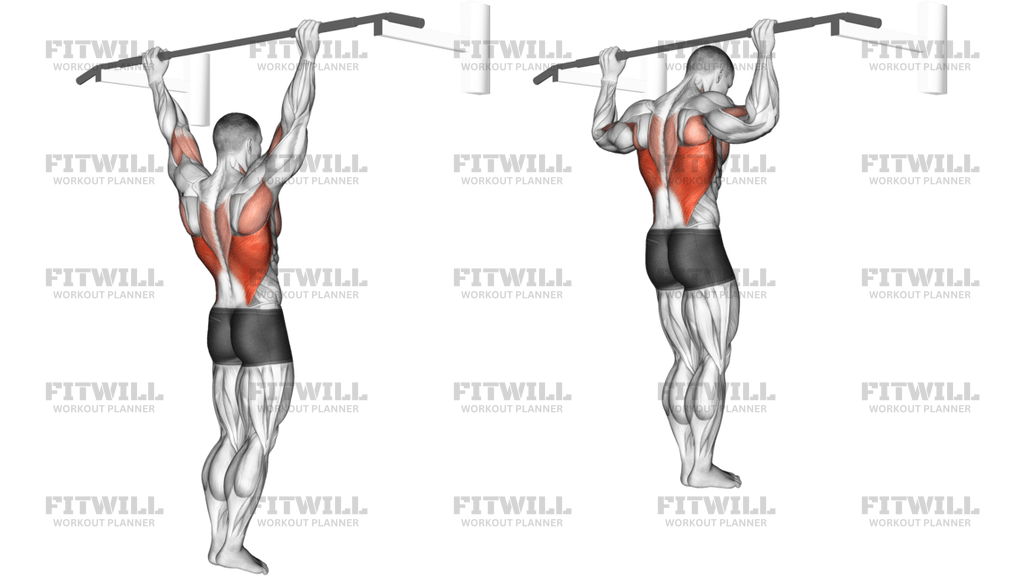
Instructions
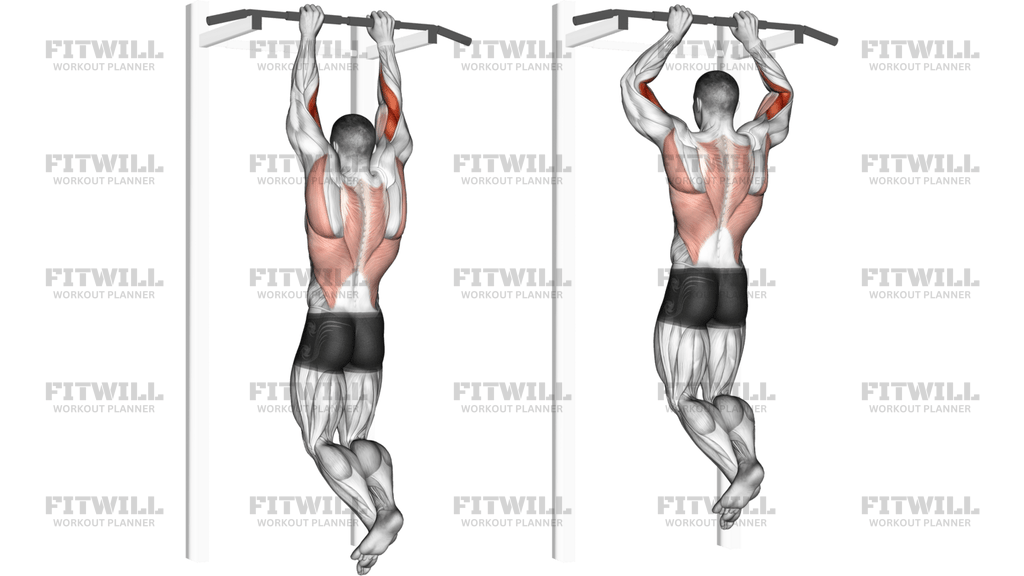
- Grasp the bar with a wide overhand grip and hang with your arms straight, feet together or lightly crossed, and your shoulders active rather than shrugged.
- Set your ribs down, tighten your midsection, and keep your neck long so your head does not drift forward toward the bar.
- Start from a dead hang only if your shoulders tolerate it; otherwise keep a small amount of tension in the shoulders at the bottom.
- Pull your elbows down and out as you raise your body toward the bar, letting the chest travel up while the torso stays controlled.
- Bring the bar behind the line of your head with a smooth pull, stopping before any shoulder pinch or neck strain appears.
- Squeeze the upper back and lats for a brief moment at the top without kicking, swinging, or over-arching the lower back.
- Lower yourself under control until the arms are straight again and the shoulders stay organized through the descent.
- Exhale as you pull and inhale on the way down, repeating for the planned number of reps with the same body position each time.
Tips & Tricks
- Choose a grip that is wider than shoulder width, but not so wide that your elbows lock out awkwardly or your shoulders feel jammed in the bottom position.
- Keep the shoulder blades down as you start each rep; if they shrug up first, the pull usually turns into a trap-dominant tug.
- Think about driving the elbows toward your back pockets instead of pulling with the hands alone.
- Keep the ribs from flaring as you rise; a big lower-back arch often hides a short range of motion.
- Do not crane the chin forward to make room for the bar behind your head, especially near the top of the rep.
- If the top position causes shoulder pinching, shorten the range or use assistance rather than forcing the head farther back.
- Lower slowly enough that your scapulae stay in control instead of snapping open at the bottom.
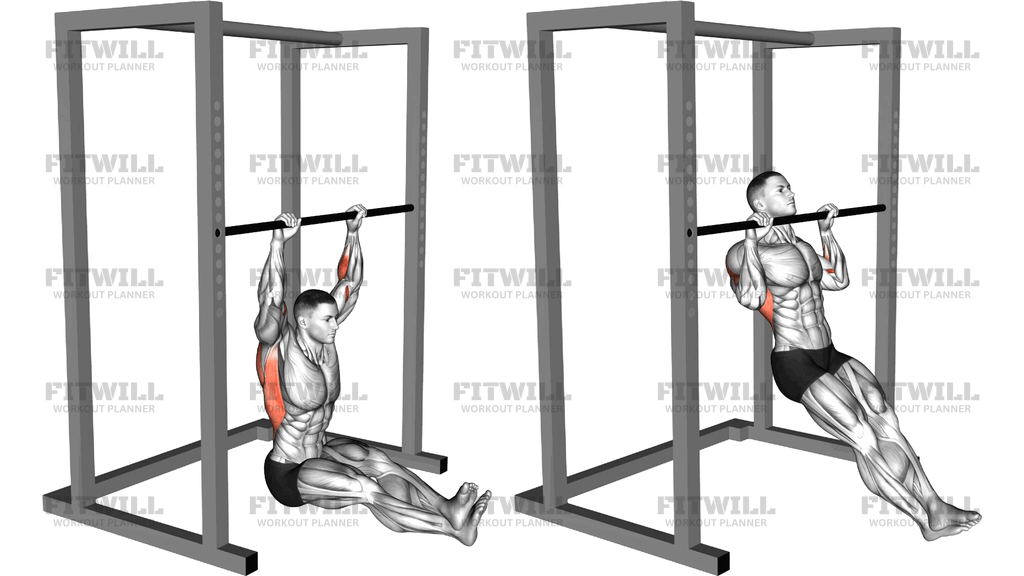
- Use bands or an assisted pull-up machine if you cannot keep the same torso angle and elbow path for every rep.
- A brief pause at the top helps you feel the lats and upper back work; a long hold is not necessary if shoulder comfort drops.
- Stop the set when your body starts swinging, because momentum usually shows up here before the back muscles truly fail.
Frequently Asked Questions
What muscles do wide-grip rear pull-ups train most?
They mainly hit the lats and upper back, with the biceps, forearms, rear shoulders, and mid-back helping to stabilize and finish the pull.
Is this the same as a regular wide-grip pull-up?
No. In the rear variation, the bar moves behind the head, which changes the shoulder position and makes the exercise more demanding on mobility and control.
Should the bar touch the back of my neck?
It should not be forced into the neck. Pull only as far as your shoulders allow comfortably, and stop before the position feels pinched or compressed.
Can beginners do this exercise?
Yes, but many beginners need assistance, a band, or a shorter range at first because the rear position is harder on shoulder mobility than a standard pull-up.
Why do my shoulders feel tight in this movement?
The wide overhead grip and behind-the-head path can expose limited shoulder external rotation or poor scapular control. Narrow the grip slightly or reduce the depth if that happens.
What should I feel working at the top?
You should feel the lats, upper back, and biceps finish the pull without neck strain, lower-back arching, or a hard shoulder pinch.
How can I make the rep cleaner?
Use a grip width you can control, keep the ribs stacked, pull the elbows down and out, and lower under tension instead of dropping back to the hang.
What is a common mistake on this pull-up?
The most common mistake is swinging the legs or leaning back hard to fake more range. That usually shifts stress away from the lats and into momentum.
How should I progress it over time?
Add reps only when every rep stays strict, then progress by reducing assistance, slowing the lowering phase, or holding the top position briefly.