Adduction Of Arm In Back Stretch
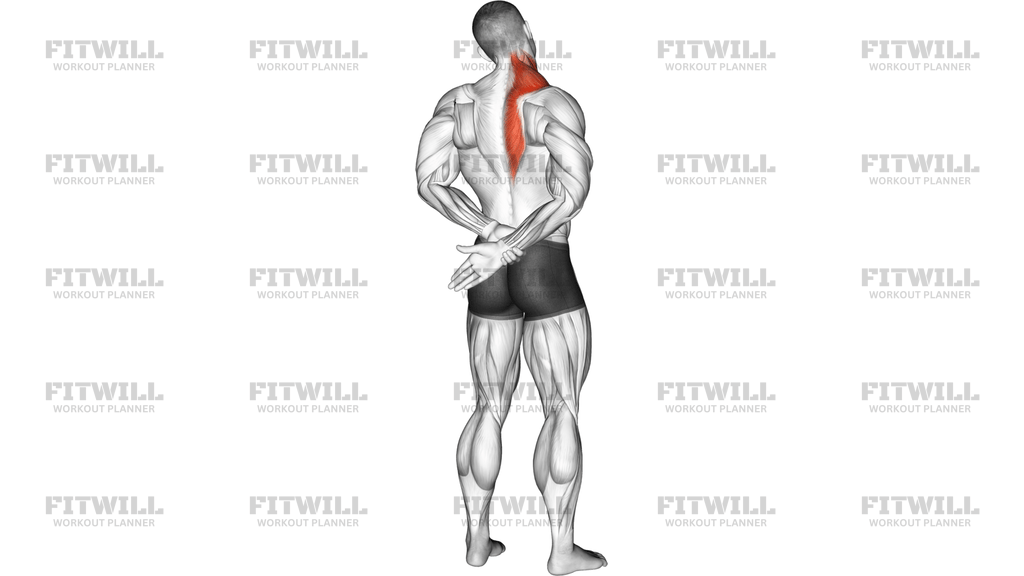
Adduction Of Arm In Back Stretch is a standing shoulder and upper-back mobility drill performed with body weight and an exercise mat. One arm reaches behind the torso while the other hand gently draws it inward, creating a controlled stretch through the shoulder girdle, upper back, and the side of the neck. It is useful when the shoulders feel tight from pressing, desk work, or repeated overhead training, because the position encourages the arm to settle behind the body without forcing the joint.
The setup matters more than the intensity. Stand tall with your feet about hip-width apart, ribs stacked over the pelvis, and both shoulders level. The working arm reaches behind the lower back while the assisting hand finds the wrist, hand, or forearm and guides it across and slightly inward. That small amount of support helps you create a clean stretch without twisting your torso, arching your lower back, or jamming the shoulder forward.
Once you are in position, the stretch should feel steady and localized rather than sharp. Keep the neck long, let the shoulder stay away from the ear, and breathe slowly so the upper traps do not tighten against the movement. If the hand is limited by tightness, keep the range small and hold the position where the shoulder opens without pain. The goal is to build tolerable range and control, not to yank the arm farther behind the body.
Adduction Of Arm In Back Stretch works well as a warm-up for upper-body sessions, as a reset between sets, or as a cool-down stretch after pressing and rowing. It can also help restore comfort when one side of the shoulder sits higher or tighter than the other. Keep the motion smooth, switch sides evenly, and stop if you feel pinching in the front of the shoulder or numbness down the arm.
For the best result, think of the stretch as a quiet repositioning of the shoulder rather than a forceful pull. A light, repeatable hold on each side will usually do more than an aggressive reach. When the torso stays square and the breathing stays relaxed, the arm can move behind the back with less compensation from the neck, ribs, and low back.
[ Workout Log & Planner ]
Put your next workout in Fitwill
Keep your plan and training log ready when you are.


Instructions
- Stand tall on an exercise mat with your feet about hip-width apart and your ribs stacked over your pelvis.
- Reach one arm behind your back so the hand sits near the opposite hip or lower back, with the palm turned comfortably outward or toward your thigh.
- Bring the other hand behind you and hold the working wrist, hand, or forearm so you can guide the stretch without yanking.
- Gently draw the working arm inward across the back of your body and slightly downward until you feel a stretch through the shoulder and upper back.
- Keep your chest facing forward and avoid twisting your torso or arching your lower back to fake more range.
- Let the shoulder stay down away from your ear and keep the neck long while you hold the position.
- Breathe slowly and exhale as you settle into the stretch instead of holding your breath or bouncing.
- Hold for the planned time, then release the arm under control and repeat on the other side.
Tips & Tricks
- The stretch should feel strong but calm; if the front of the shoulder pinches, reduce the pull immediately.
- Keep both hip bones pointing forward so the torso does not rotate to create extra range.
- If your hand cannot reach the wrist, hold the forearm or use a towel instead of forcing the grip.
- A small downward pull usually works better than trying to crank the arm farther behind the body.
- Keep the neck relaxed and avoid shrugging, especially if you feel the tension moving into the upper traps.
- Brace lightly through the lower ribs so the low back does not arch as the arm moves inward.
- Use slow nasal breaths or long exhales to help the shoulder settle as the hold continues.
- Match both sides carefully, because one shoulder often opens farther than the other.
Frequently Asked Questions
What does Adduction Of Arm In Back Stretch work most?
It mainly targets shoulder mobility and the tissues around the upper back and side of the neck, with some front-of-shoulder stretch depending on how far the arm reaches.
Where should I feel the stretch when I hold the wrist behind my back?
Most people feel it across the shoulder blade, upper traps, or the back of the shoulder. If you feel a sharp pinch in the front of the shoulder, back off the range.
Do I need to pull the arm as far behind me as possible?
No. The best position is the deepest stretch you can hold while keeping the chest square, the ribs down, and the shoulder relaxed.
What is the most common mistake with this stretch?
People usually twist the torso or shrug the shoulder to force more range. That changes the stretch and makes the neck work harder.
What if my hand cannot reach my wrist behind my back?
Hold the forearm, use a towel, or keep the working hand lower on the back. You do not need the exact grip shown to get a useful stretch.
Is Adduction Of Arm In Back Stretch good before pressing exercises?
Yes, a light version can help the shoulder settle before benching, push-ups, or overhead work as long as it stays pain-free.
How long should I hold each side?
A short hold of about 15 to 30 seconds is usually enough. If you are using it for mobility, you can repeat a few controlled breaths on each side.
Who should be careful with this stretch?
Anyone with sharp shoulder pain, recent shoulder injury, or arm numbness should keep the range very small or skip it until it feels safe and comfortable.