Assisted Chin-Up Low Bar Position
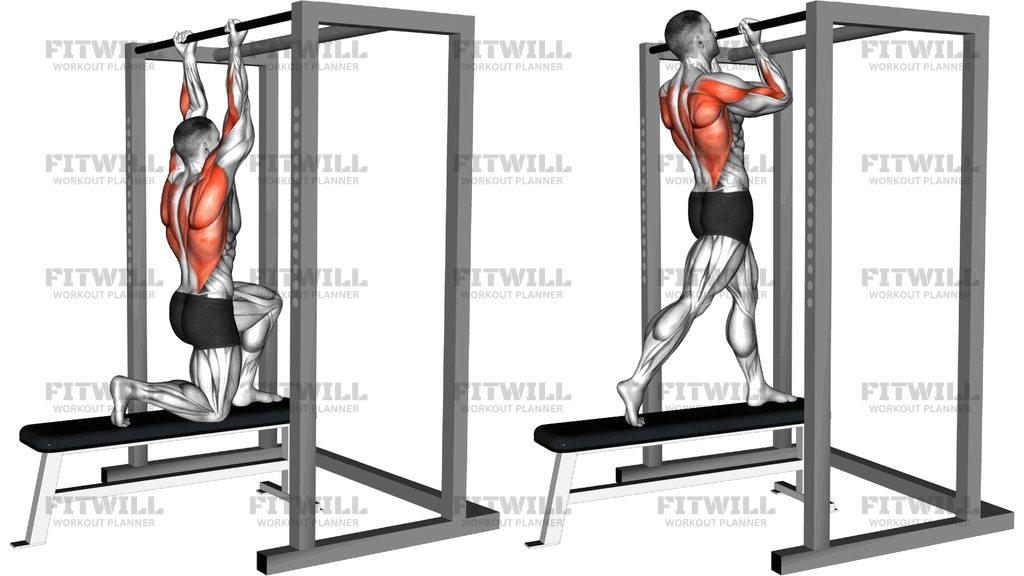
Assisted Chin-Up Low Bar Position is a bodyweight pulling exercise that lets you practice a chin-up pattern with less load than a strict free-hanging rep. The low bar setup changes the leverage of the movement and gives you a way to train the same vertical pulling pattern with your feet, legs, or an elevated support helping just enough to keep each rep clean.
This variation is useful when you want to build the strength and coordination needed for full chin-ups without losing position halfway through the set. Because the bar is lower, the setup matters as much as the pull itself: your grip, foot placement, torso angle, and shoulder position all determine whether the rep feels smooth or turns into a shrugging, swinging yank.
Use the exercise to train the lats, biceps, upper back, and the muscles that keep the ribs and pelvis organized while you pull. The assistance should reduce the total demand, not remove the challenge. If the legs are doing too much, the rep stops being a useful chin-up pattern; if they do too little, you drift back into a max-effort bodyweight pull before you are ready.
A good repetition starts with a stable setup under the bar, an active shoulder position, and a deliberate pull toward the bar rather than a loose swing upward. Keep the chest tall enough to lead the pull, but do not overarch the lower back or kick the legs to create momentum. Lower under control until the arms are straight again and the shoulders are still centered, then reset before the next repetition.
This movement fits well in strength sessions, assistance work, or beginner upper-body training because it gives you a measurable path toward unassisted chin-ups. Use just enough assistance to keep the rep strict, smooth, and repeatable. If your shoulders pinch, your grip fails early, or your body swings, adjust the assistance level or bar setup before adding more reps.
[ Workout Log & Planner ]
Put your next workout in Fitwill
Keep your plan and training log ready when you are.


Instructions
- Stand under a low chin-up bar and take a shoulder-width underhand grip with your palms facing you.
- Set your feet on the floor, a box, or a bench so you can help the pull without jumping.
- Straighten your arms and let your shoulders settle down away from your ears before you start.
- Brace your midsection and keep your ribs stacked over your pelvis instead of flaring your chest hard.
- Pull your chest toward the bar by driving your elbows down and back.
- Use your legs only enough to keep the rep smooth; do not kick or hop to finish the pull.
- Squeeze at the top when your chin reaches the bar or your upper chest nears it, depending on the setup.
- Lower yourself slowly until your arms are straight again and your shoulders stay controlled.
- Reset your feet and shoulder position before the next rep so every repetition starts clean.
Tips & Tricks
- Keep the underhand grip close to shoulder width; a grip that is too wide usually turns the rep into a shoulder-heavy pull.
- Choose a foot position that gives just enough help to keep the last rep strict; if your legs are driving the bar upward, reduce the assistance.
- Start each rep with the shoulders set down, not shrugged, so the lats can contribute from the first inch of the pull.
- Think about pulling the elbows toward your ribs rather than trying to lift the chin with your neck.
- Do not swing the torso to create momentum; a small lean is fine, but the ribs should not flare and collapse each rep.
- Lower under control for a clear eccentric phase, especially if you are using this exercise to build toward unassisted chin-ups.
- If your wrists or elbows complain, slightly adjust the hand width and keep the forearms more vertical at the bottom.
- Use a box or bench instead of a jump if you need to get into position without losing tightness before the first rep.
- Stop the set when the shoulders start shrugging or the feet have to pop hard to keep the bar moving.
Frequently Asked Questions
What does Assisted Chin-Up Low Bar Position train?
It trains the chin-up pulling pattern with emphasis on the lats, biceps, and upper back, while the core and lower body help control the body line.
How is the low bar version different from a regular chin-up?
The lower bar lets you use your feet, a box, or another support to reduce the load, so you can practice the same pull with better control.
Where should my hands go on the bar?
Use a shoulder-width underhand grip unless the setup or your joints need a small adjustment; too wide usually makes the movement less efficient.
Should my feet stay on the floor the whole time?
They can, if the setup calls for it. The goal is to assist the pull just enough to keep the rep strict without turning it into a hop or swing.
What is the most common mistake in this exercise?
The biggest mistake is using the legs too aggressively and losing the chin-up pattern. The bar should move because the upper body is pulling, not because the feet are launching you upward.
Can beginners use this exercise?
Yes. It is a good entry point for beginners because the low-bar setup makes it easier to learn body position and pulling control before progressing to full chin-ups.
How do I know if I am using the right amount of assistance?
You should be able to keep your shoulders set, your torso controlled, and your lowering phase smooth. If you have to kick, swing, or shrug to finish reps, you need more assistance.
What should I feel at the top of the rep?
You should feel the upper back and arms working hard, with the chin reaching the bar or the chest coming close depending on your body angle and bar height.
Can this help me get to unassisted chin-ups?
Yes. It is often used as a stepping stone because it lets you practice the same grip, shoulder action, and pulling path while gradually reducing support.