Barbell Floor Calf Raise
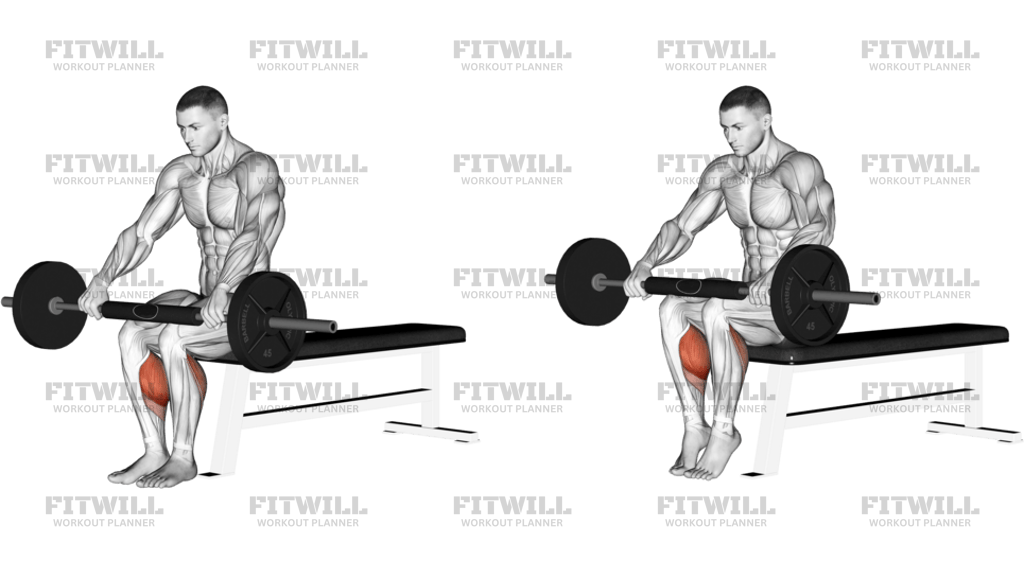
Barbell Floor Calf Raise is a direct calf-strength exercise built around ankle motion and a stable, grounded setup. Because the bar stays on the legs and the body stays close to the floor, the movement can bias the calves without demanding much from the hips, spine, or upper body. That makes it useful when you want to train the lower legs with strict control instead of relying on momentum or a machine path.
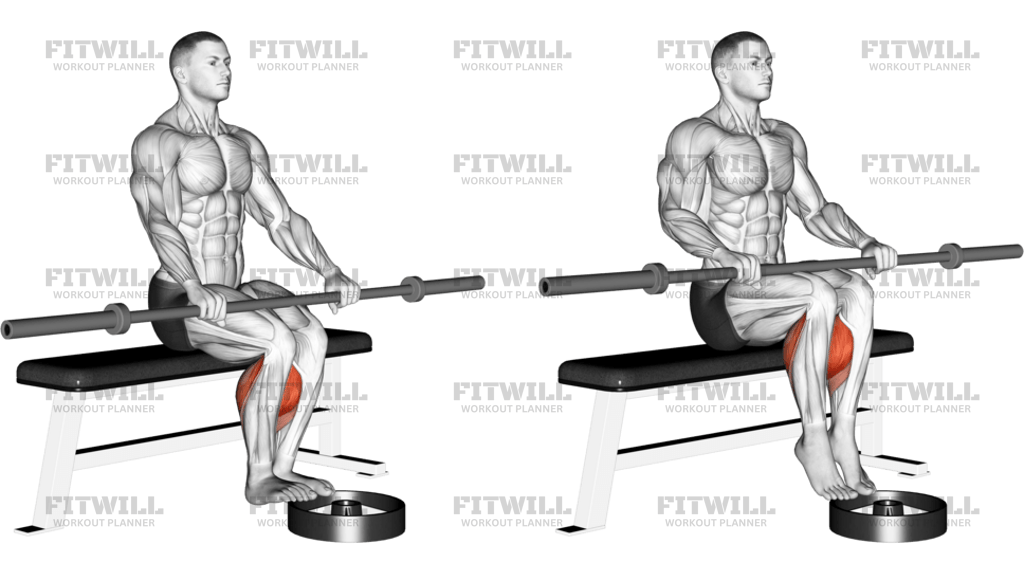
The setup matters more than it first appears. The bar should sit securely across the thighs just above the knees, the torso should stay tall, and the feet should stay planted so the ankles do the work. If the bar shifts, the heels bounce, or the knees drift around, the set quickly turns into a balance exercise instead of a calf exercise. A stable base lets you load the calves through a clean, repeatable range.
On each rep, drive through the balls of the feet, lift the heels as high as you can without rocking the torso, and then lower slowly until you feel a controlled stretch in the calves. The goal is not a big body swing or a dramatic load jump. It is steady tension, a brief squeeze at the top, and a controlled descent that keeps the calves working from start to finish.
This exercise fits well as accessory work for hypertrophy, ankle strength, or general lower-leg development. It is also a practical option when you want a simple calf movement that does not depend on a machine or step. Start light, keep the bar secure, and make every rep look the same so the calves stay under the load instead of the rest of the body helping out.
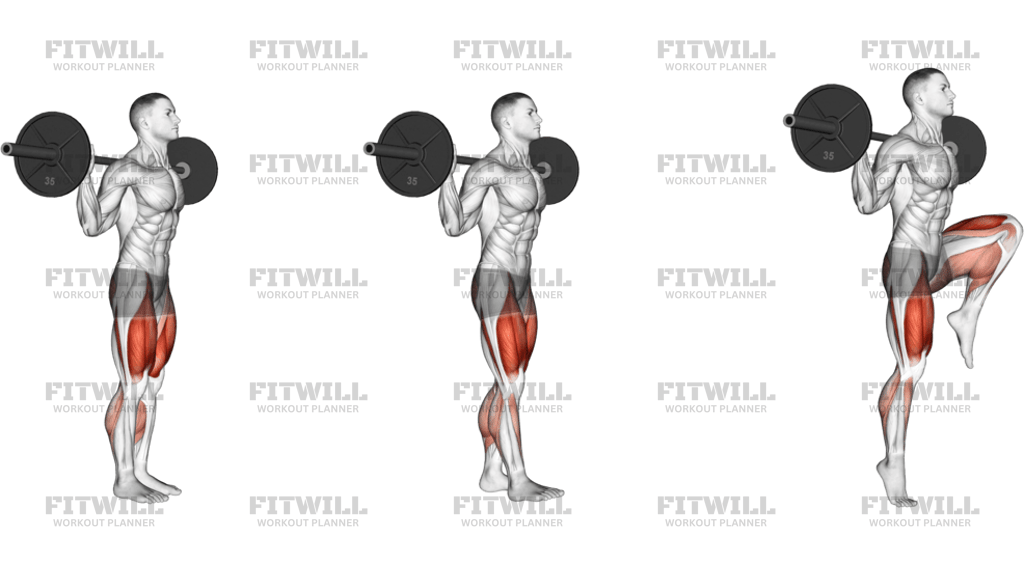
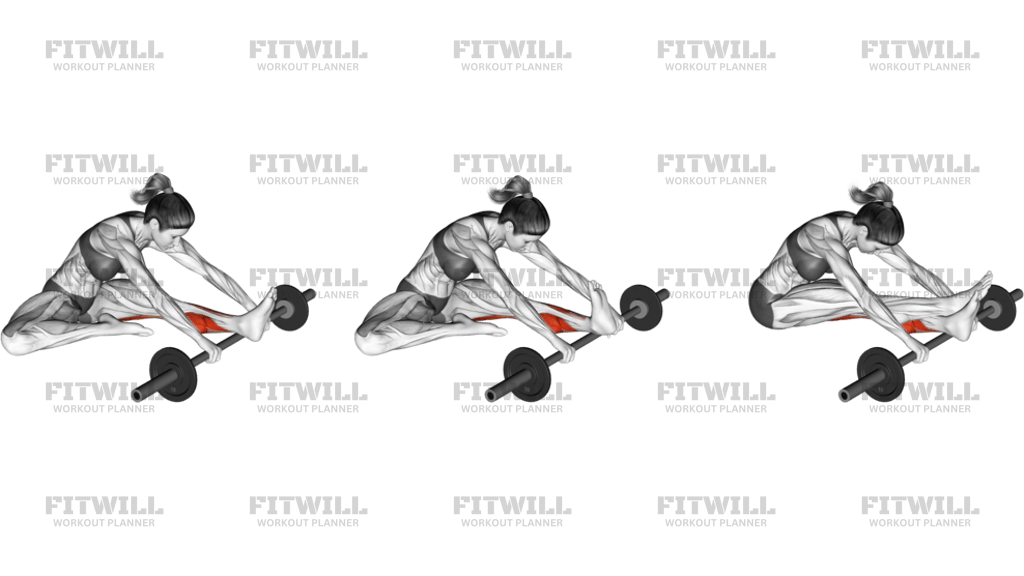
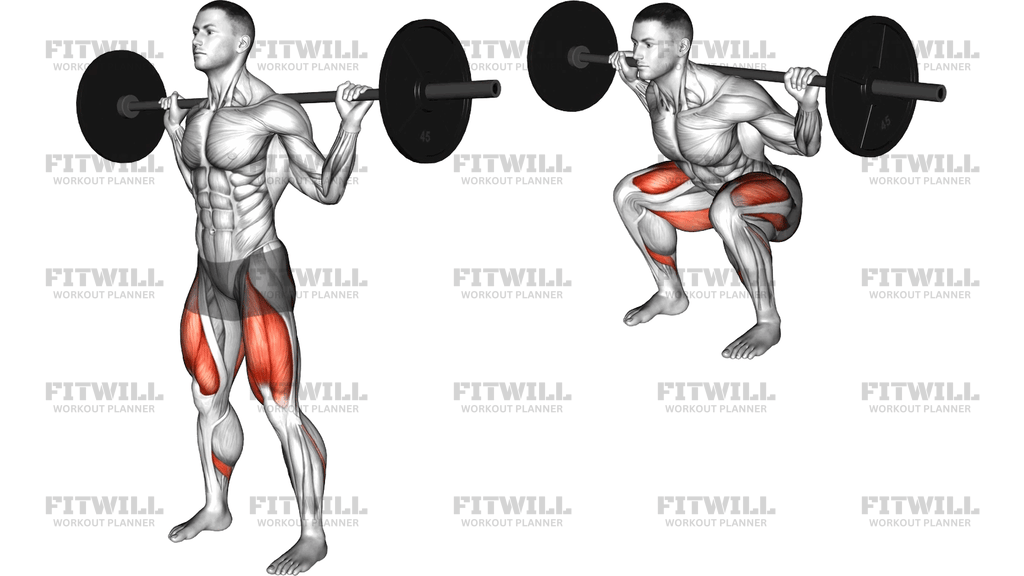
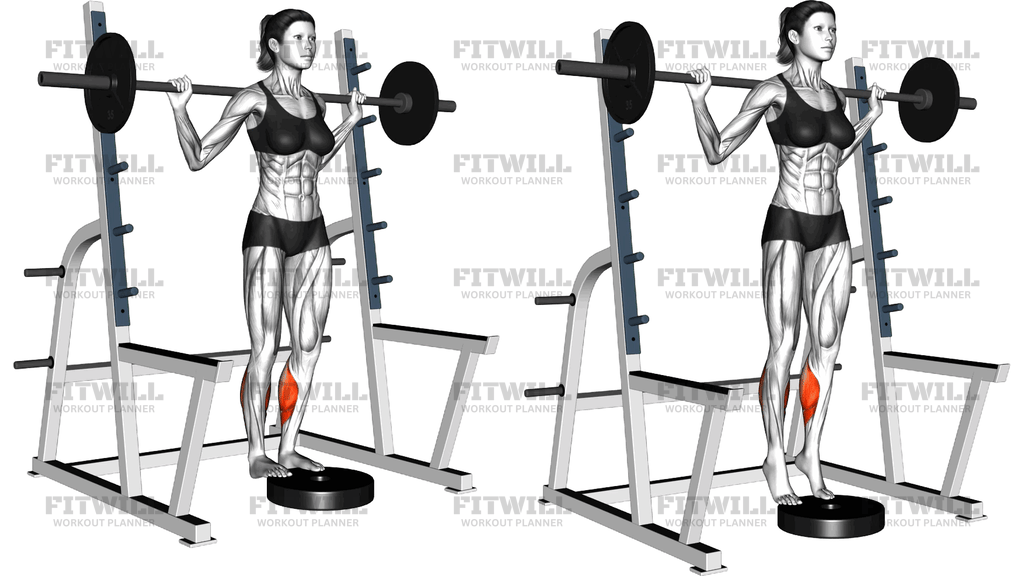
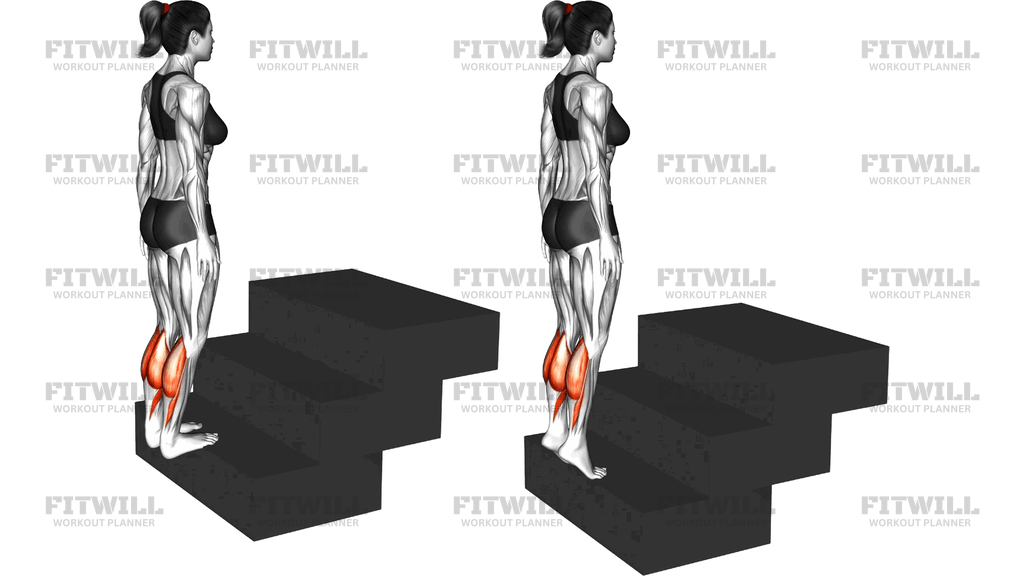
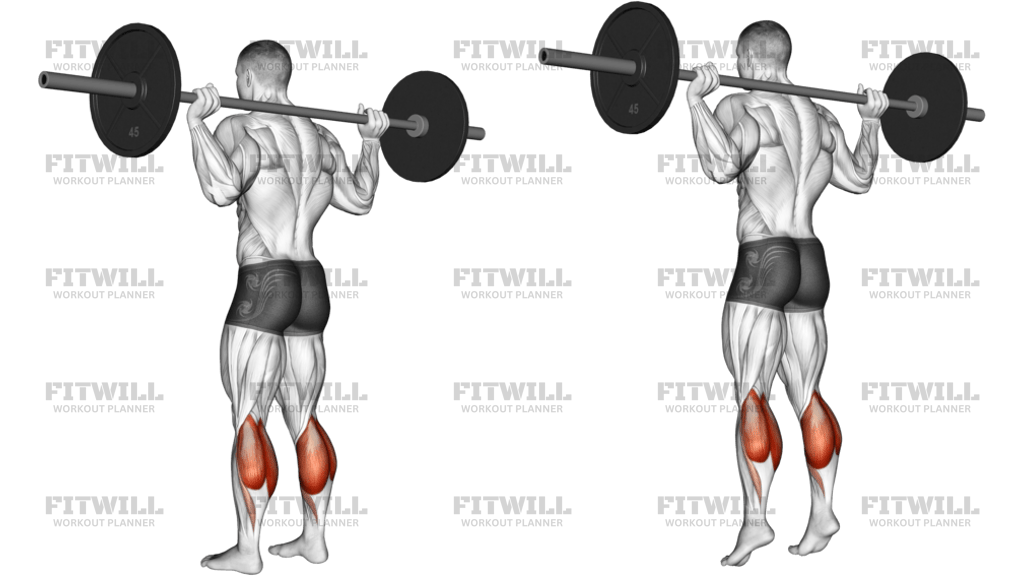
If the exercise image shows a different standing barbell calf variation, treat that as a media mismatch. The payload name here is the guide for the movement description, so the written coaching should stay aligned with the floor-based calf raise version.
[ Workout Log & Planner ]
Put your next workout in Fitwill
Keep your plan and training log ready when you are.


Instructions
- Sit on the floor with the knees bent and the feet flat, then place the barbell across the upper thighs just above the knees.
- Hold the bar securely with both hands so it does not roll, and keep the torso tall with the chest stacked over the hips.
- Position the feet about hip-width apart with the weight centered through the balls of the feet and the heels ready to move freely.
- Brace the torso, keep the knees still, and let the ankles start the rep without leaning back or shifting the hips.
- Press through the balls of the feet and lift the heels as high as possible while the bar stays quiet on the thighs.
- Pause briefly at the top and squeeze the calves without bouncing or losing the stacked torso position.
- Lower the heels slowly until you feel a controlled stretch through the calves and the ankles return to the start.
- Breathe out as you rise, breathe in on the lower phase, and reset the bar if it starts to drift before the next rep.
Tips & Tricks
- Pad the bar with a towel or bar pad if it presses uncomfortably into the thighs above the knees.
- Keep the hands on the bar the whole set so the load stays pinned in place instead of sliding forward.
- Think about moving only at the ankles; if the hips rock or the torso leans, the calves are losing tension.
- Use a short pause at the top to stop bounce reps and make the calf contraction do the work.
- Lower under control until the heels are just above or lightly touching the floor, depending on ankle mobility.
- Choose smaller jumps in load than you would for squats, because the calves usually fail from range and fatigue before strength.
- If your feet cramp, reduce the load and slow the descent instead of forcing a bigger range.
- Keep the knees bent in the same angle for the whole set so the bar position and calf angle stay consistent.
Frequently Asked Questions
What muscles do barbell floor calf raises work?
They primarily target the calves, especially the gastrocnemius and soleus, with the feet and ankles doing most of the moving.
Is this the same as a standing barbell calf raise?
No. This version is done seated or grounded on the floor with the bar across the thighs, so the calves work through a more controlled lower-leg-only path.
How should the bar sit on my legs?
Place it across the upper thighs just above the knees and hold it in place with both hands so it does not roll or drift during the set.
What is the biggest mistake with this exercise?
The most common mistake is turning it into a hip or torso movement. The ankles should lift the load while the upper body stays stacked and quiet.
How heavy should I go on the barbell?
Use a load that lets you hit a full heel raise and a slow lowering phase without the bar sliding or your posture changing.
Can beginners do barbell floor calf raises?
Yes. Start with a very light bar or even just body weight while you learn how to keep the bar steady and move only through the ankles.
Why do my feet cramp during the set?
That usually means the load is too heavy, the range is too aggressive, or you are rushing the lowering phase. Back off the weight and control the descent.
How can I make the exercise harder without adding a lot of weight?
Use a longer pause at the top, slow the lowering phase, or add reps while keeping the bar position and ankle path strict.