Resistance Band Full Squat
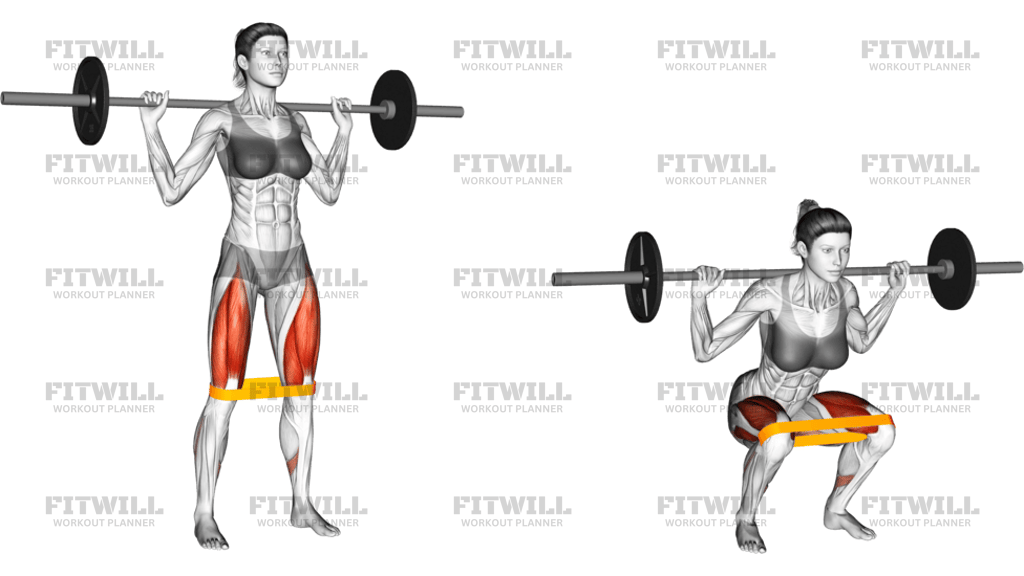
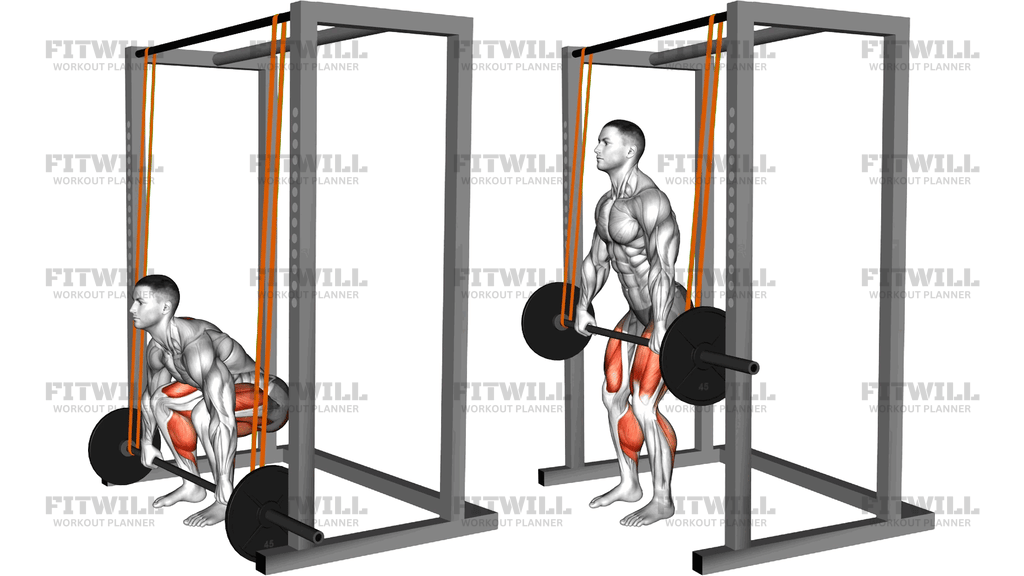
Resistance Band Full Squat is a loaded back squat performed with a loop band around the thighs just above the knees. The bar sits across the upper back while the band adds outward tension, asking the hips to stay active as you descend and stand. That makes the exercise useful for building squat strength, leg drive, and cleaner knee tracking without letting the knees drift inward as fatigue rises.
The main muscles involved are the glutes and quadriceps, with the hamstrings, adductors, calves, and trunk muscles helping stabilize the torso and transfer force. The band does not replace the squat pattern; it changes the demand at the hips by encouraging external rotation and abduction against the inward pull that often appears when the legs get tired. For that reason, setup matters more than people expect: bar placement, stance width, foot pressure, and band tension all affect whether the rep feels strong or sloppy.
Start with the band placed above the knees, feet rooted under the bar, and the chest and upper back set before the unrack. As you descend, keep the bar over the midfoot, let the hips travel between the heels, and maintain even pressure through the whole foot. The band should give you a clear cue to press the knees out, not a reason to flare them excessively or lose the squat path. On the way up, drive the floor away and keep the knees tracking in line with the toes.
This variation fits lower-body strength work, accessory blocks, warmups, and technique sessions when you want more awareness of hip position during a full squat. Beginners can use it with light load and a moderate band if they can keep a stable torso and full-foot pressure. Stop the set if the knees cave, the heels lift, or the lower back rounds at the bottom; those signs usually mean the depth, load, or band tension needs to come down before the next set.
[ Workout Log & Planner ]
Put your next workout in Fitwill
Keep your plan and training log ready when you are.


Instructions
- Loop the band just above your knees, then set the bar across your upper back and grip it slightly wider than shoulder width.
- Unrack the bar, take one or two small steps back, and set your feet about shoulder width with the toes turned slightly out.
- Plant the whole foot, brace your torso, and gently press your knees out to create tension in the band before you descend.
- Sit your hips down and back between your heels while keeping your chest lifted and the bar balanced over your midfoot.
- Lower yourself until your thighs reach below parallel or the deepest pain-free depth you can control without losing spine position.
- Keep your knees tracking over your toes at the bottom and avoid letting the band pull them far outside your foot line.
- Drive upward by pushing the floor away, extending the hips and knees together, and exhale through the hardest part of the ascent.
- Stand tall at the top, reset your breath and brace, then repeat for the planned number of repetitions.
- When the set is done, walk the bar forward carefully and re-rack it under full control.
Tips & Tricks
- Keep the band tension moderate; if it is too tight, it can pull your knees out so hard that your squat path gets messy.
- Think about spreading the floor, not forcing your knees wide. The goal is steady outward pressure, not a dramatic flare.
- Keep the bar stacked over the middle of your foot. If it drifts forward, your torso will usually tip and the rep becomes back dominant.
- If ankle mobility is limited, use a small heel lift or weightlifting shoes so you can keep the heels down and still reach depth.
- Stop the descent before your pelvis tucks under and your lower back rounds at the bottom.
- Keep your elbows under the bar and your upper back tight so the bar stays stable while the band is trying to create extra motion at the knees.
- Take a full breath and brace before each rep instead of breathing continuously through the bottom of the squat.
- If the knees collapse inward on the way up, reduce the load or band tension before the next set.
Frequently Asked Questions
What does the resistance band add to this full squat?
The band adds outward tension above the knees, which makes the hips work harder to keep the knees tracking in line with the toes.
Where should the band sit on my legs?
Place the loop just above the knees, not on the kneecaps. That gives you a clear hip cue without irritating the joint.
How low should I squat in this movement?
Go as deep as you can while keeping the heels down, the chest up, and the lower back neutral. If mobility allows, aim for thighs below parallel.
Should I push my knees outward hard against the band?
Press them out enough to keep tension and alignment, but do not force a huge flare. Excessive outward drive can throw off your squat path and foot pressure.
What muscles work most in a Resistance Band Full Squat?
The glutes and quadriceps do most of the work, with the hamstrings, adductors, core, and upper back helping you stay stable under the bar.
Is this the same as a regular barbell back squat?
It is the same squat pattern with a band added above the knees. The barbell provides the load, and the band changes how the hips and knees have to stay organized.
What is the most common mistake with the bar and band setup?
People often let the bar drift forward or place the band too low. Keep the bar pinned across the upper back and the band above the knees so both pieces of equipment do their job.
Can beginners use this exercise safely?
Yes, if the load is light and the band tension is modest. Beginners should prioritize full-foot pressure, brace, and consistent depth before adding more resistance.