Barbell Seated Calf Raise
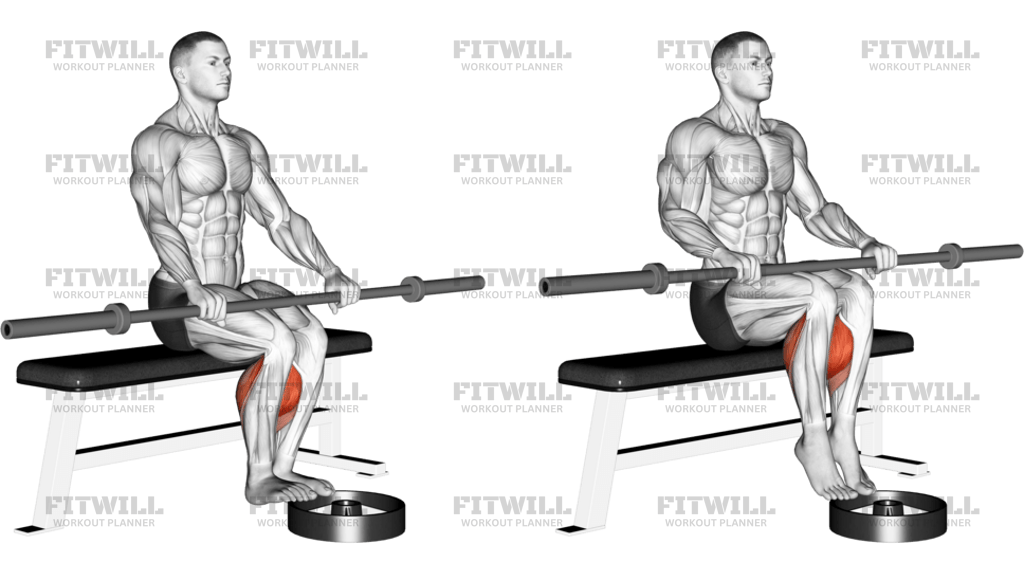
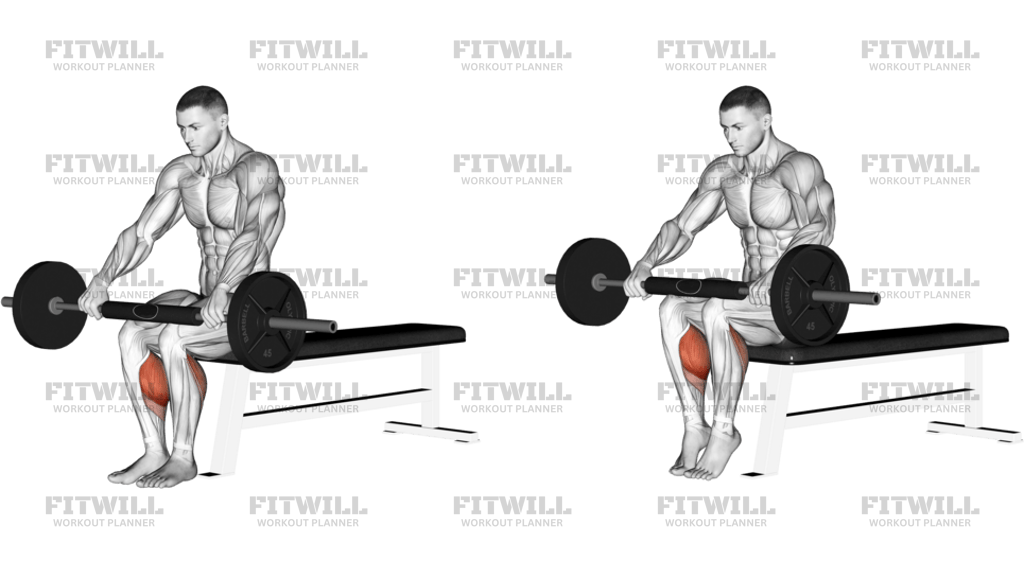
Barbell Seated Calf Raise is a seated lower-leg exercise that loads the calves with a barbell resting across the thighs. It is usually performed with the knees bent and the balls of the feet on a small block, plate, or step so the heels can drop below the forefoot. That bent-knee position changes the calf demand compared with a standing raise and makes the movement especially useful when you want direct calf work without a lot of hip or torso involvement.
The setup matters because the bar, bench, and foot position determine whether the calves do the work or whether the load shifts into the hips and knees. Sit tall on a flat bench, keep the bar steady across the upper thighs, and lock in a stable forefoot contact before each rep. The body should stay stacked and quiet while the ankles do the visible movement. If the bar slides, the bench is too high, or the feet are too far forward, the rep becomes less consistent and the stretch at the bottom gets harder to control.
Each repetition should move from a full heel drop into a strong calf contraction and back to a controlled stretch. Drive the heels upward by pushing through the balls of the feet, then pause briefly at the top before lowering slowly. The goal is a clean ankle motion with no bouncing, no hip rocking, and no snapping out of the bottom. A short pause at the top and a deliberate lowering phase usually create better tension than trying to use heavy load or speed to force more reps.
This exercise is commonly used for calf size, lower-leg strength, and ankle control in programs that include squats, running, jumping, or general physique work. It also works well as an accessory movement after bigger lower-body lifts because the seated position keeps the rest of the body relatively quiet and lets you focus on the calf muscle directly. Because the range is short and the load sits on the thighs, the exercise rewards patience and precise setup more than momentum.
Use a pad or folded towel under the bar if the thighs need it, and choose a load that lets you keep the same foot pressure and ankle path from the first rep to the last. Beginners can use this movement safely with light resistance as long as the bench is stable and the heel drop is controlled. If the calves cramp, the range is too aggressive, or the ankles roll outward, reduce the load and make the motion smoother before adding weight again.
[ Workout Log & Planner ]
Put your next workout in Fitwill
Keep your plan and training log ready when you are.


Instructions
- Sit on a flat bench and rest the barbell across the upper thighs just above the knees, using a pad or folded towel if the bar digs in.
- Place the balls of both feet on a small block, plate, or step so the heels can hang off the edge and move freely.
- Hold the bar with an overhand grip to keep it from rolling, and sit tall with your ribs stacked over your pelvis.
- Set your knees at about a right angle and keep your feet roughly hip-width apart with pressure centered through the forefoot.
- Start each rep from the bottom with the heels lowered and the calves under a controlled stretch.
- Drive the heels upward by pushing through the balls of the feet until the calves contract hard at the top.
- Pause briefly at the top without bouncing, twisting the feet, or rocking the knees forward.
- Lower the heels slowly back below the forefoot, then reset the stretch before the next rep.
- Keep breathing steady and stop the set if the bar shifts, the hips start to rock, or the ankle path gets sloppy.
Tips & Tricks
- A thin bar pad helps keep the barbell from bruising the thighs and makes it easier to stay relaxed through the set.
- Keep the knees fixed in roughly the same bend the whole time; bending and straightening the legs turns the movement into a body shift instead of a calf raise.
- Think about pressing through the big toe and second toe as the heels rise so the force stays centered on the forefoot.
- Let the heels drop only as far as you can control; if the bottom stretch turns into a bounce, shorten the range and slow down.
- A 1-2 second pause at the top usually gives better calf tension than chasing extra reps with momentum.
- Use a slower lowering phase than lifting phase to keep the calves under tension longer and reduce ankle snapping.
- Keep the torso upright instead of leaning back on the bench, which can make the bar slide and reduce forefoot pressure.
- If the feet roll outward or inward, reduce the load and reset the stance before adding weight again.
- High reps often work well here, but only if each rep still reaches the same heel height and bottom stretch.
Frequently Asked Questions
What muscles does Barbell Seated Calf Raise work?
It targets the calves, with the seated knee-bent position emphasizing the lower-leg muscles that plantarflex the ankle.
Why is the barbell placed across the thighs?
The barbell provides the load while the thighs support it, letting the ankles do the work without needing a calf machine.
Why are my feet on a block or plate?
The raised forefoot lets your heels drop below the edge so you can get a real stretch at the bottom and a cleaner calf contraction at the top.
How should the bar sit on my legs?
It should rest high on the thighs, just above the knees, with enough padding that you can hold the position without tensing up.
Should I keep my knees bent the whole time?
Yes. Keeping the knees fixed preserves the seated calf-raise pattern and keeps the movement focused on the ankles instead of turning it into a leg drive.
Can I do this without a barbell calf machine?
Yes. A bench, a barbell, and a small step or plate are enough as long as the load stays stable across the thighs.
What is the most common mistake with this exercise?
Bouncing out of the bottom or letting the bar slide on the thighs usually reduces calf tension and makes the set less effective.
Is this exercise beginner friendly?
Yes, as long as the bench is stable, the bar is padded if needed, and you start with light weight and a controlled heel drop.