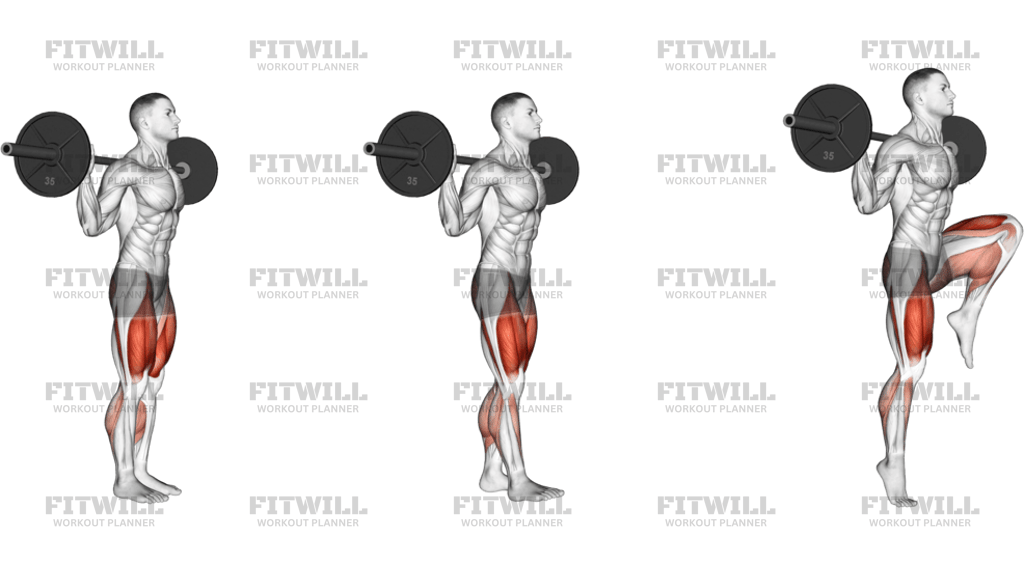
Barbell Standing Calf Raise
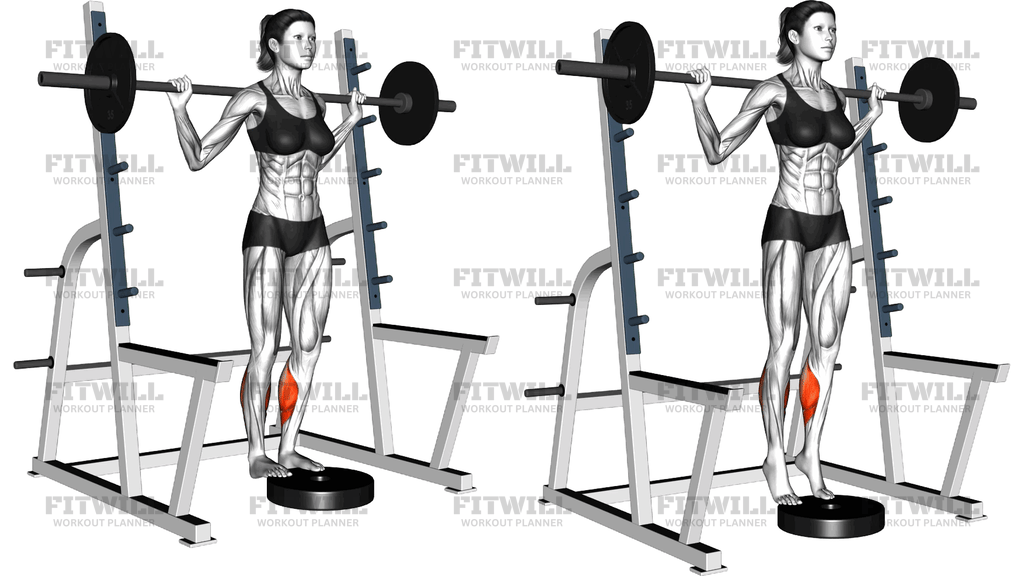
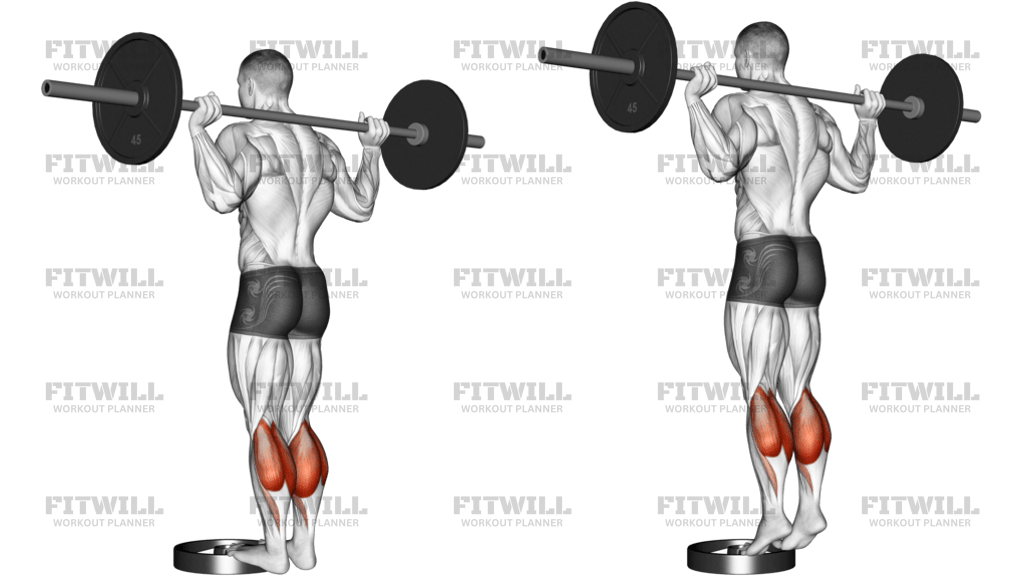
Barbell Standing Calf Raise is a loaded lower-leg exercise performed with the barbell across the upper back while the balls of the feet stay on a small step or plate and the heels drop freely. The movement is simple, but the setup matters: the bar must sit securely on the traps, the stance must stay balanced, and the ankles must do the work while the rest of the body stays quiet.
This variation emphasizes calf strength through a long stretch at the bottom and a strong peak contraction at the top. Because the knees remain mostly straight with only a soft bend, the gastrocnemius does a large share of the work, while the soleus and other lower-leg muscles help control the ankle and stabilize the rise. The barbell adds enough external load to make the exercise useful for both size and strength, provided the lift stays strict.
A clean rep begins with a stable walkout, feet about hip-width apart, toes pointing forward or slightly out, and pressure centered over the big toe and second toe. From there, lower the heels slowly until the calves lengthen under control, then drive straight up onto the forefoot without bouncing, shifting the hips, or turning the movement into a squat. The top should feel like a tall calf contraction, not a forward lean or a shrug.
The small step or plate under the forefoot is important because it lets the heels travel below the level of the toes. That extra range makes the stretch more complete and helps you train the calves through the full arc of motion instead of stopping at a shallow half rep. If the surface is too high, balance can get sloppy; if it is too low, you lose useful range. The best setup is the one that lets you move smoothly and repeatably.
Use this exercise when you want direct calf work after your main lower-body lifts, or when your program needs more ankle strength and lower-leg development for running, jumping, or general physique work. The main mistakes are using too much weight, bouncing out of the bottom, bending the knees into a squat pattern, or letting the bar force the torso forward. Keep each repetition deliberate, control the descent, and stop the set when the heel path or bar position starts to break down.
[ Workout Log & Planner ]
Put your next workout in Fitwill
Keep your plan and training log ready when you are.


Instructions
- Load the barbell across your upper traps and step onto a low plate or calf block so the balls of your feet are supported and your heels can hang free.
- Stand tall with your feet about hip-width apart, toes forward or only slightly turned out, and keep your weight centered over the big toe and second toe.
- Grip the bar evenly, brace your torso, and keep only a soft bend in the knees so the movement stays in the ankles.
- Lower your heels slowly until you feel a deep but controlled stretch through the calves.
- Press through the forefoot and drive the heels up as high as you can without bouncing or shifting your hips forward.
- Pause briefly at the top and squeeze the calves hard while keeping the bar steady on your back.
- Lower under control to the same full stretch on every repetition.
- Finish the set by stepping down carefully and re-racking the bar with a stable torso.
Tips & Tricks
- Keep the pressure on the big toe and second toe so the ankle rises straight instead of rolling outward.
- Use only a soft knee bend; if the knees keep flexing, the rep starts to look like a squat.
- Choose a step height that lets the heels drop below the forefoot without losing balance or arch control.
- Let the bottom position feel long and loaded, but do not slam into the stretch or bounce off it.
- Think about lifting the heels vertically rather than rocking the hips forward to cheat the top of the rep.
- Keep your ribs stacked over your pelvis so the bar stays quiet and the lower back does not take over.
- A brief pause at the top helps expose weak calf contraction and prevents half-rep momentum.
- Use lighter load and slower tempo if the bar starts to shift on your traps or your feet drift on the platform.
Frequently Asked Questions
What muscles does Barbell Standing Calf Raise train most?
It mainly trains the calves, especially the gastrocnemius, with the soleus and smaller ankle stabilizers helping control the lift.
Why do I stand on a small block or plate for this exercise?
The elevated forefoot lets the heels drop below toe level, which gives you a bigger calf stretch and a more complete rep.
Should my knees be locked out the whole time?
Keep them mostly straight but not hard-locked. A slight bend helps you stay stable without turning the movement into a squat.
How high should I rise at the top?
Rise until you are up on the balls of your feet and the calves are fully shortened, but stop before your body has to lean forward to finish the rep.
What are the most common mistakes with a barbell calf raise?
Common mistakes are bouncing out of the bottom, shortening the heel drop, using too much weight, and letting the hips or knees take over.
Is this better than seated calf raises?
They emphasize the calves differently. This standing version biases the gastrocnemius more because the knee stays mostly straight.
Can beginners do Barbell Standing Calf Raise safely?
Yes, if they start light, use a stable platform, and practice a slow heel drop before adding load.
What should I do if the bar feels unstable on my back?
Reduce the load, keep the torso stacked, and make sure the bar is sitting firmly on the upper traps before you start the set.