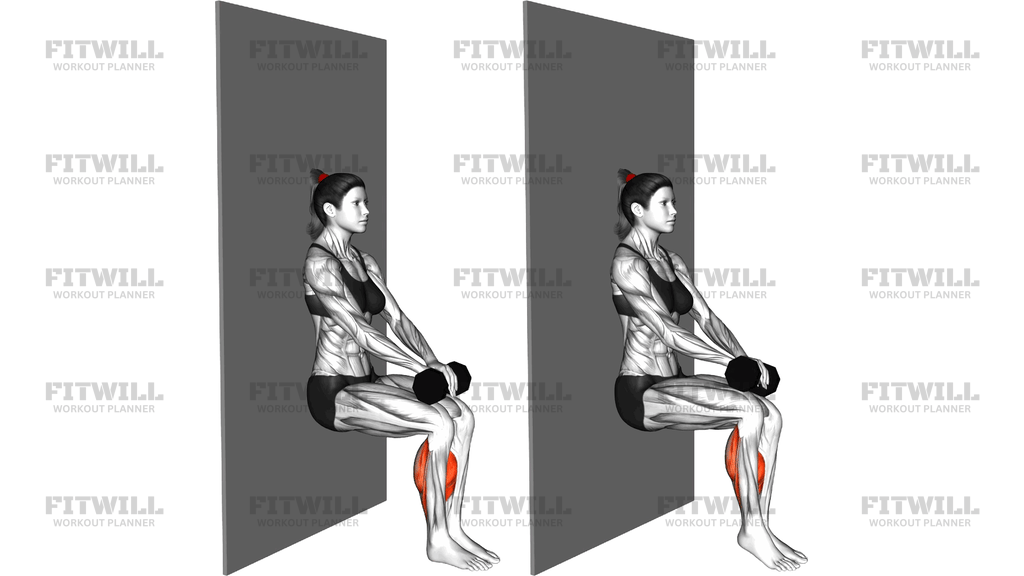
Dumbbell Seated One Leg Calf Raise Palm Up
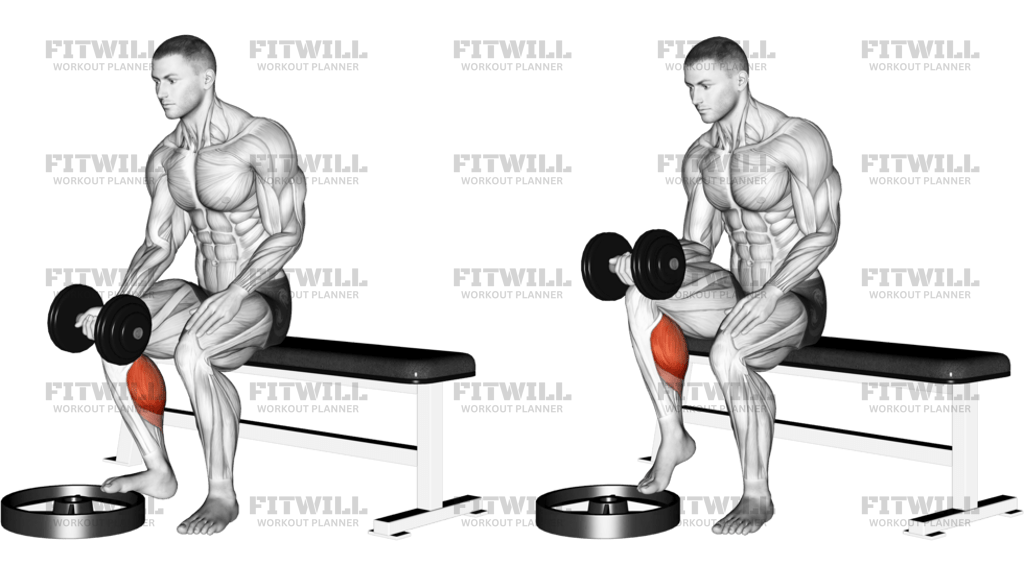
Dumbbell Seated One Leg Calf Raise Palm Up is a focused lower-leg exercise built around a seated, single-leg heel raise. The bent-knee position changes the emphasis compared with standing calf work, making it especially useful when you want direct calf training without loading the whole body. The movement looks small, but it becomes very effective when the setup is stable and every rep is controlled.
This exercise primarily trains the calves, with the seated position placing a strong demand on the soleus and the small stabilizers around the ankle and foot. Because only one leg works at a time, it also exposes side-to-side differences in ankle strength, balance, and range of motion. That makes Dumbbell Seated One Leg Calf Raise Palm Up a practical choice for calf development, ankle control, and targeted accessory work after heavier lower-body lifts.
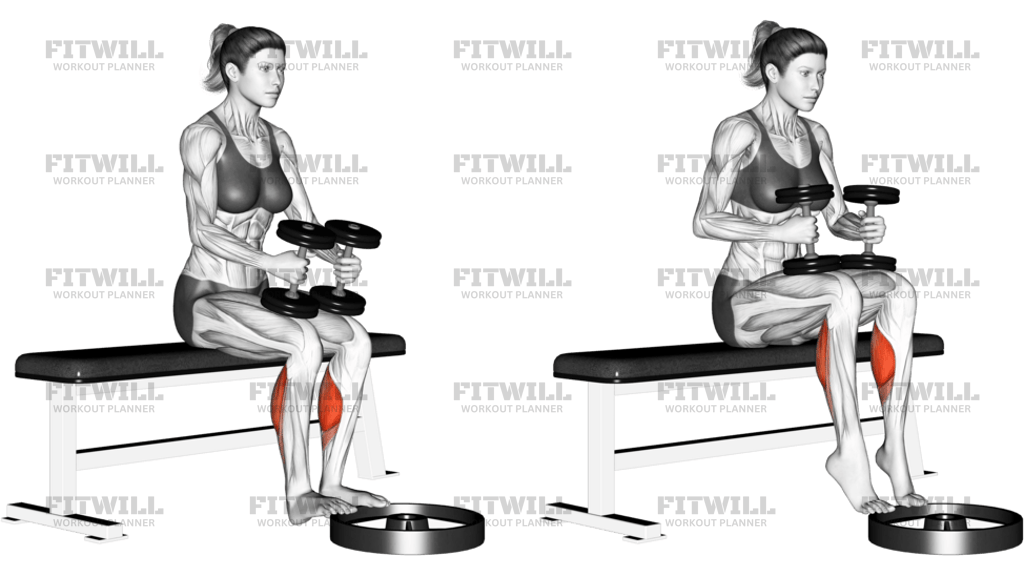
The setup matters because the load should sit securely on the working thigh while the foot has freedom to move through a full heel raise. Sit on a firm bench, place the ball of the working foot on a small plate or step, and let the heel hang free. Hold the dumbbell palm up on the same-side thigh just above the knee, then keep the opposite foot planted so you can stay tall without twisting through the hips.
Each rep should start from a deep, controlled stretch and finish with a clean peak contraction. Let the heel sink under control, then drive through the big toe mound and lift as high as possible without bouncing or rolling the ankle inward. Pause briefly at the top, lower slowly, and keep your breathing steady so the calf stays under tension instead of the body rushing the motion. The goal is a smooth ankle movement, not a swing of the knee or hip.
Dumbbell Seated One Leg Calf Raise Palm Up is best used when you want precise calf work that is easy to recover from but hard to fake. It fits well after squats, lunges, running sessions, or any lower-body day where the calves deserve direct attention. Use a load that lets you reach a full stretch and a strong top position on every rep, and stop the set if the heel starts bouncing, the dumbbell shifts on the thigh, or the ankle loses its clean path.
[ Workout Log & Planner ]
Put your next workout in Fitwill
Keep your plan and training log ready when you are.


Instructions
- Sit on a firm bench with one forefoot on a small plate or step so the heel can hang free.
- Keep the working knee bent and stack the shin over the ball of the foot while the other foot stays planted for balance.
- Rest the dumbbell palm up on the same-side thigh just above the knee and hold it steady with the hand.
- Sit tall with your ribs down and let the heel drop under control until you feel a calf stretch.
- Press through the ball of the foot and lift the heel as high as you can without shifting the knee or hip.
- Pause briefly at the top and keep the ankle from rolling outward or inward.
- Lower the heel slowly back into the stretch while keeping tension in the calf.
- Set the dumbbell down safely, reset your foot position, and switch sides for the next set.
Tips & Tricks
- Keep the dumbbell on the upper thigh just above the knee; if it drifts toward the kneecap, the setup gets unstable fast.
- Use the pad under the ball of the foot, not the center of the arch, so the heel can travel through a real ankle range.
- Drive through the big toe mound and second toe instead of loading the outside edge of the foot.
- Hold the top position for a full beat; the pause matters more than chasing extra height.
- Lower for two to three seconds so the calf stays loaded instead of dropping off the end of the rep.
- Keep the free hand light on the bench for balance, but do not push so hard that the torso twists.
- If the heel cannot drop below the step, use a thinner plate or smaller platform rather than shortening every rep.
- Stop before the dumbbell starts sliding on the thigh, since that usually means the set is too heavy or the bench position is off.
- If the ankle rolls outward as you rise, slow the rep down and keep the kneecap pointed straight ahead.
- Use a lighter dumbbell before the forearm tires, because this movement should be limited by the calf, not by the grip.
Frequently Asked Questions
What muscle does Dumbbell Seated One Leg Calf Raise - Palm Up target most?
It mainly targets the calves, with a strong emphasis on the soleus because the knee stays bent throughout the rep.
Where should the dumbbell sit during Dumbbell Seated One Leg Calf Raise - Palm Up?
Rest it palm up on the same-side thigh just above the knee so the load stays stable without pressing directly on the kneecap.
Should my heel go below the step on each rep?
Yes, if your ankle tolerates it. A small drop below the platform gives you a better calf stretch and usually improves the quality of the set.
Can I do Dumbbell Seated One Leg Calf Raise - Palm Up with my other foot on the floor?
Yes. Keeping the other foot planted is a good way to stay balanced while the working leg handles the full calf raise.
Why is the knee bent in Dumbbell Seated One Leg Calf Raise - Palm Up?
The bent knee reduces help from the gastrocnemius and shifts more of the work to the deeper calf muscles.
How heavy should the dumbbell be for this exercise?
Use a load that lets you keep the dumbbell steady on the thigh and still reach a full heel drop and strong peak contraction.
Can beginners do Dumbbell Seated One Leg Calf Raise - Palm Up?
Yes. Start with a light dumbbell and a small step, then focus on smooth reps before adding load.
What should I do if I feel the movement in my Achilles instead of my calf?
Shorten the bottom range slightly, slow the lowering phase, and reduce the step height or load until the rep feels smooth.