Dumbbell Seated Calf Raise
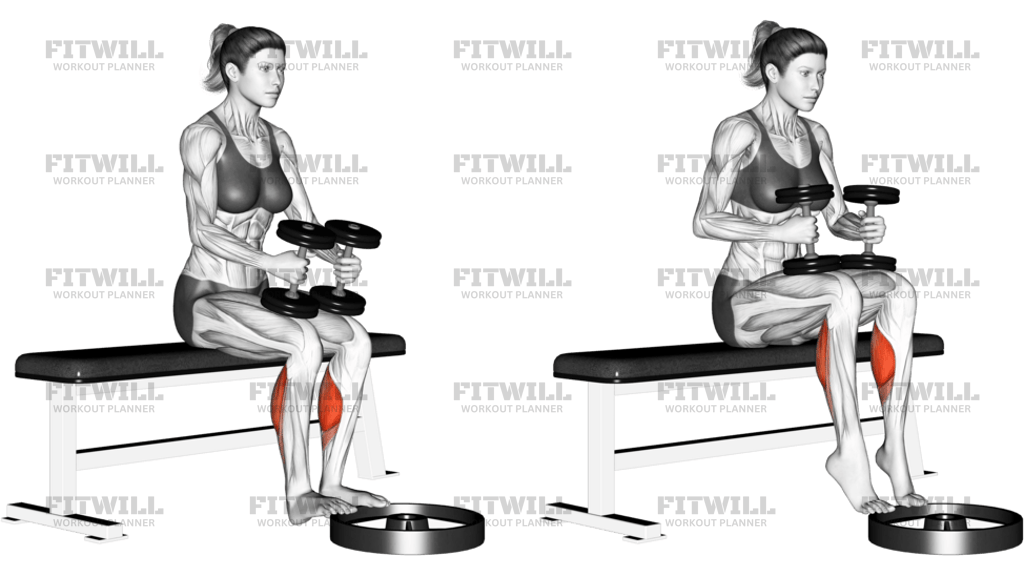
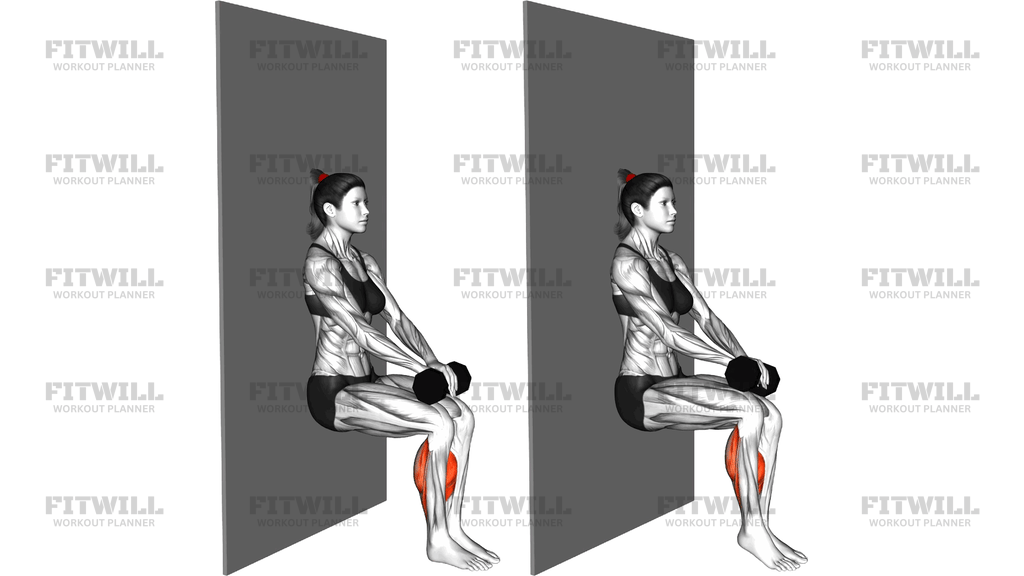
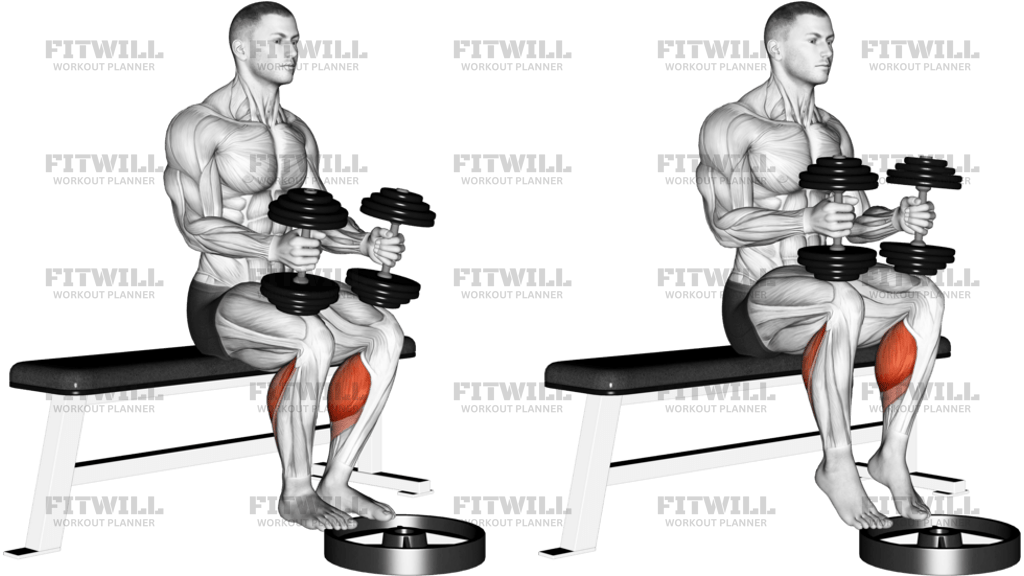
Dumbbell Seated Calf Raise is a seated ankle-flexion exercise for building the calves with the knees bent and the torso supported. In the image, the lifter sits on a bench with the balls of the feet on a raised surface and the dumbbells resting across the thighs just above the knees, which keeps the load centered while the ankles do the moving. That setup matters because it lets you train the calves through a long stretch and a hard top contraction without turning the movement into a bounce or a hip drive.
This version of the calf raise shifts emphasis toward the soleus while still recruiting the larger calf muscles to extend the ankle. The seated position reduces help from the hips and keeps the work where it belongs: on a clean heel lift and a controlled lowering phase. If the dumbbells slide, the feet drift, or the torso starts rocking, the set usually becomes a balance drill instead of a calf exercise.
A good rep starts with the feet placed so the heels can drop below the forefoot, the knees bent around ninety degrees, and the spine stacked tall over the hips. From there, press through the balls of the feet, lift the heels as high as you can, and briefly squeeze at the top before lowering under control. The working range should feel smooth and repeatable, not forced.
Use this movement for direct calf work when you want low skill, high-quality tension, and easy progression with small load changes. It works well as accessory volume after bigger lower-body lifts or as a focused calf block on its own. Keep the load light enough that the dumbbells stay stable on the thighs and the ankles, not momentum, determine the rep.
If you feel the exercise mostly in the toes, shins, or low back, the setup is usually off. Recheck the bench height, foot placement, and load before adding weight. A controlled seated calf raise should feel deliberate, steady, and localized to the calves from the first rep to the last.
[ Workout Log & Planner ]
Put your next workout in Fitwill
Keep your plan and training log ready when you are.


Instructions
- Sit on a flat bench and place one dumbbell across each thigh just above the knees, with the balls of your feet on a low plate or block so your heels can hang free.
- Set your feet about hip-width apart, keep the toes pointed forward, and let the knees stay bent around ninety degrees.
- Hold the dumbbells steady on the thighs so they do not roll as you move.
- Start with the heels dropped below the level of the forefoot to create a stretch through the calves.
- Brace lightly through the midsection and press through the balls of the feet to lift the heels as high as possible.
- Pause briefly at the top without bouncing or leaning back.
- Lower the heels slowly until you feel the calves lengthen again.
- Keep breathing smoothly and repeat for the planned number of repetitions.
Tips & Tricks
- Use a bench height that lets the thighs stay stable while the heels can move freely below the forefoot.
- If the dumbbells dig into the thighs, fold a towel or pad under them so you can keep the setup steady.
- Keep pressure through the big toe and second toe so the ankle does not roll outward on the way up.
- Do not bounce off the bottom; the stretched position should still be controlled.
- A one-second squeeze at the top is usually more useful than chasing extra speed.
- Lower the heels for at least as long as the lift so the calves stay under tension.
- If the dumbbells start wobbling, the load is too heavy for this setup.
- A small range loss is better than letting the knees, hips, or torso help the rep.
Frequently Asked Questions
What muscle does Dumbbell Seated Calf Raise target most?
It mainly targets the calves, with the seated position putting extra emphasis on the soleus while the larger calf muscles still contribute.
Why do the dumbbells sit on the thighs in this exercise?
Resting them just above the knees keeps the load centered and steady while the ankles do the work instead of the upper body.
Do my heels need to hang off a step or plate?
Yes, a small elevation is useful because it lets the heels drop below the forefoot for a fuller calf stretch at the bottom.
Should my knees move during the rep?
No. Keep the knees bent and mostly still so the movement comes from ankle plantarflexion, not from knee or hip shifting.
Can I do this one leg at a time?
Yes. Single-leg reps are a good option if you want more control, a bigger challenge, or to work around left-right differences.
What if the dumbbells keep slipping on my thighs?
Reduce the load, center the dumbbells more carefully, or add a towel pad so you can keep the setup secure.
Is this exercise beginner-friendly?
Yes. It is usually easy to learn if you start light and focus on a stable setup and a slow heel lower.
What should I feel if I am doing it correctly?
You should feel the calves working through the whole range, with the strongest squeeze near the top and a clear stretch at the bottom.