Back Stretch
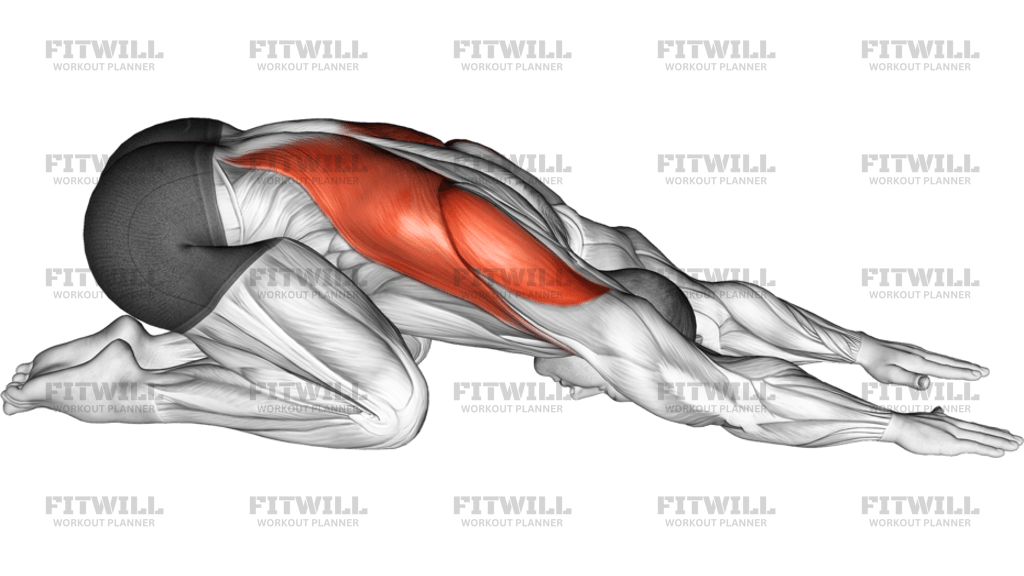
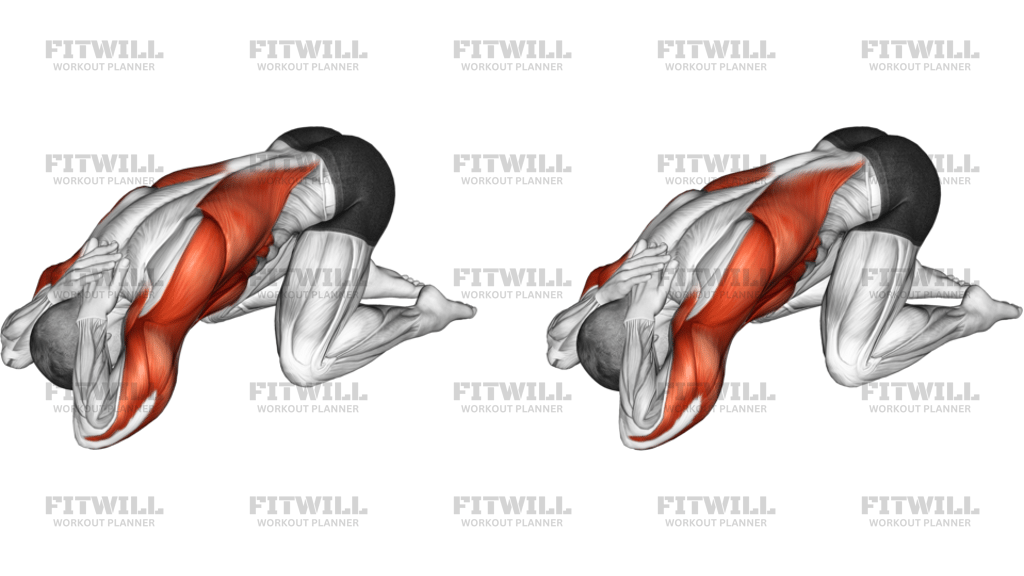
Back Stretch is a floor-based kneeling stretch that places the hips back toward the heels while the arms reach long in front of the body. The position creates a deep lengthening effect through the latissimus dorsi, upper back, shoulders, and the tissues along the sides of the torso, which is why it often feels best after pressing work, pulling work, or long desk sessions.
The image shows a long, supported reach rather than an active strength rep. That setup matters because the knees, shins, hips, and hands all determine where the stretch lands: if the hips stay close to the heels, the stretch shifts more into the lats and upper back; if the hands walk farther forward, the shoulders and ribcage take on more of the load. Small changes in position can make the difference between a useful opening stretch and a shoulder pinch.
Back Stretch is most useful when the lats feel tight overhead, the upper back has stiffened from benching or rowing, or the shoulders need a calm reset between heavier sets. It also works well as part of a warm-up or cooldown because it teaches the ribs to settle while the arms stay extended. The main goal is not to force depth, but to find a position where the whole back can lengthen without the lower back collapsing or the neck craning forward.
A good rep starts by setting the knees, shins, and hands in a stable line, then easing the hips backward until the stretch builds gradually. From there, the arms stay long, the elbows remain soft, and the chest melts toward the floor while the breath stays slow and quiet. The exhale is important here because it helps the ribcage drop and gives the lats more room to lengthen without fighting tension.
Use Back Stretch as a controlled mobility drill, not a competition for how far you can sink. If the shoulders feel jammed, shorten the reach; if the knees dislike the position, add padding; if the stretch moves into the low back, bring the hips slightly forward and stack the ribs over the pelvis more cleanly. Done well, Back Stretch should leave the upper body feeling looser, not strained.
[ Workout Log & Planner ]
Put your next workout in Fitwill
Keep your plan and training log ready when you are.


Instructions
- Place a mat under your knees and shins, then kneel with your big toes touching, knees apart enough for your torso to fit between them.
- Walk both hands forward on the floor with your palms down, arms straight, and fingers reaching long in front of your head.
- Sink your hips back toward your heels until you feel a stretch through your lats, sides, and upper back.
- Keep your forehead close to the floor and let your neck stay long instead of looking forward.
- Reach your fingertips farther away from your knees as you exhale, letting your ribs soften toward the mat.
- Keep your elbows soft but not bent, and keep both shoulders reaching evenly instead of shrugging one side higher.
- Hold the stretch for several slow breaths, then ease off slightly if the front of the shoulders or low back starts to pinch.
- To come out, walk your hands back under your shoulders and lift your torso up slowly to reset.
Tips & Tricks
- Widen your knees if your ribs cannot sink between your thighs without your hips lifting away from your heels.
- Keep your hands shoulder-width apart; a very narrow reach turns the stretch into more triceps and shoulder compression.
- Exhale fully before you try to reach farther, because the ribs usually release before the shoulders do.
- If the stretch lands in your low back, walk your hands back a few inches and keep the tailbone heavier toward the heels.
- Add a folded towel under the knees if the floor pressure distracts you from the lat stretch.
- Keep both palms pressing evenly so one shoulder does not twist forward and take over the position.
- A small side shift can bias one lat at a time: reach both hands slightly to the right to feel the left side more, and vice versa.
- Stop short of any sharp pinch at the front of the shoulder; this stretch should feel long and opening, not jammed.
Frequently Asked Questions
What muscles does Back Stretch target most?
It mainly stretches the lats and upper back, with extra length through the shoulders, triceps, and forearms.
Is Back Stretch the same as Child'S Pose?
It is very close to a Child's Pose variation, but the long overhead reach makes it hit the lats and shoulders more strongly.
Should my hips stay on my heels during Back Stretch?
Ideally yes, but if the shoulders are tight, let the hips float a little forward rather than forcing the chest down and shrugging.
Why do I feel Back Stretch more in my shoulders than my back?
Usually the hands are too far forward or the elbows are locked hard. Bring the reach back slightly and keep the arms long without forcing the shoulder joint.
Can beginners do Back Stretch comfortably?
Yes. Beginners usually do best with extra knee padding, a shorter reach, and only a mild stretch for a few slow breaths.
How long should I hold Back Stretch?
A comfortable hold is usually 20 to 45 seconds, or about 3 to 6 slow breaths, before coming out and resetting.
Can I use Back Stretch before pressing or rowing?
Yes. It works well before benching, pull-downs, or rows when the lats and shoulders feel stiff and you want more overhead or reach range.
What should I do if my knees hurt in Back Stretch?
Put a thicker pad under the knees, reduce how far you sit back, or keep the knees a little wider so the pressure is less direct.