Back Pec Stretch
Back Pec Stretch is a standing, bench-supported mobility stretch that opens the lats, chest, shoulders, and upper back while keeping the arms long and the torso organized. The movement looks simple, but the setup changes the feel immediately: a higher support shortens the lever and makes the stretch easier, while a lower support or deeper hinge increases tension through the side body and front of the shoulders.
This exercise is useful when the upper body feels locked up from pressing, pulling, climbing, or long hours at a desk. Because the hands stay fixed on the bench, the stretch comes from the torso folding and the ribs softening rather than from yanking the arms behind the body. That makes the position easy to control and repeat.
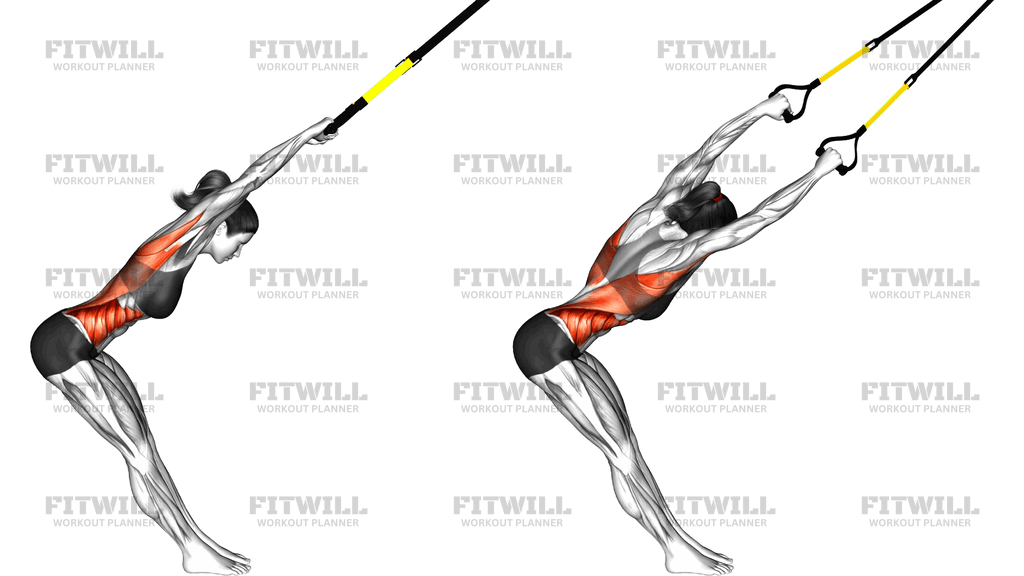
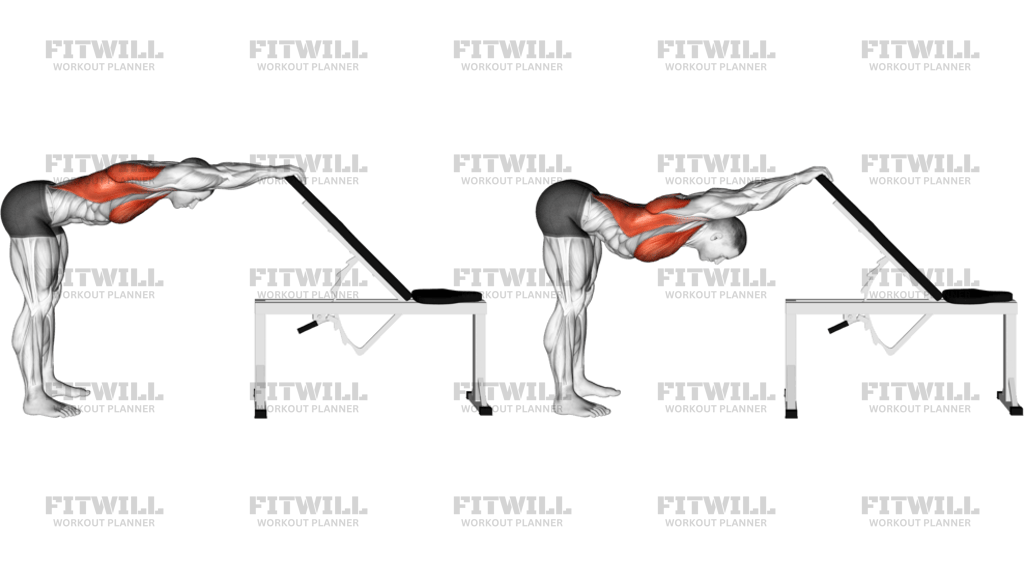
The main target here is the lat line, with a noticeable pull through the chest, front of the shoulders, and upper back when you sink into the hold. In the provided image the athlete is standing and hinging at the hips with both hands on a bench, which is the best way to think about the exercise: stable feet, long arms, and a controlled fold until the stretch is strong but still calm.
Good reps are smooth and quiet. Keep the neck relaxed, breathe out to let the ribs drop, and avoid turning the move into a lower-back stretch by over-arching or collapsing. If one side is tighter, small stance adjustments can change the angle, but the goal stays the same: length through the lats and front of the shoulder without joint pain.
Use Back Pec Stretch before upper-body training to open the shoulders, or after lifting to reduce stiffness and restore overhead motion. It is suitable for beginners because the range is self-limited by the support height and the distance of the feet from the bench, so you can scale the intensity without changing the exercise.
[ Workout Log & Planner ]
Put your next workout in Fitwill
Keep your plan and training log ready when you are.


Instructions
- Stand facing a sturdy bench or similar support and place both hands on the edge, about shoulder-width apart.
- Walk your feet back until your arms are straight and your torso can hinge forward comfortably.
- Keep a soft bend in the knees and a hip-width stance so you can fold from the hips instead of the low back.
- Push your hips back, let your chest drop between your arms, and keep your neck long.
- Keep the shoulders away from your ears while you allow the lats and chest to lengthen.
- Breathe in to maintain position, then exhale slowly as you settle a little deeper into the stretch.
- Hold the end range without bouncing or forcing the shoulders past a comfortable line.
- Step your feet back in and stand up slowly to finish.
Tips & Tricks
- Use a bench height that lets you keep your ribs down; too high reduces the stretch, too low can overload the shoulders.
- If the front of the shoulders feels pinched, move the hands slightly higher or shorten the step-back distance.
- Keep the elbows nearly straight, but do not lock them so hard that the wrists and shoulders feel jammed.
- Let the sternum sink rather than driving the head toward the floor; that keeps the stretch in the lats and chest instead of the neck.
- A longer exhale usually deepens the stretch more safely than forcing the torso lower.
- Keep pressure through the whole foot so the hinge comes from the hips, not from shifting onto the toes.
- If one side is tighter, turn the fingertips a few degrees inward or outward to find a cleaner line through the shoulder.
- Stop at a strong stretch, not pain; this is a mobility drill, not a contest for range.
Frequently Asked Questions
What muscle does Back Pec Stretch target most?
The lats are the main target, with a strong stretch through the chest, front of the shoulders, and upper back.
Can beginners perform this exercise?
Yes. Beginners usually need only a higher support and a smaller step-back distance to keep the stretch comfortable.
How high should the bench or support be?
Use a height that lets you keep straight arms and a comfortable hip hinge. Higher makes it easier; lower increases the stretch.
Why do I feel this in my shoulders more than my back?
Your hands may be too high or your stance too short. Step back a little less and keep the shoulders away from your ears.
Should my elbows stay locked?
Keep the arms long, but a very small elbow bend is fine if it helps the shoulders feel smoother.
How long should I hold the stretch?
Hold it for about 20 to 40 seconds, or for the number of calm breaths your program calls for.
What should I do if my lower back takes over?
Shorten the hinge, tuck the ribs slightly, and think about moving the hips back rather than arching the spine.
Can I do this after pressing or pulling workouts?
Yes. It works well after upper-body training because it helps restore shoulder motion and reduce tightness through the lats and chest.