Pelvic Tilt Into Bridge
Pelvic Tilt Into Bridge is a bodyweight floor exercise that blends a deliberate posterior pelvic tilt with a bridge. It is useful when you want to teach the hips, pelvis, and trunk to work together instead of letting the lower back take over. The movement is simple, but the quality of the setup matters because the whole point is to feel the pelvis tuck first and the bridge rise second.
This exercise usually trains the glutes and hamstrings most, with the lower abs helping keep the ribs down and the pelvis controlled. Because the arms stay on the floor and the load is just body weight, it also works well as a low-fatigue activation drill before heavier lower-body work. If you sit a lot or struggle to feel your glutes during bridges, this is a useful way to rehearse cleaner mechanics.
Start on your back with your knees bent, feet flat, and feet about hip-width apart. In the version shown here, the arms stay long overhead on the floor, which helps keep the ribcage settled and stops the torso from helping too much. From that position, exhale, tuck the tailbone, and flatten the lower back before you drive the hips upward.
At the top of the bridge, the hips should come up from the glutes rather than from a hard arch in the lower back. The torso and thighs should form a straight line from shoulders to knees, or close to it, without overreaching for extra height. A short pause at the top makes the rep more honest and helps you feel whether the pelvis is still tucked or has tipped forward.
Use Pelvic Tilt Into Bridge as a warm-up, activation drill, or light accessory exercise when you want better pelvic control, more glute engagement, or a cleaner bridge pattern before hip thrusts, squats, or deadlift variations. It is also a good option for beginners because the movement can be scaled easily by shortening the range or slowing the tempo. If you feel the lower back more than the glutes, reduce the height of the bridge and make the tuck more obvious before you add more reps.
[ Workout Log & Planner ]
Put your next workout in Fitwill
Keep your plan and training log ready when you are.


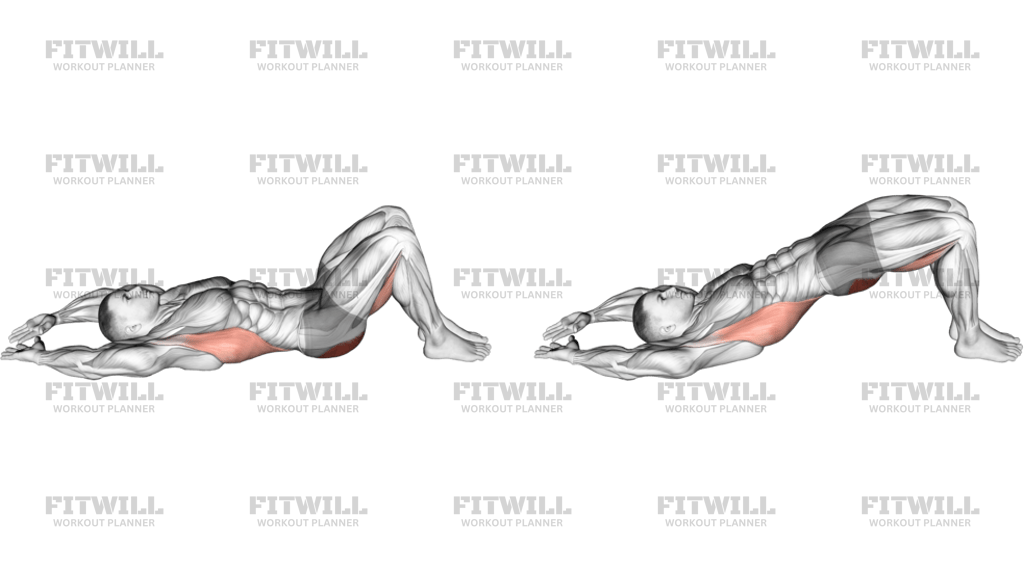
Instructions
- Lie on your back with your knees bent, feet flat on the floor, and feet about hip-width apart.
- Reach your arms overhead on the floor or keep them long by your ears so your ribs stay down and your shoulders stay relaxed.
- Exhale fully and tuck your tailbone to press your lower back gently into the floor before you lift.
- Drive through your heels and midfoot to raise your hips, keeping the knees tracking straight ahead.
- Lift only until your shoulders, hips, and knees form a straight line without arching your lower back.
- Squeeze your glutes at the top and keep the pelvic tuck instead of tipping the ribs up.
- Lower your hips slowly until your sacrum and lower back return to the floor with control.
- Reset the tuck with each rep, breathe out on the lift, and stop the set if the bridge turns into a low-back arch.
Tips & Tricks
- Think about tipping your tailbone toward your knees before you think about lifting your hips.
- Keep the bottom ribs heavy against the floor; if they flare, shorten the bridge height.
- Press through the whole foot, but let the heels do most of the work so the glutes stay dominant.
- If your hamstrings cramp, move your feet a little farther from your hips and reduce the bridge height.
- Hold the top for a full second instead of bouncing through quick reps.
- Keep the knees stacked over the second and third toes so they do not drift inward.
- Do not chase extra height if the movement starts to come from the low back instead of the hips.
- Keep the arms quiet on the floor; they are there to help the ribcage stay controlled, not to push the rep.
Frequently Asked Questions
What muscles does Pelvic Tilt Into Bridge work most?
It mainly targets the glutes and hamstrings, with the lower abs helping keep the pelvis tucked and the ribs down.
Can beginners perform this exercise?
Yes. It is beginner-friendly because it is bodyweight, but the key is to keep the tuck and lift only as high as you can without arching your lower back.
Where should I feel Pelvic Tilt Into Bridge?
You should feel the glutes doing most of the lifting, with the hamstrings and lower abs helping. If you mainly feel your lower back, the bridge is too high or the tuck is lost.
Why are the arms overhead in Pelvic Tilt Into Bridge?
The overhead arm position helps keep the ribs settled and makes it harder to cheat by arching through the torso. If your shoulders dislike that position, place your arms by your sides instead.
How high should my hips go?
Only high enough to make a straight line from shoulders to knees. If you have to flare the ribs or arch the low back to go higher, the bridge is too big.
Why do my hamstrings cramp during this exercise?
That usually means your feet are too close, the bridge is too high, or the glutes are not taking over soon enough. Move the feet slightly farther out and make the pelvic tilt more deliberate.
Is Pelvic Tilt Into Bridge a good warm-up before hip thrusts or squats?
Yes, it works well as a warm-up or activation drill because it teaches pelvic control and gets the glutes working without much fatigue.
What is the biggest mistake in Pelvic Tilt Into Bridge?
Letting the movement turn into a back arch is the main error. The tuck should happen first, and the hips should rise while the ribs stay down.