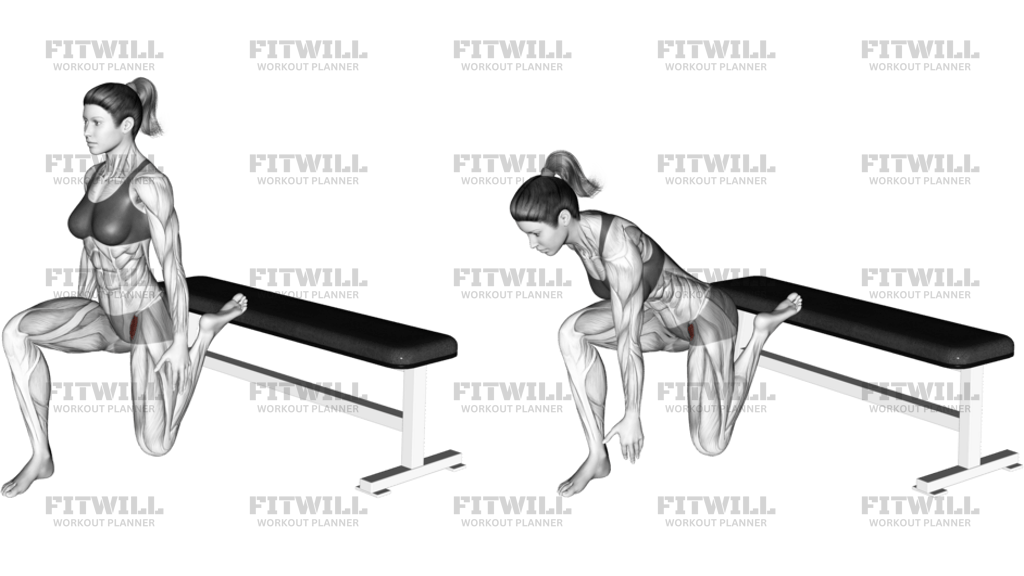
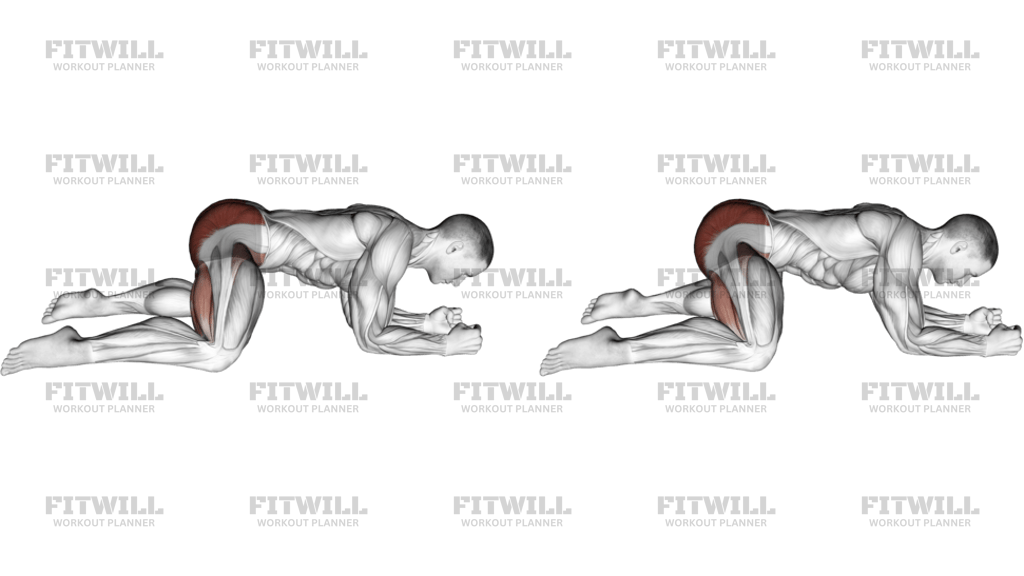
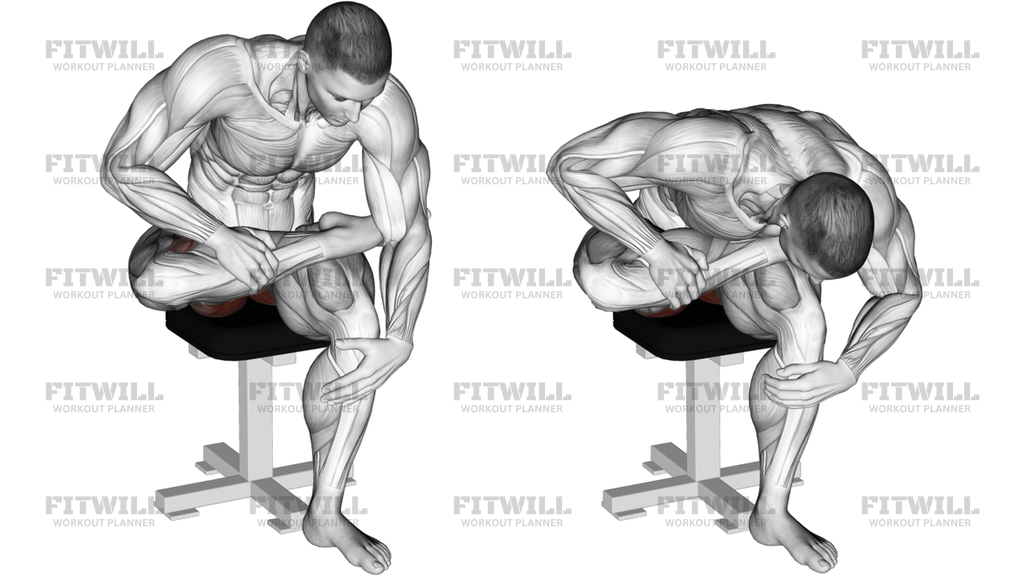
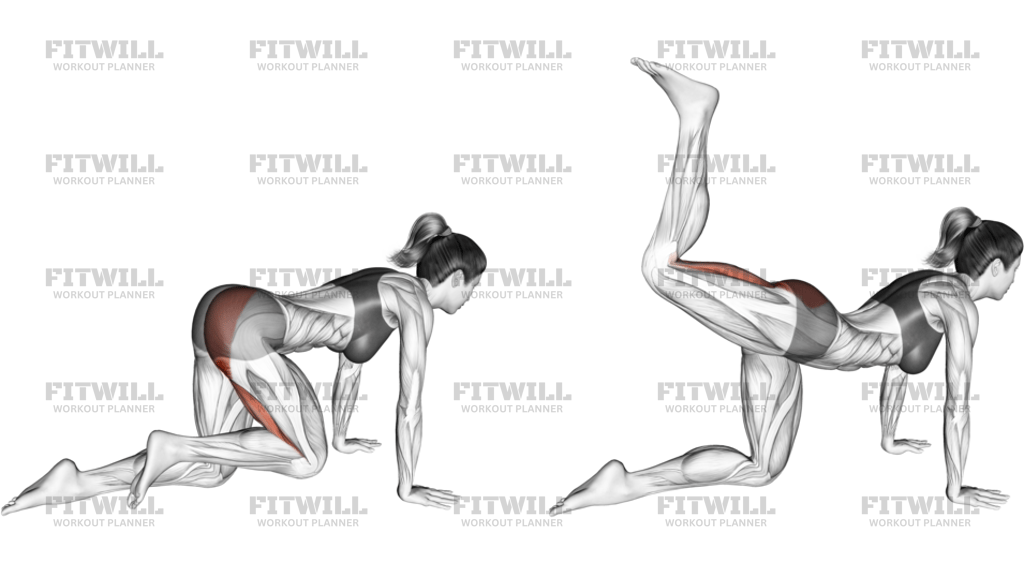
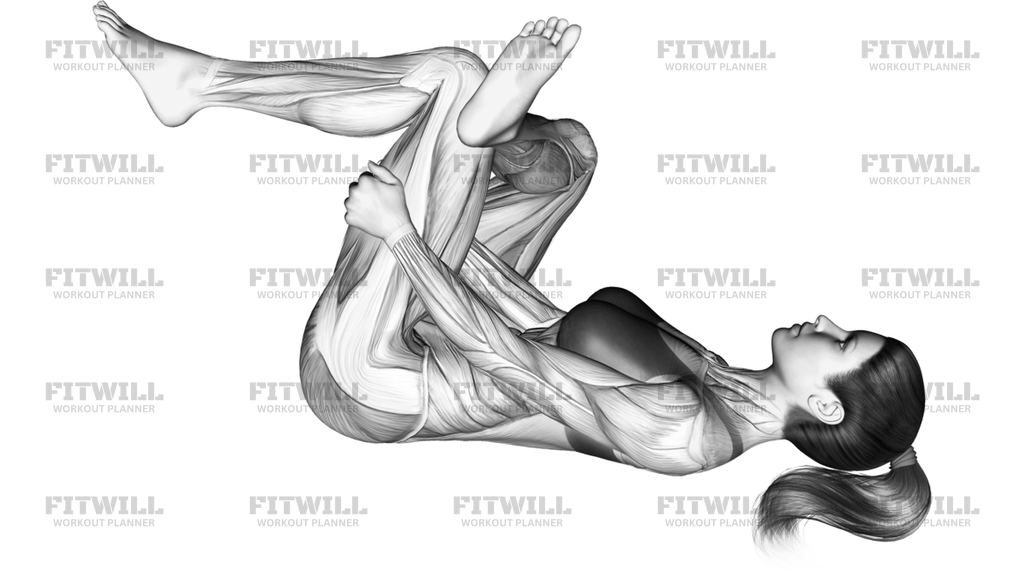
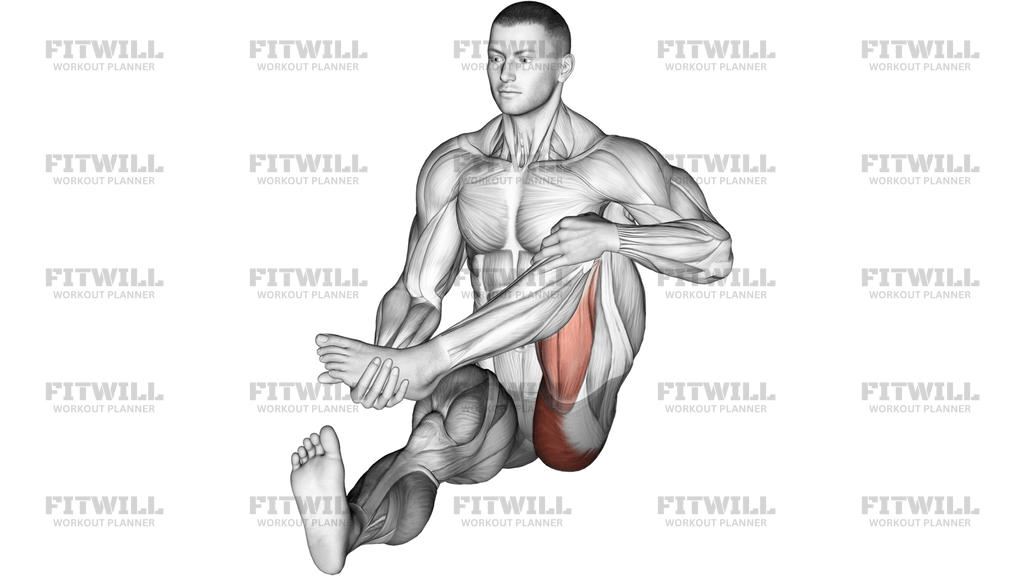
Seated Glute Stretch
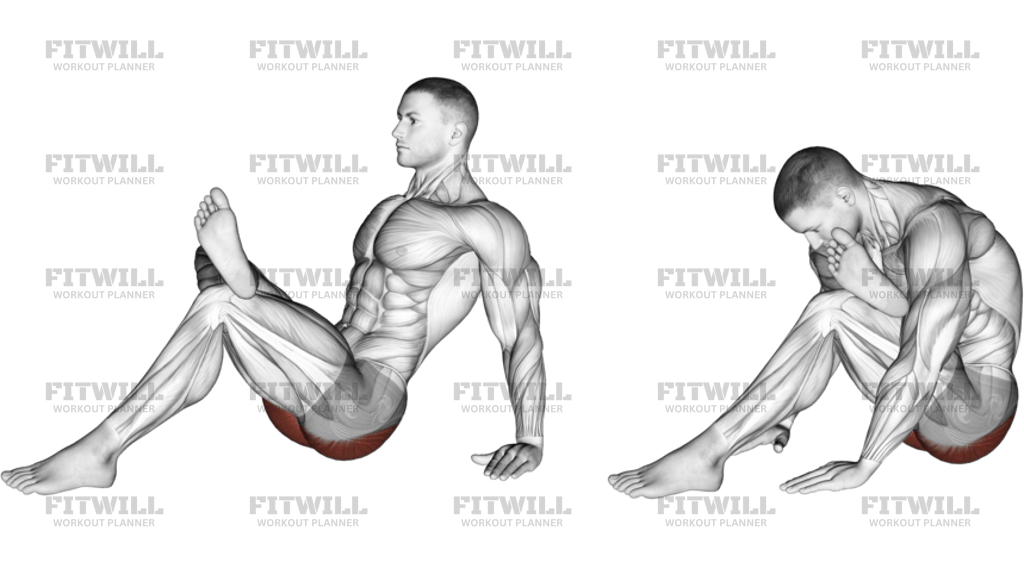
Seated Glute Stretch is a floor-based mobility exercise that opens the back of the hip by placing one ankle across the opposite thigh and folding the torso forward over the crossed leg. It is a bodyweight stretch on an exercise mat, and the image shows a figure-four style position with the supporting hand on the floor and the chest reaching toward the shin. The goal is not to force depth, but to create a controlled stretch in the glute and outer hip while keeping the pelvis steady.
This stretch is useful when the hips feel tight from sitting, squatting, running, or heavy lower-body training. The crossed-leg position shifts the stretch into the gluteus maximus and nearby rotators of the hip, while the planted foot and braced torso help you keep the movement organized. When the setup is correct, the stretch feels broad through the buttock and outer hip rather than sharp at the knee or pinched in the front of the hip.
The setup matters because small changes change the feel a lot. Keeping the lifted foot flexed, the sitting bones grounded, and the spine long helps protect the knee and lets the hip open without twisting. If the torso collapses, the stretch often moves into the low back instead of the hip. If the crossed knee is forced down, the inner side of the knee can get irritated. A calm setup makes the stretch more effective and easier to repeat side to side.
Use a slow hinge from the hips to deepen the position, then breathe into the hold instead of bouncing. You can stay more upright for a lighter version or fold farther forward for a stronger glute stretch, but the sensation should stay controlled and pain-free. This is a practical cooldown or mobility drill for people who want better hip comfort, easier sitting tolerance, and cleaner lower-body mechanics without loading the joints.
Treat each side separately and compare how the hips feel rather than trying to make both sides look identical. The side that feels tighter may need a smaller range, a higher torso, or a longer pause before you fold forward. Clean positioning, patient breathing, and a relaxed neck matter more here than reaching the floor.
[ Workout Log & Planner ]
Put your next workout in Fitwill
Keep your plan and training log ready when you are.


Instructions
- Sit on the mat with both knees bent and both feet on the floor.
- Cross your right ankle over your left thigh just above the knee, then flex the right foot.
- Keep your left foot planted and sit up on your sit bones instead of slumping into the low back.
- Place one or both hands on the floor beside your hips for support.
- If needed, use your hand to guide the right knee slightly outward so the hip stays open.
- Lengthen your spine and hinge your chest forward from the hips.
- Stop when you feel a deep stretch in the right glute or outer hip, not pain in the knee.
- Hold the position while breathing slowly, then come back up with control and switch sides.
Tips & Tricks
- Keep the crossed foot flexed so the knee stays protected and the stretch stays in the hip.
- If the stretch feels too aggressive, stay more upright and reduce how far you fold forward.
- Do not press the crossed knee down with force; let the hip open gradually.
- Keep both sit bones grounded so the movement does not turn into a twist or side bend.
- A long spine is better than a deep round-back fold for this stretch.
- Exhale slowly as you settle into the hold; do not bounce at the bottom.
- If one side is much tighter, give it a few extra breaths before moving deeper.
- Sharp pain in the knee means the position needs to be reduced or changed.
Frequently Asked Questions
What does Seated Glute Stretch target most?
It mainly stretches the glutes and outer hip of the crossed leg, especially the gluteus maximus and the deeper hip rotators.
Do I need to lean far forward to make it work?
No. A small hip hinge is enough if you already feel the stretch in the glute. More depth is not better if it starts pulling on the knee or low back.
Why is the foot on the crossed leg flexed?
Flexing the foot helps keep the knee joint safer and keeps the stretch aimed at the hip instead of dumping into the knee.
Can beginners do this stretch?
Yes. Beginners should start upright with light support from the hands and only fold forward as far as they can keep the spine long.
What is the biggest form mistake?
Forcing the crossed knee down or rounding hard through the low back. Both usually reduce the quality of the hip stretch.
Is this the same as a lying figure-four stretch?
It is similar, but the seated version uses the floor and your hands for support. That makes it easy to adjust torso angle and control the stretch.
When should I use Seated Glute Stretch?
It fits well after lower-body lifting, after running, or anytime your hips feel stiff from sitting.
What should I do if I feel it in my knee?
Reduce the height of the crossed leg, keep the foot more flexed, and sit more upright. If knee discomfort continues, switch to another hip stretch.