Barbell High Bar Squat
Barbell High Bar Squat is a classic barbell squat variation performed with the bar resting high on the upper traps. That higher bar position encourages a more upright torso than a low-bar squat, which usually shifts more of the work toward the quadriceps while still involving the glutes, adductors, spinal erectors, and core for support. The exercise is built around controlled knee and hip flexion, so the quality of each rep depends on how well you organize the setup before you descend.
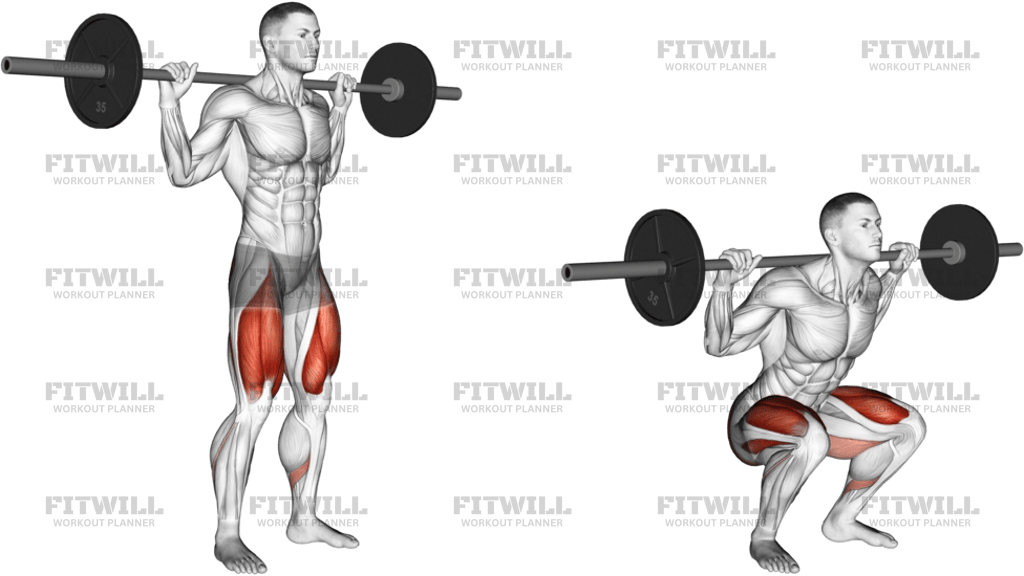
The image shows the bar placed across the upper back, not down on the rear delts, with the feet set about shoulder width and turned slightly out. From there, the lifter lowers into a deep squat by sending the hips down between the heels while the knees track in line with the toes. That upright, high-bar position makes ankle mobility, trunk stiffness, and even foot pressure more important than in many other squat styles.
A good high bar squat is not about dropping straight down or bouncing out of the bottom. It is about staying braced, keeping the chest tall, and controlling the descent so the knees and hips share the load smoothly. At the bottom, the thighs are shown below parallel, then the lifter drives back up by pushing the floor away and maintaining the same bar path over the midfoot. If the torso collapses, the heels rise, or the knees cave inward, the set usually becomes more about compensation than strength.
This movement is useful anywhere you want a foundational lower-body strength lift with a clear quad bias and a strong carryover to general squatting mechanics. It fits strength blocks, hypertrophy work, and technique practice, provided the load matches the lifter's mobility and control. Beginners can learn it well with light weight or just the bar, but the bar path, depth, and brace need to stay consistent. For safety and quality, keep the neck neutral, stop the descent if the spine loses position, and use a depth you can own on every repetition rather than chasing range with no control.
[ Workout Log & Planner ]
Put your next workout in Fitwill
Keep your plan and training log ready when you are.


Instructions
- Step under the bar and place it high across the upper traps, then grip the bar evenly just outside shoulder width.
- Stand up to unrack the bar, take two or three controlled steps back, and set your feet about shoulder width with the toes turned slightly out.
- Stack the ribcage over the pelvis, take a breath into your belly and sides, and brace before starting the descent.
- Sit down between your heels by bending the knees and hips together while keeping the chest tall and the bar centered over the midfoot.
- Keep the knees tracking over the toes as you lower to a depth you can control, ideally until the thighs are at or below parallel.
- Pause briefly if needed to stay tight at the bottom, then drive up by pushing the floor away and keeping the elbows and chest lifted.
- Exhale through the hardest part of the ascent, maintain pressure through the whole foot, and avoid letting the heels pop up or the knees cave in.
- Finish the rep by standing tall with the hips and knees fully extended, then reset your breath before the next repetition.
- After the last rep, walk the bar forward into the rack and set it down under control.
Tips & Tricks
- Keep the bar on the upper traps, not on the neck or rear delts, so the high-bar position stays stable.
- Use a stance that lets the knees track naturally over the toes without forcing an unnaturally wide base.
- Think about keeping the midfoot under pressure; if your weight drifts to the toes, the torso usually tips forward.
- A deep breath before each rep helps keep the trunk rigid when the bar is descending.
- If your heels lift, reduce depth slightly or check ankle mobility before adding more load.
- Let the knees travel forward on purpose instead of trying to keep them pinned back; that is part of a proper high-bar squat.
- Lower under control for a full count rather than dropping into the bottom and losing position.
- Stop the set if the bar path starts drifting forward or the lower back rounds out of the hole.
Frequently Asked Questions
What does the high-bar position change compared with a low-bar squat?
The bar sits higher on the traps, which usually keeps the torso more upright and increases the demand on the quadriceps.
Which muscles do I feel most in this squat?
The quads are the main driver, with the glutes, adductors, core, and upper back helping stabilize the lift.
How wide should my feet be for this exercise?
Start around shoulder width with the toes slightly turned out, then adjust until you can squat deep without your knees collapsing or your heels lifting.
How do I keep the bar path correct on the way down and up?
Keep the bar stacked over the midfoot, descend with the chest tall, and drive straight up without letting the torso pitch forward.
Can beginners do barbell high bar squats?
Yes, but only with a light load and enough mobility to keep the spine and heels stable through the full range.
How deep should I squat?
Lower until your thighs reach at least parallel if you can do it without losing brace, heel contact, or knee tracking.
What is the most common mistake with the high-bar squat?
Letting the chest drop and the bar drift forward, which usually turns the squat into an unstable good morning pattern.
How can I make this squat safer for my knees and lower back?
Use a controlled descent, keep pressure through the whole foot, and stop the set as soon as your brace or alignment starts to break down.