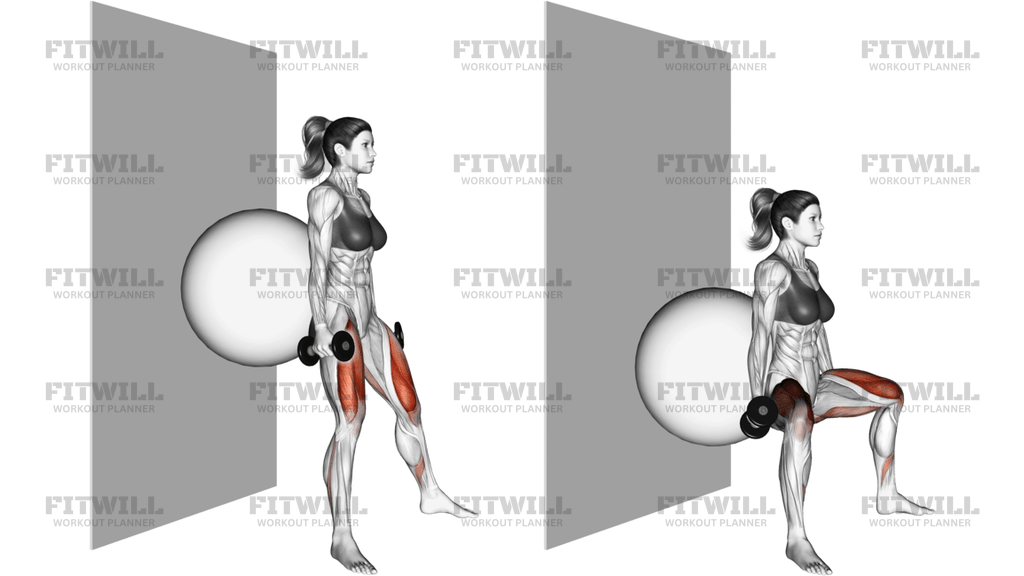
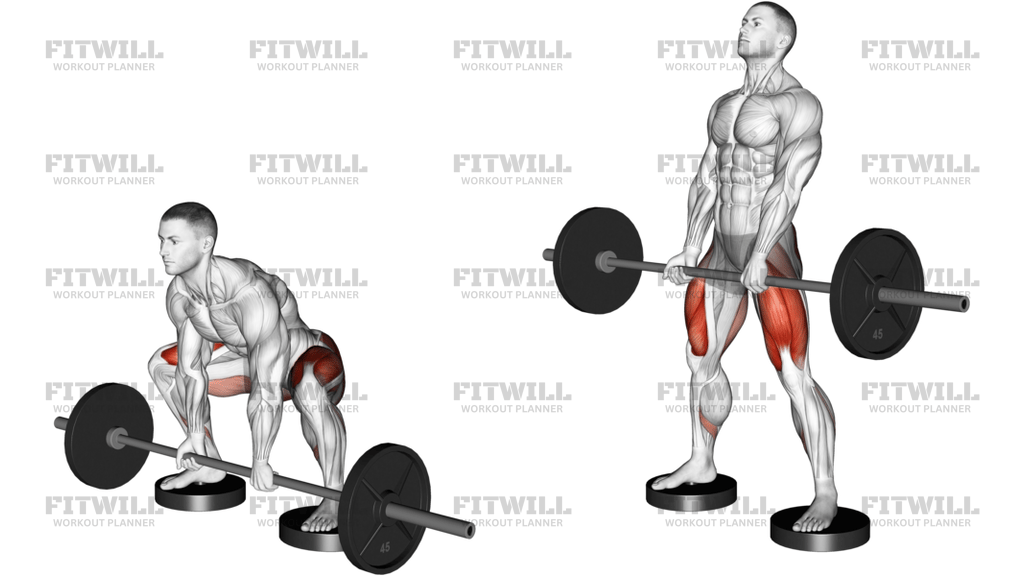
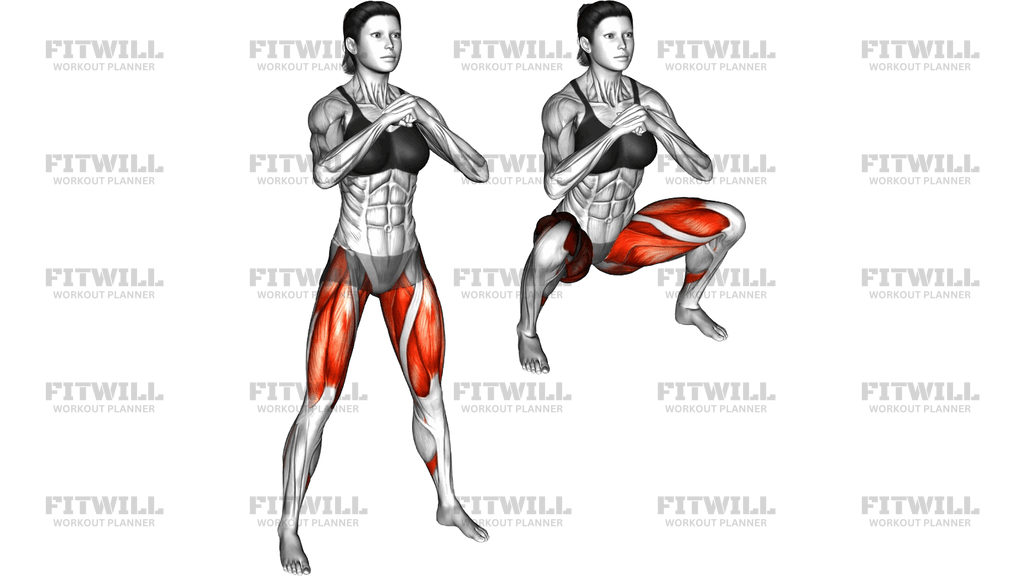
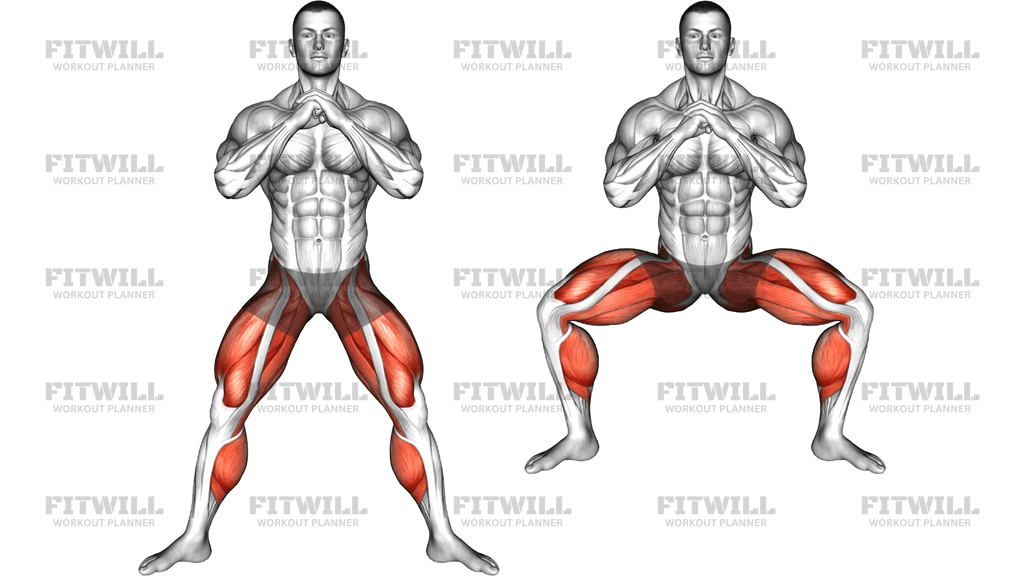
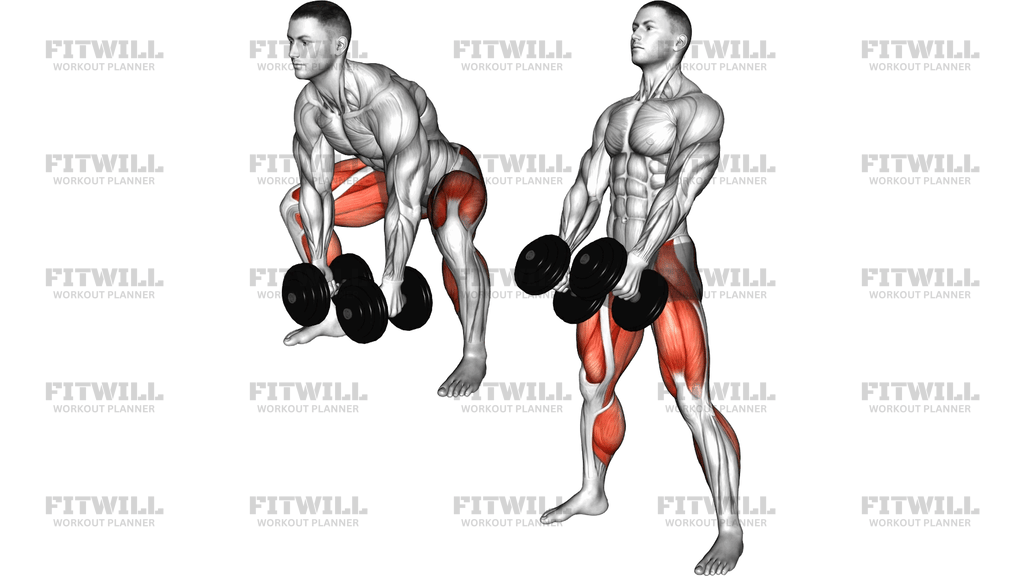
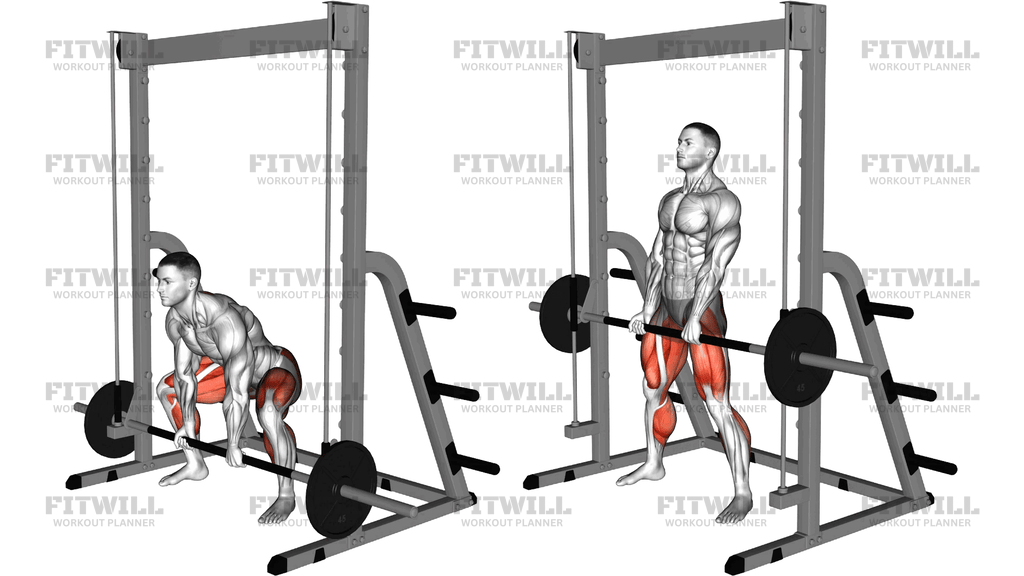
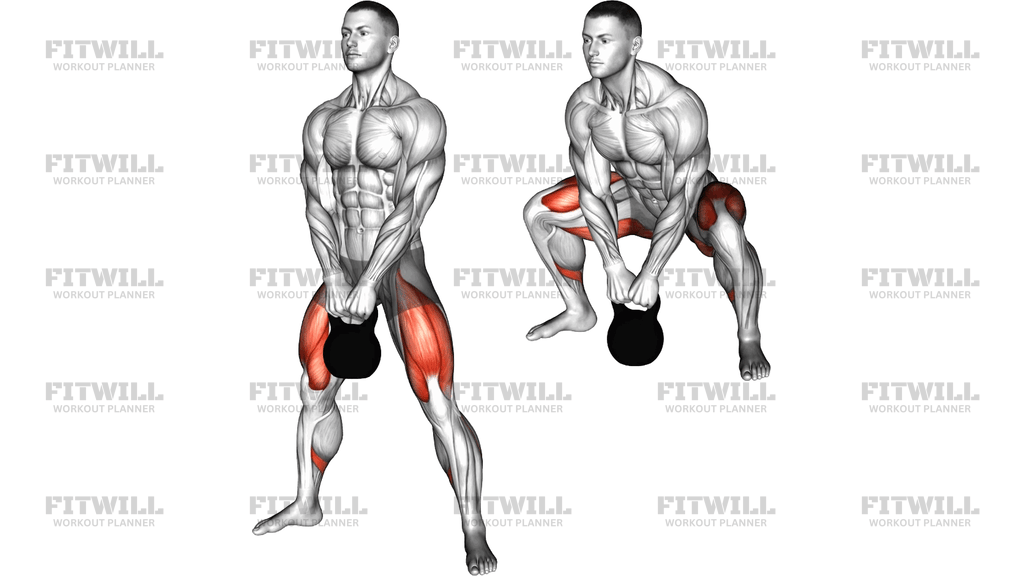
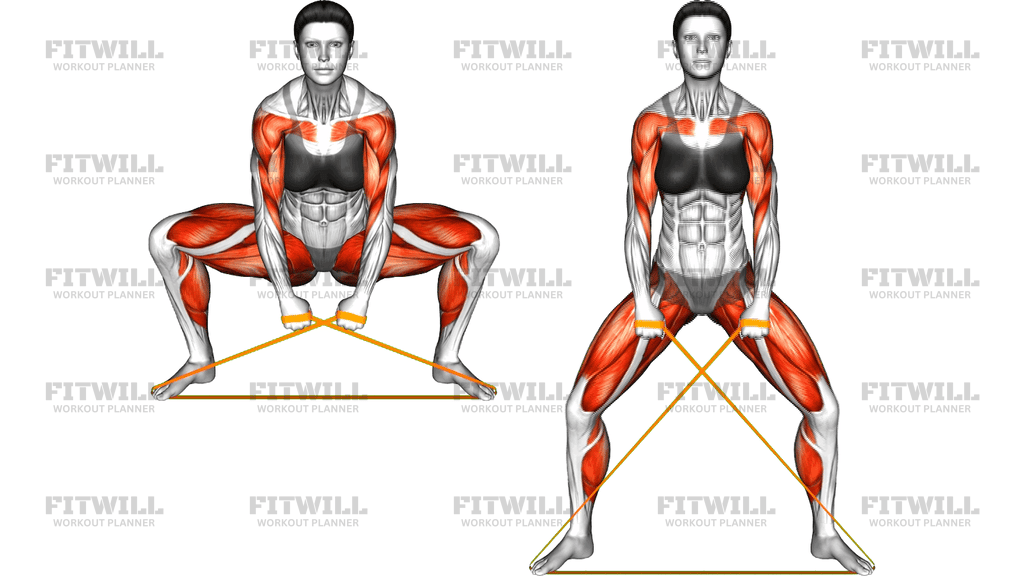
Barbell Narrow Stance Squat
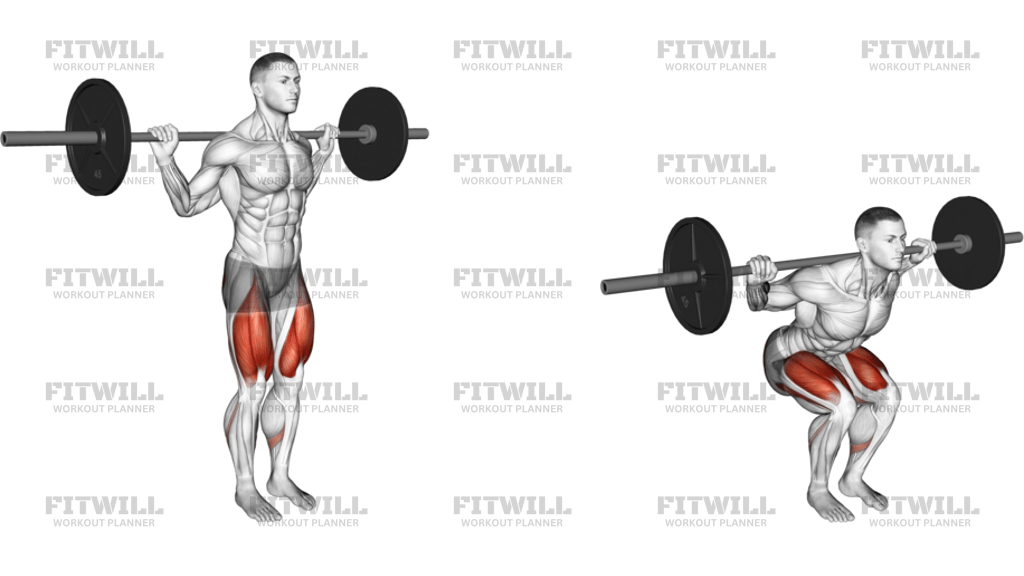
Barbell Narrow Stance Squat is a barbell squat variation performed with the feet set closer together than a standard squat stance. The narrower base shifts more of the work toward the quads while still demanding strong bracing from the trunk, hips, and upper back. It is a useful lower-body strength builder when you want a squat pattern that feels more upright and more quad-dominant than a wider stance version.
The setup matters because a narrow stance gives you less room to hide sloppy knee tracking, heel lift, or an unstable bar path. The bar should sit firmly across the upper back, the ribs should stay stacked over the pelvis, and the feet should be planted so the knees can travel forward and out without caving inward. When the stance is too tight or the toes are pointed too straight, the squat usually turns into a cramped hinge that limits depth and balance.
A good repetition starts by sitting between the heels, not by pitching the chest aggressively forward. Descend under control, keep pressure through the whole foot, and let the knees open just enough to follow the line of the toes. At the bottom, the hips should stay active rather than collapsing onto the ankles. On the way up, drive the floor away and keep the bar moving over the midfoot instead of drifting toward the toes.
This exercise is common in strength programs, quad-focused lower-body sessions, and accessory work after a main squat lift. It can also be useful for lifters who want to practice staying braced and upright under load. The main benefits come from consistent mechanics and a controlled range of motion, not from forcing the deepest possible squat with a stance that does not match your hip and ankle mobility.
Use a load that lets you keep the bar steady, the heels grounded, and the knees tracking cleanly on every rep. If your hips or ankles feel pinched, widen the stance slightly before adding weight. The goal is a repeatable squat pattern that challenges the quads without losing control at the bottom position.
[ Workout Log & Planner ]
Put your next workout in Fitwill
Keep your plan and training log ready when you are.


Instructions
- Set a barbell across your upper back and stand with your feet about hip-width apart, slightly narrower than a standard squat stance.
- Turn the toes out just enough to let the knees track over them and keep your weight spread through the whole foot.
- Take a breath into your belly and brace your torso before you unlock the hips and knees.
- Lower yourself straight down between your heels while keeping the chest tall and the bar balanced over the midfoot.
- Let the knees travel forward and slightly out as you descend, but do not let them cave inward.
- Reach the bottom only as deep as you can maintain heel contact, control, and a neutral torso angle.
- Drive up by pushing the floor away and keeping the bar path smooth as you return to standing.
- Exhale near the top, reset your brace, and repeat for the planned number of reps.
Tips & Tricks
- A slightly narrower stance than shoulder width usually works best; if the squat feels cramped, open the feet a little before changing the load.
- Keep the bar over the midfoot on the way down and up; if it drifts forward, the narrow stance is probably forcing too much torso lean.
- Think about sitting straight down, not back, so the quads stay involved and the heels stay heavy.
- If the knees touch or collapse inward, reduce the load and use a slower descent until the tracking stays clean.
- Small toe-out angles often feel better than pointing the feet straight ahead because they give the hips room to open.
- A controlled pause just above the bottom can expose weak positions and stop you from bouncing out of depth.
- Stop one or two inches short of the point where your heels rise or your pelvis tucks under hard; depth is only useful when it stays stable.
- Use a rack height that lets you unrack the bar without standing on tiptoe or walking out under a shaky setup.
Frequently Asked Questions
What muscles does Barbell Narrow Stance Squat work most?
It mainly targets the quads, with the glutes, adductors, and trunk working hard to keep the bar stable and the knees tracking cleanly.
Can beginners perform this exercise?
Yes, if they already understand barbell squatting and start with a light load. Beginners should keep the stance only slightly narrower than shoulder width and stop the set if balance gets shaky.
Where should the bar sit for this squat?
The bar should rest securely across the upper back, not on the neck. Keep the shoulder blades tight enough to create a stable shelf before you unrack the weight.
How narrow should my stance be?
Usually just inside shoulder width is enough. If the stance is too narrow, the squat can feel cramped and the knees and ankles may lose a clean line.
Should my knees go forward in this squat?
Yes. In a narrow stance squat, some forward knee travel is normal and often helpful for keeping the torso more upright and the quads loaded.
What is the most common mistake?
Letting the knees cave inward or shifting the weight onto the toes. Both usually happen when the stance is too narrow or the load is too heavy.
Is this a good quad-building exercise?
Yes. The narrower stance usually makes the quads work harder than they do in a wider squat pattern, especially if you keep the torso upright and the heels down.
What should I do if my heels come up?
Reduce the depth a little, open the stance slightly, or lower the load. Heel lift usually means the stance is too tight for your ankle and hip mobility.