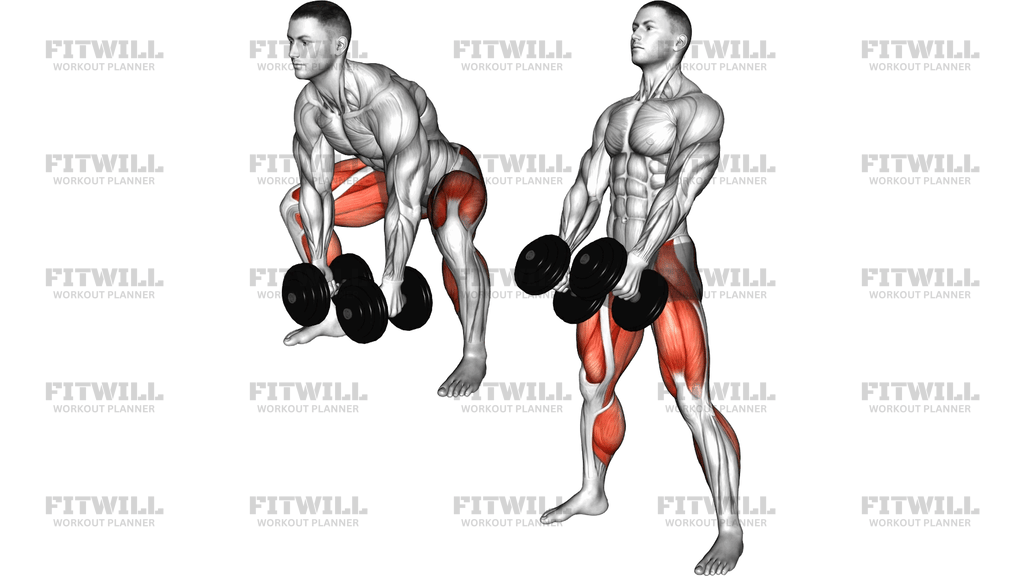
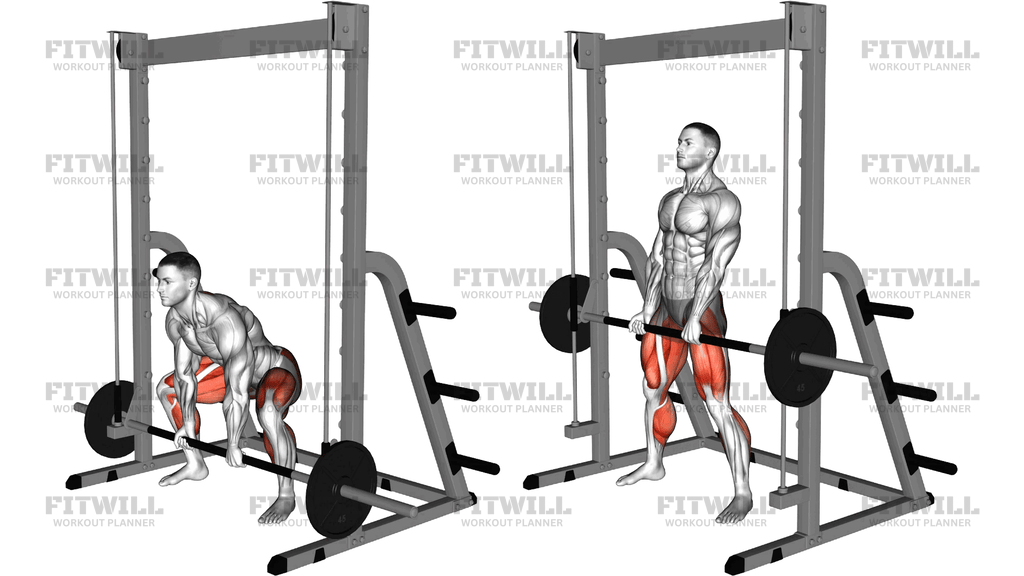
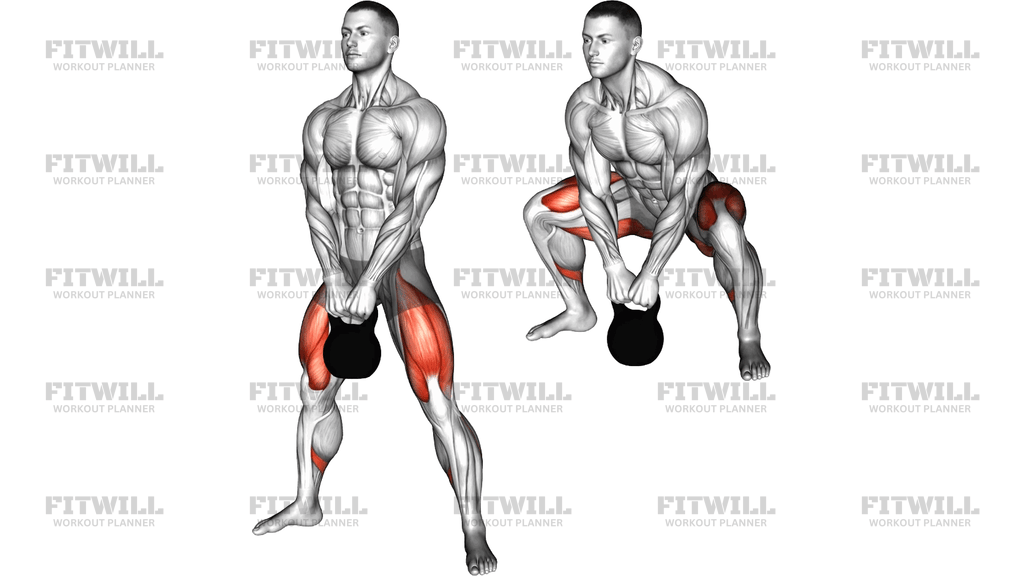
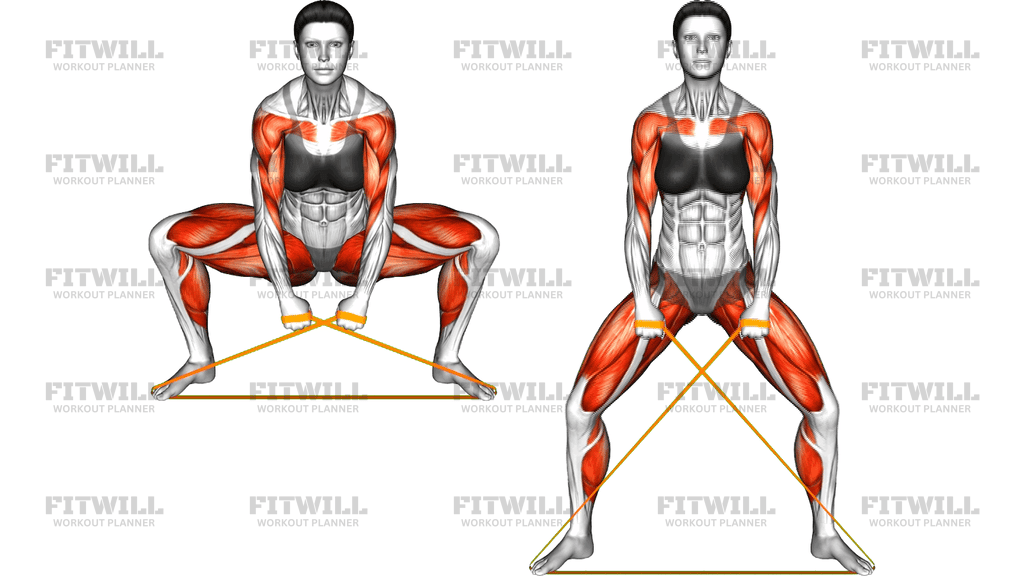
Barbell Squat Knees End Position WRONG-RIGHT
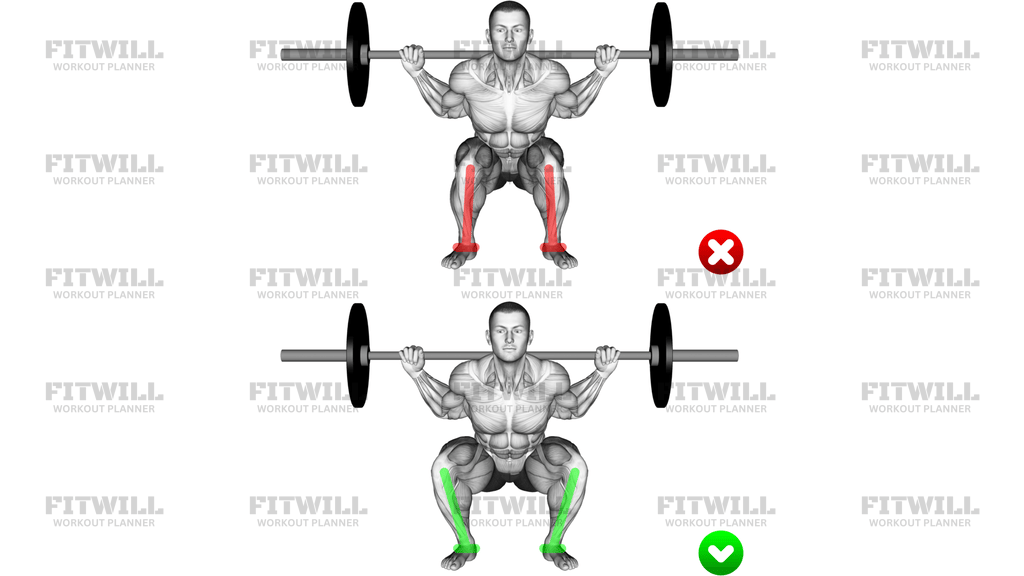
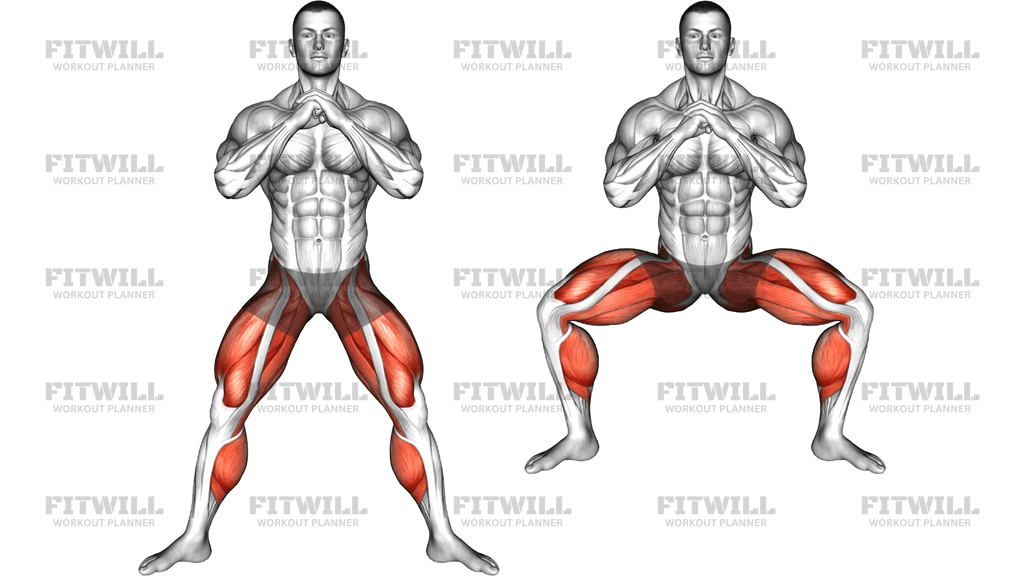
Barbell Squat - Knees - End Position (wrong-right) is a squat coaching drill that shows the difference between collapsed knees and properly tracked knees at the bottom of a barbell back squat. The image is not about adding load or chasing depth first; it is about proving that the hips, knees, and feet stay aligned when the squat finishes.
The wrong position shows the knees drifting inward and losing line with the feet. The correct position shows the knees pressed outward so they stay in line with the toes and mid-foot. That alignment lets the quads, glutes, and adductors share the work more cleanly while the hips and trunk stay organized under the bar.
This is useful when a lifter can descend but caves at the bottom, especially if the arches collapse, the stance is too narrow, or the bar feels unstable. The cue is simple: keep the whole foot planted, push the knees out with intention, and keep pressure through the outer hips as you settle into the bottom position. The bar should stay centered over the mid-foot instead of shifting forward.
Because this is a technique-focused end position, the best repetitions are controlled and deliberate. A lighter load usually makes the correction clearer because you can feel the foot pressure, knee path, and hip position without fighting momentum. If the knees still cave, the problem is usually stance, ankle control, hip control, or too much weight for the current pattern.
Use this drill as a teaching reference, a warm-up reminder, or a squat quality check before heavier sets. The goal is not just to reach the bottom of the squat, but to arrive there with knees that track cleanly and keep the bar path, foot pressure, and hip position in sync.
Fitwill
Log Workouts, Track Progress & Build Strength.
Achieve more with Fitwill: explore over 9600 exercises with images and videos, access built-in and custom workouts, perfect for both gym and home sessions, and see real results.
Start your journey. Download today!




Instructions
- Set the bar across your upper back and stand with your feet about shoulder-width apart, toes slightly turned out.
- Root both feet into the floor so the heel, big toe, and little toe stay loaded before you descend.
- Brace your trunk and keep your chest and ribs stacked over your pelvis as you start the squat.
- Lower under control until you reach the bottom position shown in the image.
- At the bottom, keep your knees tracking in line with your toes instead of letting them cave inward.
- Drive up through the mid-foot and heels while keeping the knees pushed out over the feet.
- Exhale as you rise and keep the bar balanced over the middle of the foot.
- Reset your stance before the next rep if the knees drift or the arches collapse.
Tips & Tricks
- If the knees cave in at the bottom, lighten the load and own the knee path before adding weight.
- Think about spreading the floor apart with your feet as you rise; that often helps the knees stay out.
- Keep your arches from collapsing, because flat feet usually pull the knees inward with them.
- A slightly wider stance or a little more toe-out can make the bottom position easier to control.
- Do not force the knees out so hard that the feet roll to the outer edge; keep pressure across the whole foot.
- Pause briefly in the bottom if you need to practice the correct knee line without bouncing.
- If the bar drifts forward, your knees often follow; keep the bar stacked over the mid-foot.
- Use controlled reps rather than touching depth and rebounding through a sloppy bottom position.
Frequently Asked Questions
What is this barbell squat drill teaching?
It shows the difference between knees that cave inward and knees that stay aligned over the feet at the bottom of the squat.
What should the knees do at the bottom of the squat?
They should track in line with the toes instead of collapsing toward each other.
Why do my knees cave inward when I squat?
Common causes are weak foot pressure, a stance that is too narrow, limited hip control, or using more load than you can stabilize.
Should my feet stay flat during this squat position?
Yes, keep the heel, big toe, and little toe planted so the arch supports the knee line.
Is this mainly a quad exercise?
The quads drive a lot of the work, but good knee tracking also depends on the glutes, adductors, and foot stabilizers.
Can I use this cue before heavier barbell squats?
Yes, it is a good technique check before working sets because it reinforces the correct bottom position.
What is the most common mistake shown in the wrong image?
The knees collapse inward and lose alignment with the toes and mid-foot.
How can I fix the correct knee position?
Reduce the load, widen the stance slightly if needed, and practice pushing the knees out while keeping the whole foot rooted.