Dumbbell Over Bench One-Arm Reverse Wrist Curl
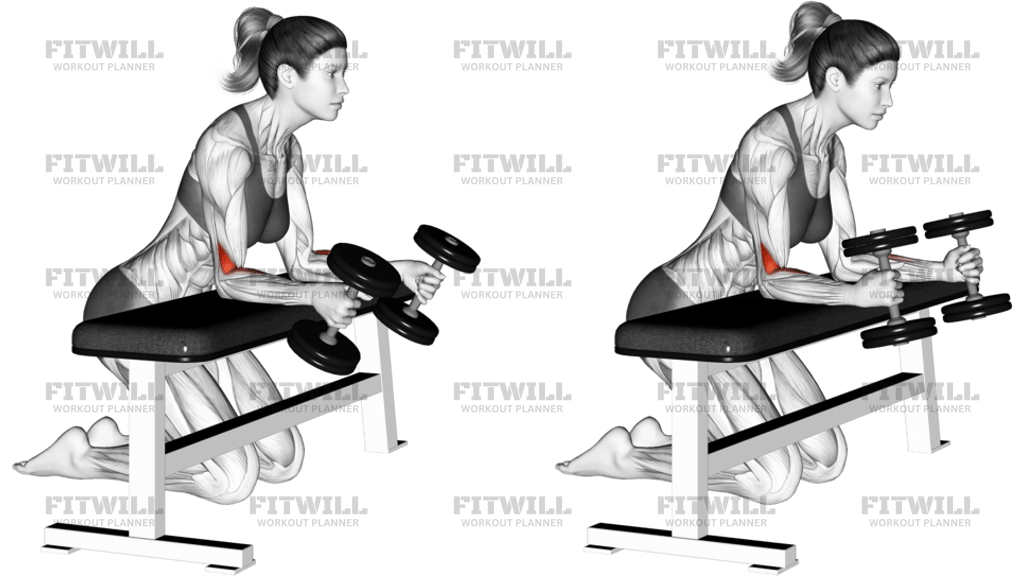
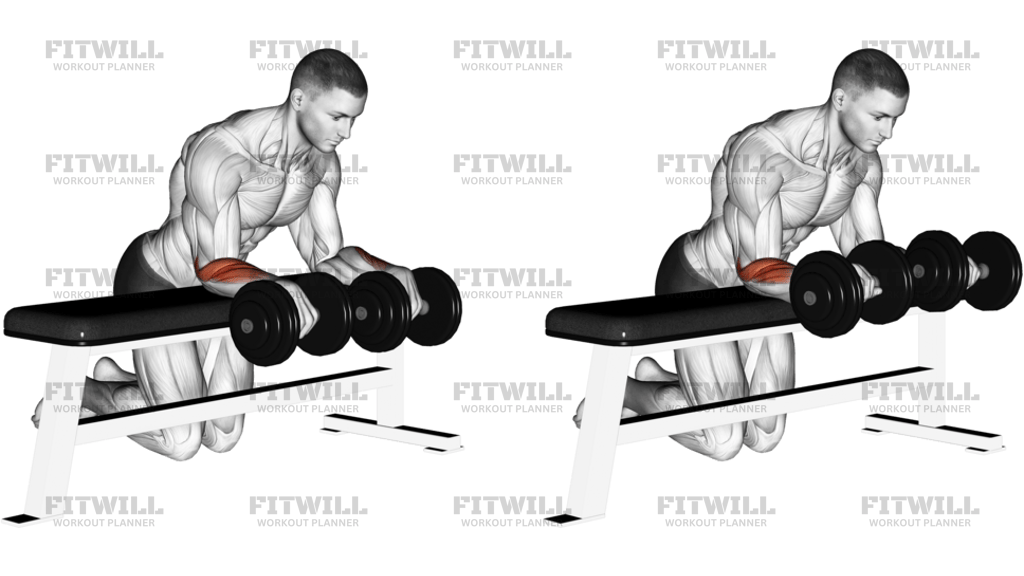
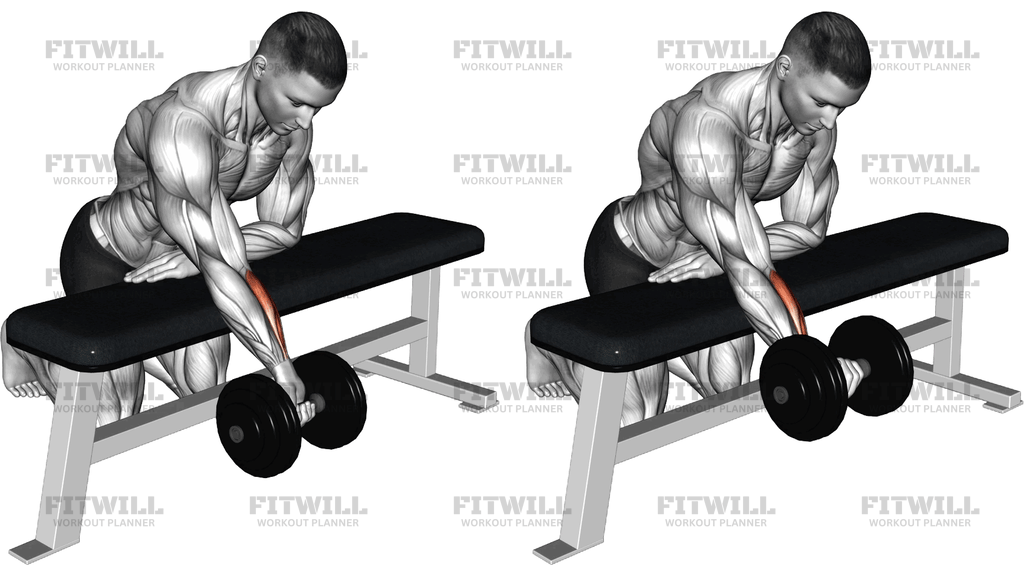
Dumbbell Over Bench One-Arm Reverse Wrist Curl is a bench-supported forearm isolation exercise that trains the wrist extensors through a short, controlled range of motion. The working arm is braced on the bench while the wrist hangs past the edge, so the dumbbell can move only through the wrist without turning the set into a curl, row, or shoulder movement.
This exercise is most useful when you want direct work for the top of the forearm and better control at the wrist joint. The main effort comes from the wrist extensors, with the brachioradialis and other forearm stabilizers helping keep the dumbbell steady. Because the range is small, setup matters: if the forearm is not anchored and the wrist is not free to move past the bench edge, the exercise quickly loses its purpose.
Use a bench height that lets your forearm rest comfortably with the hand and dumbbell hanging off the side. Keep the upper arm quiet, the elbow fixed, and the shoulder relaxed so the wrist does the work. The dumbbell should travel in a smooth arc as you extend the wrist, then lower back under control until the forearm and hand are aligned again.
The best reps feel deliberate, not forceful. A light to moderate load is usually enough because the lever is small and the forearm tires quickly when you cheat with body movement. If the knuckles start drifting, the elbow slides, or the dumbbell is bouncing through the bottom, the set is too heavy or the tempo is too fast.
Dumbbell Over Bench One-Arm Reverse Wrist Curl fits well in arm day accessories, grip-strength work, rehab-style forearm training, or the end of an upper-body session when you want targeted forearm volume without loading the whole body. Keep the motion clean, keep the wrist path honest, and stop the set when you can no longer lift and lower the dumbbell without shifting the forearm on the bench.
[ Workout Log & Planner ]
Put your next workout in Fitwill
Keep your plan and training log ready when you are.


Instructions
- Place one forearm flat on the bench with the wrist and dumbbell hand hanging just past the edge.
- Grip the dumbbell with an overhand grip and let the palm face down so the back of the hand can move upward.
- Kneel or stand beside the bench so your shoulder can stay relaxed and your elbow stays planted.
- Keep the working forearm still and start with the wrist dropped slightly below the bench edge.
- Curl the hand upward by extending the wrist, lifting the dumbbell in a short arc without moving the elbow.
- Pause briefly at the top when the knuckles are highest and the forearm is fully working.
- Lower the dumbbell slowly until the wrist returns to the starting stretch under control.
- Keep breathing steady and repeat for the planned reps before switching arms.
Tips & Tricks
- Let only the wrist move; if the elbow slides or the shoulder helps, the set stops being a true reverse wrist curl.
- Keep the forearm fully supported on the bench so the dumbbell hangs freely past the edge.
- Use a light load first; the lever is short, but the forearm burns quickly when the range is strict.
- Lift the back of the hand, not the whole arm, so the tension stays on the wrist extensors.
- Lower slowly to the bottom stretch instead of dropping the dumbbell and losing control of the joint.
- Keep the grip firm but not crushing, or you will turn the exercise into a forearm squeeze test.
- If the dumbbell bumps the bench, move your hand a little farther off the edge before starting the set.
- Stop the set when the top position turns into a shrug or elbow shift rather than a wrist movement.
- Use higher reps if you are training forearm endurance or grip support for pulling lifts.
Frequently Asked Questions
What muscle does Dumbbell Over Bench One-Arm Reverse Wrist Curl target most?
It mainly trains the wrist extensors on the top of the forearm, especially when the forearm stays fixed on the bench.
Can beginners perform this exercise?
Yes. Start with a very light dumbbell so you can feel the wrist move without letting the elbow or shoulder take over.
How heavy should the dumbbell be for this movement?
Choose a load that you can raise smoothly from a bench-supported hang without bouncing off the bottom or twisting the forearm.
Why does the forearm need to stay on the bench?
The bench locks the upper arm and forearm in place so the wrist can isolate the work instead of turning the rep into a curling or swinging pattern.
Should I feel this in my biceps or shoulder?
No. A small amount of stabilization is normal, but the main fatigue should stay in the forearm near the wrist.
What range of motion should I use?
Use the range that comes from the wrist alone: a controlled drop below the bench edge and a smooth lift back up without the forearm lifting off the pad.
Is this the same as a regular wrist curl?
No. A regular wrist curl usually focuses on wrist flexion with the palm up, while this version uses an overhand grip to emphasize the extensor side of the forearm.
Where does this fit in a workout?
It works well as accessory forearm work after pulling sessions, arm day finishers, or grip-focused training blocks.