Dumbbell Romanian Deadlift
The Dumbbell Romanian Deadlift is a hip-hinge strength exercise built around a controlled descent from the hips, not a squat. It places the greatest demand on the glutes and hamstrings while teaching you how to keep your spine, rib cage, and pelvis organized under load. Because the dumbbells stay close to the legs and the knees stay softly bent, the movement loads the back side of the body without needing a deep knee bend or a large change in stance.
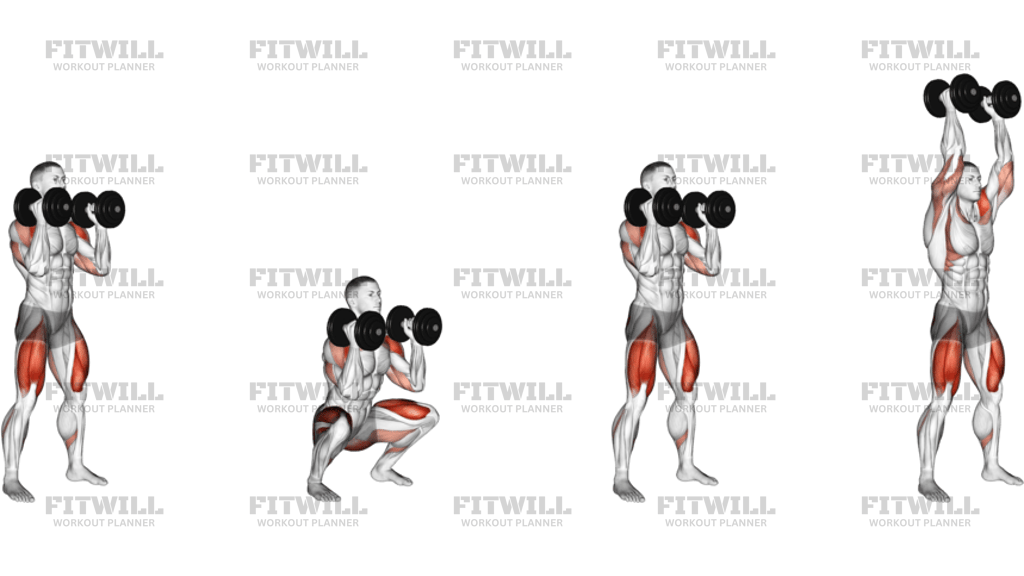
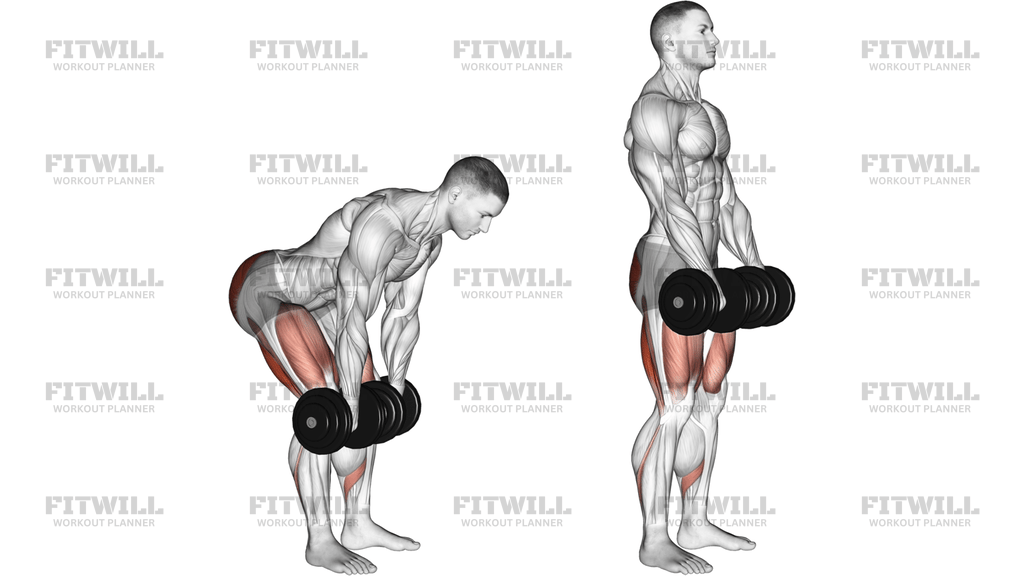
The image shows the top and bottom positions clearly: stand tall with the dumbbells hanging in front of the thighs, then hinge the hips back until the torso leans forward and the weights travel down the front of the legs. That long, close path matters. If the dumbbells drift away from the body, the leverage gets worse and the lower back usually picks up more of the work. Keeping the weights close helps the hamstrings stay loaded and makes the return to standing feel like a strong hip drive instead of a back extension.
This exercise is useful for building posterior-chain strength, improving hinge mechanics, and adding controlled volume for glutes and hamstrings in strength, hypertrophy, or athletic programs. It also works well as an accessory after squats, as a main hinge on lower-body day, or as a lighter technique drill when you want to rehearse proper hip folding. The load should feel challenging, but the movement should still look calm and repeatable from rep to rep.
The main performance cue is to keep a soft knee bend, push the hips back, and stop the descent when the hamstrings are clearly lengthened without losing the neutral back position. At the bottom, the dumbbells should still be close to the legs, and the torso should stay braced rather than rounded. Drive back up by pushing the floor away and bringing the hips forward until you stand tall, finish with the glutes, and avoid leaning back at the top.
Use this variation when you want a straightforward dumbbell hinge that is easier to set up than a barbell deadlift and easier to control than a faster swing-style movement. It is a good choice for beginners who can maintain a neutral spine and for experienced lifters who want clean posterior-chain work with less systemic fatigue. The quality of the hinge, not the depth of the bend, is what makes the rep effective.
[ Workout Log & Planner ]
Put your next workout in Fitwill
Keep your plan and training log ready when you are.


Instructions
- Stand with your feet about hip-width apart and hold a dumbbell in each hand in front of your thighs with your palms facing your body.
- Soften your knees slightly, lift your chest, and set your shoulders down and back so the weights hang quietly at arm's length.
- Brace your torso, keep your neck long, and begin by pushing your hips straight back instead of bending the knees deeper.
- Slide the dumbbells down the front of your thighs, then along your shins as your torso tips forward in one controlled hinge.
- Lower until you feel a strong stretch in the hamstrings and can still keep your back neutral and the dumbbells close to your legs.
- Pause briefly at the bottom without bouncing or letting the shoulders round forward.
- Drive through your heels, squeeze your glutes, and bring the hips forward to stand tall again.
- Finish upright with the ribs stacked over the pelvis, not by leaning back or shrugging the weights.
- Reset your brace before the next repetition and repeat for the planned number of reps.
Tips & Tricks
- Keep the dumbbells brushing close to your thighs and shins; if they drift forward, the lower back usually takes over.
- Think about moving the hips backward first. The knees should stay softly bent, not keep bending as you descend.
- Stop the lowering phase when your hamstrings limit the hinge, even if the dumbbells have not reached the floor.
- Use a grip width that keeps the dumbbells outside your legs and lets your arms hang straight without contacting the knees.
- Maintain a neutral head position and look a few feet in front of you to avoid cranking the neck up.
- Lower under control for 2-4 seconds so the hamstrings stay loaded instead of letting gravity drop the weights.
- Exhale as you stand up, but keep your torso braced so the ribs do not flare at the top.
- Choose a load that lets every rep look identical; if the back rounds or the weights swing, the set is too heavy.
- If you feel this mostly in the low back, shorten the range and re-hinge with more hip travel and less knee bend.
Frequently Asked Questions
What muscles does the Dumbbell Romanian Deadlift train most?
It primarily trains the glutes and hamstrings, with the spinal erectors and core working to keep the torso braced.
Is the Dumbbell Romanian Deadlift a squat or a hinge?
It is a hinge. The hips move backward while the knees stay softly bent instead of dropping into a deep squat.
How low should the dumbbells go during the descent?
Lower only until you feel a strong hamstring stretch and can still keep the dumbbells close to your legs with a neutral back.
Should the dumbbells touch the floor?
No. In most reps they stop around mid-shin or slightly below the knees, depending on your hamstring flexibility and spine position.
Can beginners use this exercise safely?
Yes, if they start light and practice the hip hinge first. The movement is simple, but the back position has to stay controlled.
What is the most common form mistake?
Letting the dumbbells drift forward away from the legs or turning the descent into a squat by bending the knees too much.
How is this different from a conventional deadlift?
The Romanian version starts from the standing position and emphasizes the eccentric hip hinge, while a conventional deadlift usually starts from the floor.
Where should I feel the exercise most?
You should feel the stretch and tension mainly in the hamstrings on the way down and the glutes driving the return to standing.