Dumbbell Glute Bridge
Dumbbell Glute Bridge is a floor-based hip extension exercise performed while lying on your back with a dumbbell braced across the hips. It trains the glutes first, with the hamstrings and core helping to stabilize the pelvis so the hips can move cleanly instead of the lower back doing the work. Because the range of motion is short and the setup is simple, it is a useful choice for learning how to finish a hip extension, building glute strength, and adding controlled posterior-chain work without needing a bench or barbell.
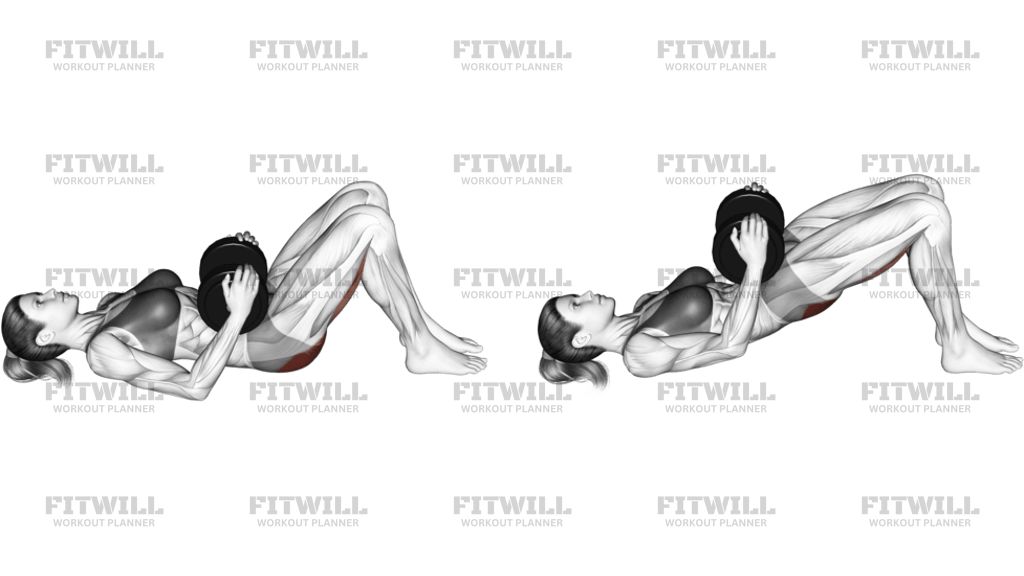
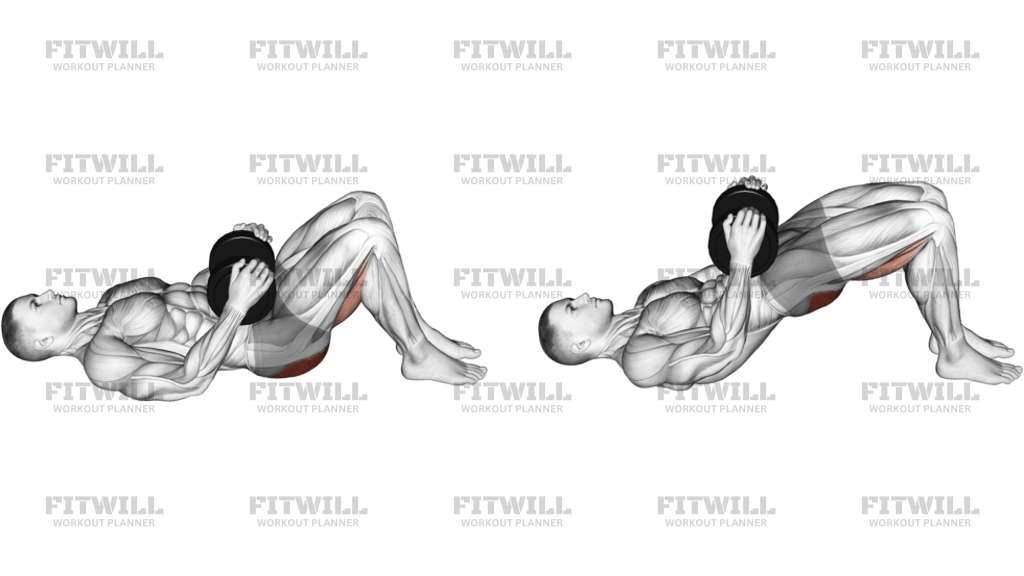
The dumbbell should sit across the hip crease or upper pelvis, not high on the abdomen. In the image, both hands are used to steady the weight while the shoulders stay on the floor, the knees remain bent, and the feet stay planted. That setup matters because the bridge only feels good when the rib cage stays down, the pelvis stays stacked, and the feet are placed far enough away to let the hips rise without cramping the hamstrings or arching the lower back.
At the top of the bridge, the goal is a straight line from shoulders through hips to knees, not a bigger arch through the spine. Drive through the heels and midfoot, lift the hips under control, and finish with a hard glute squeeze while keeping the ribs from flaring. If the dumbbell shifts, the knees cave inward, or the low back takes over, the load is probably too heavy or the feet are too far away. A brief pause at the top usually makes the exercise much more effective than chasing speed or height.
This movement works well as a warm-up drill, an accessory lift, or a lower-load option when you want direct glute work without standing balance demands. It can also be used to reinforce hip extension mechanics before heavier squats, deadlifts, lunges, or sprint work. Beginners can use it with a light dumbbell or no load at all, then progress by adding resistance, adding a pause, or tightening the rep tempo while keeping the pelvis stable.
The best reps look smooth, quiet, and repeatable. Lower the hips slowly, reset the feet if needed, and keep the dumbbell centered so each repetition starts from the same position. If the bridge turns into a low-back arch, shorten the range and focus on posterior pelvic control first. The target sensation should stay in the glutes, with only mild assistance from the hamstrings and abs.
[ Workout Log & Planner ]
Put your next workout in Fitwill
Keep your plan and training log ready when you are.


Instructions
- Lie on your back with your knees bent and your feet flat on the floor about hip-width apart.
- Place the dumbbell across the hip crease or upper pelvis and steady it with both hands.
- Walk your feet in or out until your shins are close to vertical at the top of the bridge.
- Set your shoulders and upper back on the floor, tuck your chin slightly, and keep your ribs down.
- Brace your abs, then drive through your heels and midfoot to lift your hips off the floor.
- Raise your hips until your knees, hips, and shoulders form a straight line.
- Squeeze your glutes hard at the top without arching your lower back.
- Lower your hips slowly until they hover just above the floor, then repeat for the planned reps.
Tips & Tricks
- If the dumbbell digs into your pelvis, place a folded towel or pad under it and keep the weight centered.
- Stop the lift when your torso is straight; turning the top into a lower-back arch changes the exercise.
- Keep your knees tracking over your second and third toes so the hips rise evenly instead of twisting.
- If your hamstrings cramp, bring your feet a little closer to your hips and press through the heels instead of the toes.
- A one-second pause at the top usually builds more glute tension than trying to throw the hips up quickly.
- Keep the dumbbell stable with your hands, but do not press so hard that your shoulders tense up.
- Lower under control and let the hips touch down softly; bouncing removes tension from the glutes.
- Use a lighter load if you cannot keep the pelvis level or the weight starts sliding toward one side.
Frequently Asked Questions
What muscle does Dumbbell Glute Bridge target most?
The glutes are the main target, with the hamstrings and core assisting to stabilize the bridge.
Can beginners perform this exercise?
Yes. It is beginner-friendly because the floor supports your back and the load can be kept light while you learn the hip drive.
Where should the dumbbell sit during the bridge?
It should rest across the hip crease or upper pelvis, usually with both hands holding it in place so it does not roll.
Do I need a bench for this exercise?
No. This version is done on the floor, with your shoulders and upper back staying down the whole time.
Why do my hamstrings cramp during dumbbell glute bridges?
Your feet are probably too far from your hips or you are pushing through the toes. Bring the feet a little closer and drive through the heels and midfoot.
How high should I lift my hips?
Lift until your body makes a straight line from shoulders to knees. Going higher usually turns the rep into a lower-back arch.
What are the most common mistakes?
The biggest issues are flaring the ribs, overextending the lower back, letting the knees cave in, and using a dumbbell that is too heavy to stabilize.
How can I make this exercise harder without changing the movement?
Use a heavier dumbbell, add a longer pause at the top, or slow the lowering phase while keeping the pelvis level.