Dumbbell Lying Femoral
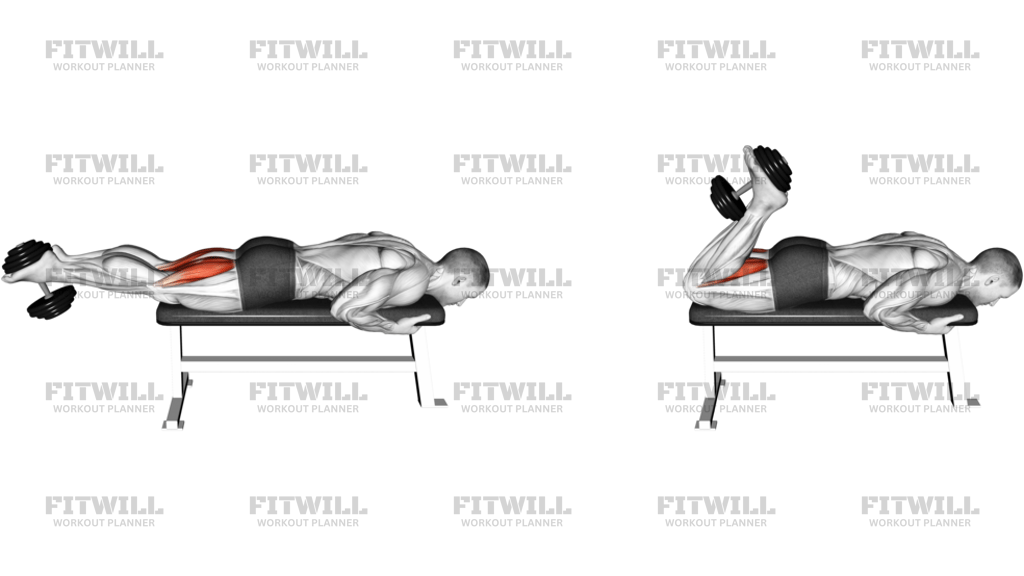
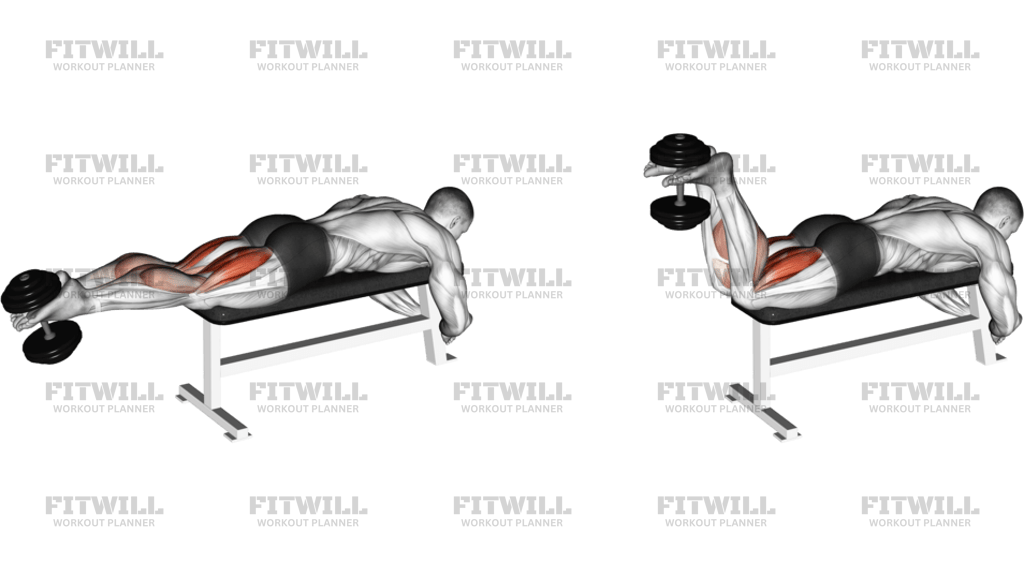
Dumbbell Lying Femoral is a prone hamstring curl done with a dumbbell clamped between the feet while you lie face down on a flat bench. The image shows the body supported chest-down on the bench, the dumbbell hanging below the feet, and the knees bending to pull the heels toward the glutes. It is a knee-flexion exercise, so the main job is to load the hamstrings through a controlled curl instead of using hip swing or lower-back movement.
The primary demand is on the hamstrings, especially through the lower half of the curl where the knees bend against gravity. The calves help hold the dumbbell in place and the glutes, core, and upper body stabilize the pelvis and torso so the bench position stays fixed. That setup matters because if the hips lift or the feet stop clamping the weight, the movement turns into a messy swing instead of a clean leg curl.
Set the bench so your hips and lower abdomen are supported and your legs can hang just off the end. Lie face down, hold the bench with your hands, and secure the dumbbell firmly between your feet before you start. A light squeeze through the arches, heels, and inner ankles keeps the dumbbell centered. If the weight is too heavy to keep pinned, the set is too heavy for this variation.
Each rep should begin from a long, controlled hang. Bend the knees and curl the dumbbell upward by pulling the heels toward the glutes, then pause briefly when the hamstrings are fully shortened. Lower the dumbbell slowly back to the start until the knees are nearly straight again. Keep the thighs quiet on the bench, keep the pelvis from rocking, and use the same path on every repetition.
This exercise is useful as an accessory hamstring movement when you want direct knee-flexion work without a machine. It can fit into lower-body strength work, posterior-chain accessories, or athletic prep, but it only works well when the dumbbell stays secure and the descent stays deliberate. If the feet cramp, the hips lift, or the weight swings, reduce the load or switch to a more stable leg-curl variation.
[ Workout Log & Planner ]
Put your next workout in Fitwill
Keep your plan and training log ready when you are.


Instructions
- Lie face down on a flat bench with your hips supported near the edge and your legs hanging free.
- Clamp one dumbbell securely between your feet before starting the set.
- Hold the bench with your hands and keep your torso heavy on the pad.
- Brace your core and lightly squeeze the dumbbell so it stays centered between your arches and ankles.
- Bend your knees and curl the dumbbell toward your glutes without lifting your hips off the bench.
- Pause briefly at the top when the hamstrings are fully shortened.
- Lower the dumbbell slowly until your knees are nearly straight again.
- Keep the feet aligned and the dumbbell under control on every rep.
- Reset the position if the weight starts to slip or your pelvis rocks.
Tips & Tricks
- Use a dumbbell that you can clamp securely between your feet; if it rolls or feels unstable, it is too heavy for this variation.
- Let your knees hang just past the bench edge so the dumbbell clears the pad on the way down.
- Keep your hips pressed into the bench; if they lift, the hamstrings lose tension and the rep turns into a swing.
- A small squeeze through the arches and inner ankles helps the dumbbell stay centered through the curl.
- Move slowly on the lowering phase so the hamstrings do the work instead of gravity dropping the weight.
- Stop the rep before the dumbbell hits the bench or your feet start cramping hard.
- Do not let the toes flare or the ankles twist apart, because that is usually what makes the weight slip.
- Choose a controlled range first, then add load only after you can keep the same path for every rep.
Frequently Asked Questions
What does Dumbbell Lying Femoral train most?
It mainly trains the hamstrings through knee flexion. The calves, glutes, core, and upper body help stabilize the position on the bench.
How do I keep the dumbbell from slipping out of my feet?
Clamp it firmly between your arches, heels, and inner ankles before each rep. If you cannot hold it without over-squeezing, the dumbbell is too heavy.
Where should my hips be on the bench?
Your hips and lower abdomen should stay supported on the pad while your lower legs hang off the end. That gives the knees room to bend without the dumbbell hitting the bench.
Should I lift my hips to finish the curl?
No. The pelvis should stay heavy on the bench so the hamstrings do the curling instead of the lower back and hip flexors helping out.
Is Dumbbell Lying Femoral good for beginners?
Yes, but only with a light dumbbell and a very controlled setup. If the feet cramp or the weight feels awkward, a machine or slider leg curl is usually easier.
What is the biggest mistake in this exercise?
Using too much weight and turning the curl into a kick or swing. The rep should look smooth, with the dumbbell hanging under control the whole time.
How is this different from a lying leg curl machine?
A machine keeps the resistance path fixed, while this version demands more foot control and balance because you are pinching the dumbbell yourself.
What can I use instead if this setup feels awkward?
Try a lying leg curl machine, Swiss ball leg curl, or sliding hamstring curl. Those options train the same knee-flexion pattern with less foot-finding work.