Dumbbell Decline Lying Leg Curl
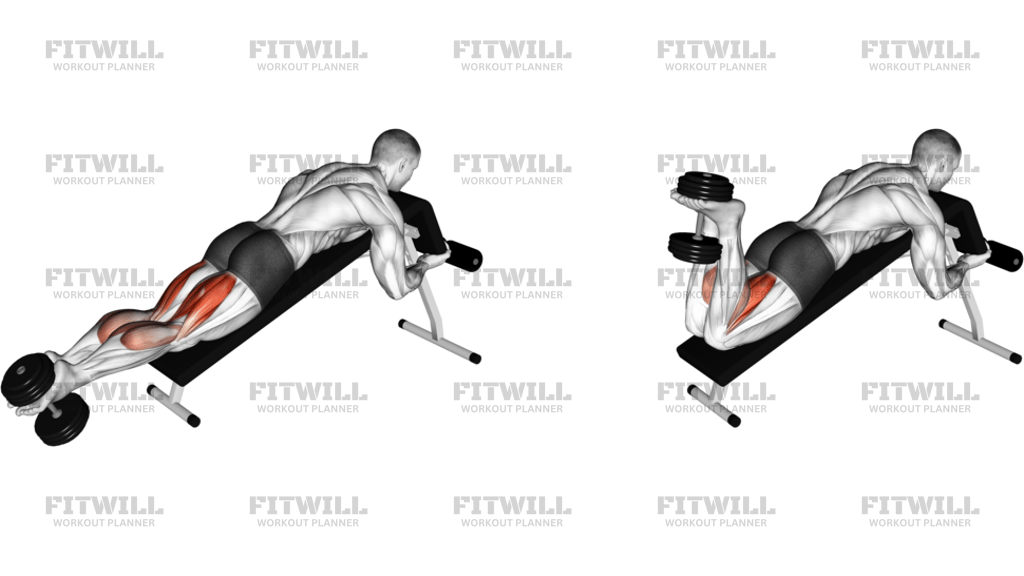
Dumbbell Decline Lying Leg Curl is a decline-bench hamstring curl that uses a dumbbell held between the feet to create resistance through knee flexion. The setup changes the loading angle compared with a flat lying curl, so the exercise rewards a very controlled squeeze and a steady lower-back position. It is a useful accessory for lifters who want direct hamstring work without a machine, especially when they need a unilateral-friendly or home-gym option.
The movement is simple, but the setup is not forgiving. In Dumbbell Decline Lying Leg Curl, the chest, stomach, and hips stay supported on the bench while the lower legs hang off the end and the dumbbell is trapped between the feet or ankles. That support point matters because any shift in the pelvis will turn the rep into a lower-back extension exercise instead of a knee-flexion exercise. The more securely the dumbbell sits, the cleaner the curl will feel.
Each rep should start from a quiet, braced position and then travel through a smooth curl toward the glutes. The knees bend while the thighs stay pinned to the bench, and the weight lowers back down under control instead of dropping from the top. Breathing should stay steady so you can maintain grip pressure with the feet and keep the torso from rocking on the decline pad. A short pause at the top is usually enough to keep the hamstrings honest without turning the lift into a swing.
Dumbbell Decline Lying Leg Curl works well as a hamstring isolation drill after squats, deadlifts, lunges, or running sessions. It is also a practical choice when a leg-curl machine is unavailable, as long as the dumbbell is light enough to stay secure between the feet. The limiting factor is often the foot squeeze and pelvic control, not raw leg strength, so small load jumps and strict reps are usually more productive than chasing heavy weight.
[ Workout Log & Planner ]
Put your next workout in Fitwill
Keep your plan and training log ready when you are.


Instructions
- Lie face down on a decline bench with your hips and stomach supported, your chest near the high end, and your lower legs hanging free off the bottom edge.
- Hold the bench frame or front support with both hands so your torso stays quiet, then trap a light dumbbell securely between your feet or ankles.
- Slide into position until your knees can move freely off the end of the bench and the dumbbell hangs straight down without touching the floor.
- Squeeze the dumbbell with your feet, brace your abs and glutes, and keep your pelvis pressed into the pad before you start the rep.
- Curl your heels toward your glutes by bending your knees, keeping your thighs in contact with the bench as long as possible.
- Pause briefly when the hamstrings are fully shortened and the dumbbell is close to your glutes, without letting your hips lift.
- Lower the dumbbell slowly until your legs are nearly straight again and the hamstrings stay under tension.
- Reset your foot squeeze before the next rep, and after the final rep guide the dumbbell down carefully instead of dropping it.
Tips & Tricks
- Use the lightest dumbbell that stays locked between your feet; if it shifts or wobbles, the load is too heavy for this variation.
- Keep your hips pinned to the bench pad on every rep so the curl comes from knee flexion instead of lower-back extension.
- Think about pulling your heels toward your hamstrings, not kicking the weight upward with your toes.
- A firm ankle squeeze helps keep the dumbbell centered, especially when fatigue starts to make the feet drift apart.
- Lower the dumbbell for two to three seconds to keep tension on the hamstrings instead of letting gravity finish the rep.
- Stop the descent before your knees lock out hard if the bench angle makes the bottom position feel loose or uncomfortable.
- If your calves cramp, reduce the load and shorten the range slightly until the hamstrings do more of the work.
- Keep your head and neck relaxed while your hands steady the bench; extra torso tension usually means the weight is too ambitious.
Frequently Asked Questions
What muscles does Dumbbell Decline Lying Leg Curl work?
It mainly targets the hamstrings through knee flexion, with the glutes, calves, and core helping stabilize your body on the decline bench.
How do I keep the dumbbell from slipping out of my feet?
Use a very light dumbbell, clamp it between the arches or ankles, and squeeze your feet together before every rep. If it still shifts, the load is too heavy for this exercise.
Should my hips stay on the bench during Dumbbell Decline Lying Leg Curl?
Yes. Your hips and stomach should stay pressed into the bench pad so the movement stays focused on the hamstrings instead of the lower back.
Is Dumbbell Decline Lying Leg Curl a good beginner exercise?
It can be, but only with a very light dumbbell and a stable setup. Beginners usually need to learn the foot squeeze and pelvic control before adding load.
How heavy should the dumbbell be for this curl?
Choose the lightest dumbbell that you can hold securely between your feet for the full set. The grip-like foot squeeze is usually the limiting factor before the hamstrings are.
Why do I feel Dumbbell Decline Lying Leg Curl in my calves?
A little calf involvement is normal because the feet are trapping the dumbbell, but the main effort should still come from bending the knees and shortening the hamstrings.
Can I replace a lying leg-curl machine with Dumbbell Decline Lying Leg Curl?
Yes, it is a workable substitute when you do not have a machine. The tradeoff is that the dumbbell requires more foot control and is usually best done with lighter loads.
What is the most common mistake on the decline bench?
Letting the pelvis lift or swinging the dumbbell with momentum. Keep the torso quiet, squeeze the weight firmly, and lower it under control.