Lateral Side Plank
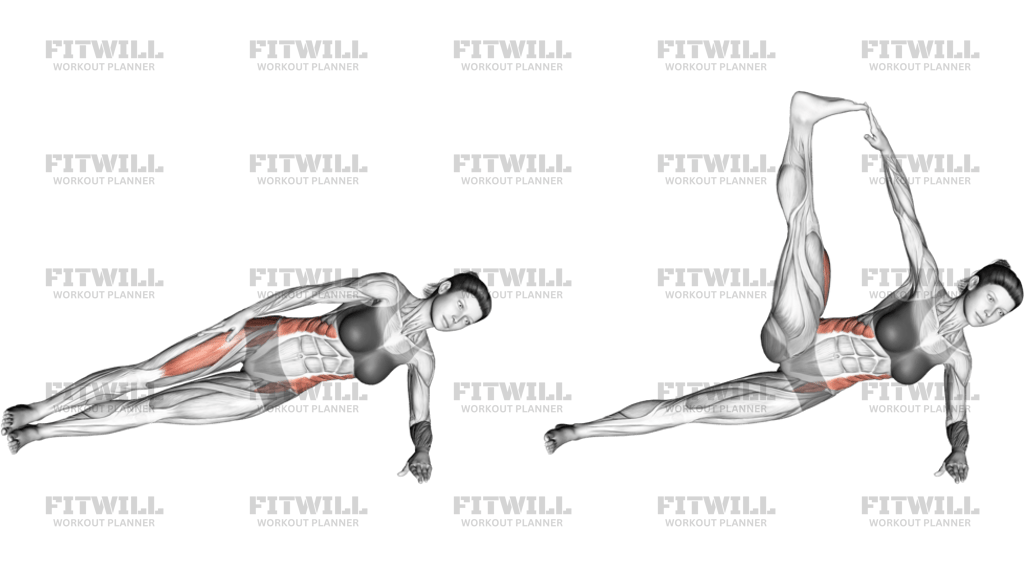
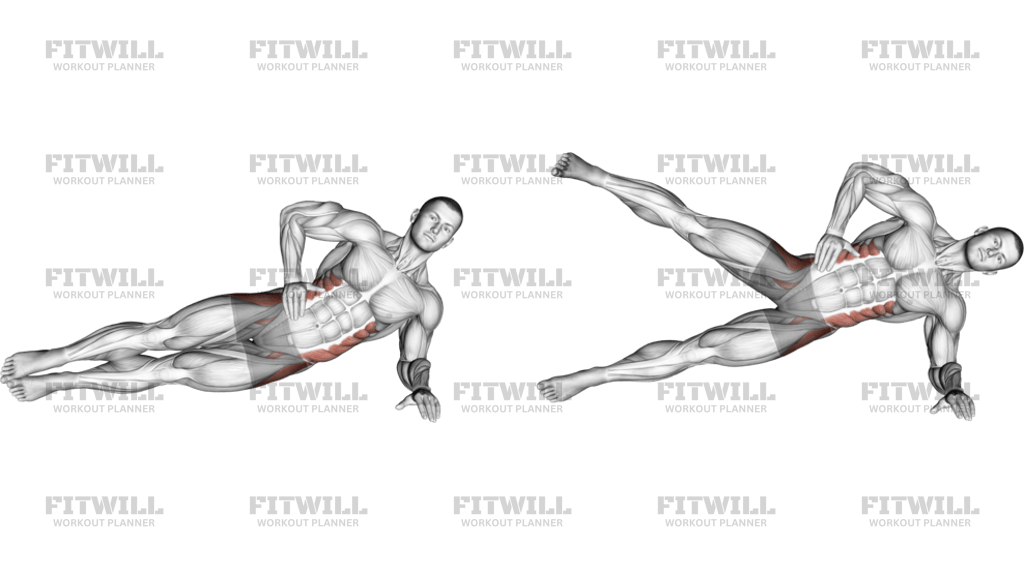
Lateral Side Plank is a body weight side-body and hip stability drill that asks you to hold a strong side plank while reaching the top hand toward the lifted foot. It is a demanding isometric variation because the base arm has to support your body while the trunk, pelvis, and top leg stay stacked. The exercise is useful when you want more than a basic side plank: it adds a long lever, a balance challenge, and a stronger demand on the outer hip and side core.
The main training effect comes from keeping the pelvis steady while the shoulder, obliques, and glutes work together to hold the body in one line. In this pattern, the glutes remain the primary target muscle group, with the hamstrings, core, and lower back helping control the position. The lifted-leg reach also asks the supporting hip and trunk to resist rotation, so the set should feel organized and deliberate rather than loose or twisted.
Set up on your forearm with the elbow directly under the shoulder, the chest open, and the legs long. From there, lift the hips until the body forms a straight line from head to heel, then keep the rib cage stacked over the pelvis as you reach toward or hold the top foot. If your mobility allows the foot hold, move into it slowly so the shoulder does not dump forward and the low back does not arch to fake extra range.
Lateral Side Plank works well in core circuits, warmups for lateral stability, and accessory work for athletes who need better control in single-leg and side-loaded positions. Because the lifted-leg version is more demanding than a standard side plank, it is better to hold quality positions for short periods than to chase long, messy efforts. Keep the neck long, the hips lifted, and the breathing calm so the side body does the work instead of momentum.
Use the exercise on both sides and match the hold time or reps side to side. If one shoulder feels unstable or the top leg cannot stay lifted without the pelvis rotating, shorten the reach, bend the top knee slightly, or return to a regular side plank until control improves. When it is done well, Lateral Side Plank builds useful strength in the hips and trunk without needing heavy equipment or a large training setup.
Fitwill
Log Workouts, Track Progress & Build Strength.
Achieve more with Fitwill: explore over 9600 exercises with images and videos, access built-in and custom workouts, perfect for both gym and home sessions, and see real results.
Start your journey. Download today!




Instructions
- Lie on your side with the forearm of the support arm on the floor and the elbow stacked under the shoulder.
- Straighten both legs, stack or slightly stagger the feet, and place the free hand near the lifted leg.
- Press the forearm and outer edge of the bottom foot into the floor, then lift the hips until the body makes one long line.
- Keep the chest open and the ribs stacked over the pelvis instead of rolling forward or back.
- Reach the top arm toward the lifted foot, or hold the foot if your shoulder and hamstring mobility allow it.
- Keep the lifted leg active and the glutes squeezed so the pelvis does not drop as you hold the position.
- Breathe steadily through the hold, making a small exhale as you settle into the strongest position.
- Lower the hips and release the foot with control, then reset before repeating on the other side.
Tips & Tricks
- Stack the elbow directly under the shoulder; if the elbow drifts forward, the shoulder takes over and the hold gets shaky.
- Keep the bottom foot actively pressing into the floor so the hips do not slide backward as you reach for the foot.
- If the top foot hold pulls your torso forward, keep the hand on the hip or reach only as far as you can without losing the plank line.
- A slight bend in the lifted knee is fine if straightening the leg makes the pelvis twist.
- Do not shrug into the support shoulder; push the floor away and keep space between the ear and shoulder.
- If your low back arches, lower the reach and bring the ribs down before trying a bigger hold.
- Use short holds with clean position rather than long holds that turn into a side-bending collapse.
- A mat under the forearm helps if the support elbow is sensitive during longer sets.
Frequently Asked Questions
What muscles does Lateral Side Plank work most?
It mainly trains the glutes and side core, with the shoulder, hamstrings, and lower back helping you hold the stacked side-plank position.
Is Lateral Side Plank harder than a regular side plank?
Yes. The lifted-leg reach creates a longer lever and a bigger balance demand, so the hips and trunk have to work harder to stay steady.
Do I need to hold the top foot in Lateral Side Plank?
No. If the foot hold makes you lose the shoulder stack or twist the pelvis, just reach toward the foot or keep the top hand on the hip.
Where should I feel Lateral Side Plank?
You should feel the side glutes and obliques working hardest, with some support from the shoulder and upper back on the floor side.
Can beginners do Lateral Side Plank?
Beginners can start with a basic side plank, then add the foot reach once they can keep the hips stacked without wobbling.
What if my shoulder feels unstable in the support arm?
Shorten the hold, keep the top hand off the foot, and work a regular side plank first until the support shoulder feels solid and quiet.
How long should I hold Lateral Side Plank?
Most people do better with short, high-quality holds of about 10 to 30 seconds per side instead of fighting through long shaky attempts.
What is the best regression for Lateral Side Plank?
Use a normal side plank with both feet stacked, or drop the bottom knee to the floor while you build the shoulder and side-core strength for the full version.