Bow Yoga Pose
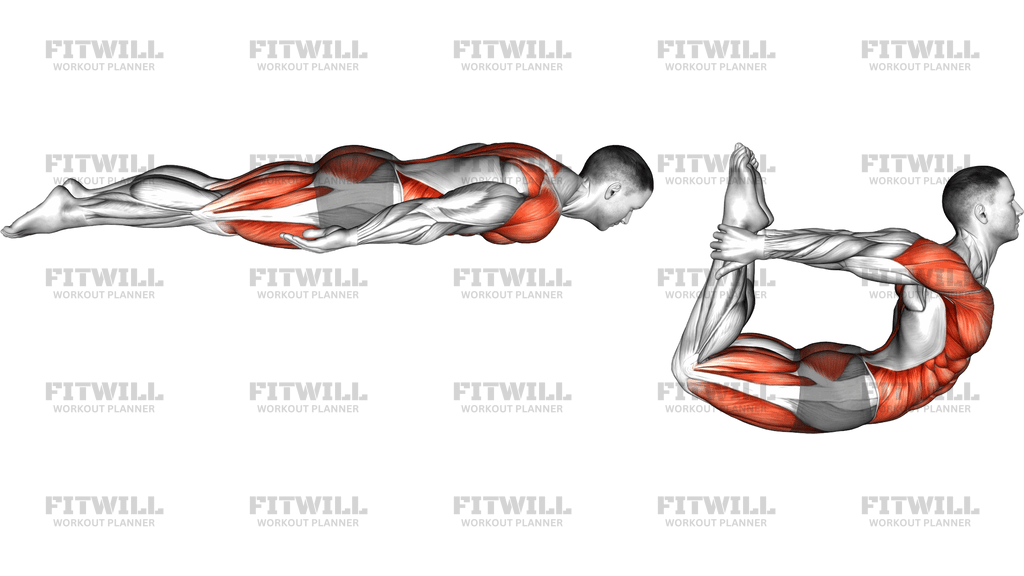
Bow Yoga Pose is a prone yoga backbend that uses body weight to load the front of the body and the posterior chain at the same time. It is commonly known as Dhanurasana. From the floor, you reach back to hold the ankles, then use the pull of the legs and the lift of the chest to create a smooth arch through the torso. The shape in the image shows the key idea clearly: thighs lifted, chest open, shoulders drawn back, and the body balanced on the abdomen and lower pelvis.
This exercise trains more than flexibility. It asks the thoracic spine, shoulders, hip flexors, quads, glutes, and spinal extensors to work together while the core keeps the low back from collapsing. The strongest version of the pose is not the deepest one. It is the one where you can lift evenly, keep the knees from splaying, and breathe without losing the shape. That makes the setup important: if the ankles are hard to reach or the knees are too wide, the pose turns into a shoulder tug or a low-back crank instead of a controlled backbend.
A good rep begins with the face down, knees bent, and hands on the ankles before you lift. From there, press the ankles into the hands, draw the shoulder blades down and back, and lift the chest and thighs together. The movement should feel like one connected arc rather than a hard yank at the feet. Keep the neck long, look slightly forward instead of jamming the chin up, and hold only as long as you can keep the ribs from flaring and the breath steady.
Bow Yoga Pose is useful as a mobility drill, a yoga strength position, or a controlled accessory movement when you want to open the front of the body while challenging the back line. It can also expose asymmetries between sides if one ankle is easier to hold than the other. Avoid forcing the depth, especially if the low back, knees, or shoulders are irritated. A shorter, cleaner shape is usually better than a bigger arch that breaks alignment.
[ Workout Log & Planner ]
Put your next workout in Fitwill
Keep your plan and training log ready when you are.


Instructions
- Lie face down on the floor with your legs hip-width apart, bend both knees, and reach back to hold the outside of your ankles.
- Keep your forehead or chin lightly on the floor, with the tops of the feet pointing up and the thighs relaxed before you lift.
- Set your shoulders down and back, and keep the knees from drifting wider than your hips.
- Inhale, brace your midsection, and press your ankles gently into your hands.
- Lift your chest, ribs, and thighs off the floor together so the body arcs into the bow shape.
- Keep the neck long and the gaze slightly forward; do not crank the head back to gain height.
- Hold the top position for a smooth breath or two while maintaining even tension through both legs.
- Lower the chest and thighs back to the floor under control, then release the ankles.
Tips & Tricks
- Grip the ankles first, then lift. If you try to reach after you are already up, the pose usually turns into a shoulder strain.
- Press the ankles into your hands to help lift the chest and thighs instead of pulling only with the arms.
- Keep the knees roughly hip-width apart so the low back does not take over the whole arch.
- Lift the sternum forward as much as up; that keeps the backbend open through the chest instead of dumping into the lumbar spine.
- If the feet are hard to reach, use a yoga strap around the ankles rather than forcing the shoulders into an ugly position.
- Keep the glutes and inner thighs active so the legs rise with the torso instead of dangling passively.
- Breathe into the sides of the ribs while you hold the pose; shallow breath usually means the arch is too aggressive.
- Come down slowly when the neck, low back, or knees start to feel pinched; Bow Pose should feel active, not jammed.
Frequently Asked Questions
What does Bow Yoga Pose work most?
It primarily challenges the back line and front-body opening together, especially the chest, shoulders, hip flexors, quads, glutes, and spinal muscles.
Is Bow Yoga Pose the same as Dhanurasana?
Yes. Bow Pose is the common English name for Dhanurasana.
Where should my hands go in the pose?
Reach back and hold the outside of the ankles or the feet. That grip lets you create the lift without yanking the shoulders forward.
Why do my knees spread apart when I lift?
The pose usually gets easier to enter when the knees drift wide, but that often shifts stress into the low back. Keep them about hip-width apart.
Can beginners do Bow Yoga Pose?
Yes, but only with a short lift and an easy grip. Beginners should stop well before the low back feels compressed.
What should I do if I cannot reach my ankles?
Use a strap around the feet or work on a gentler prone backbend first. Forcing the reach usually makes the shoulders and neck do too much.
Should I feel Bow Pose in my lower back?
Some spinal extension is normal, but the pose should not feel pinched in the lumbar spine. If it does, reduce the height or back off the grip.
How long should I hold the top position?
Hold only for a breath or two at first. The goal is a clean shape and steady breathing, not a long strain.